Escher Quilt Kit

I’ve been sewing a little bit lately and working on a couple of quilt tops. When they’ll actually be finished and quilted is anyone’s guess, but I like playing with the colours.

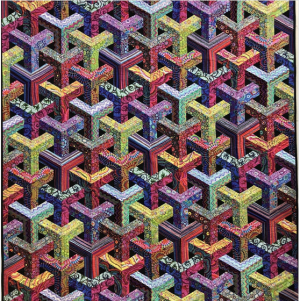
Escher quilt kit

I particularly like the fabrics designed by Kaffe Fassett, so it shouldn’t be much of a surprise that this kit caught my eye.

It’s called Escher and was designed by Christopher Weinhold. You can buy a kit right here.

I’m so excited about this one that it will probably jump my queue of sewing projects so I can get started. I’ll share my progress with you!

What do you think of this quilt design? Would you make it?

Renaissance Fan Shawl

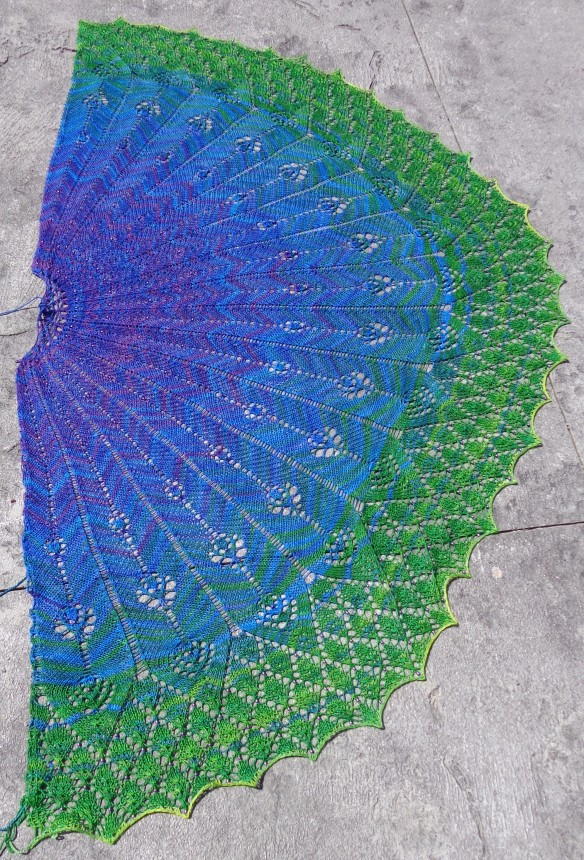
I just finished this shawl, which was a bit of an impulsive buy. The kit came from Earthfaire, with beads and yarn included. I thought it was pretty and ordered it—when it arrived, the colours were so beautiful that the project jumped queue and leaped onto my needles. I’m really happy with how it came out.Renaissance Fan by Nim Teasdale knit in The Unique Sheep Luxe (Earthfaire kit) by Deborah Cooke

The pattern is called Renaissance Fan by Nim Teasdale (the same designer who created the Dragon Scarf I showed you a few weeks ago.) That’s a Ravelry link, and you can buy the pattern there. I bought the kit from Earthfaire, which puts together wonderful kits often with The Unique Sheep gradient-dyed yarn and matching beads. This one isn’t on the site anymore. It came with six skeins of yarn, shading from purple to green.

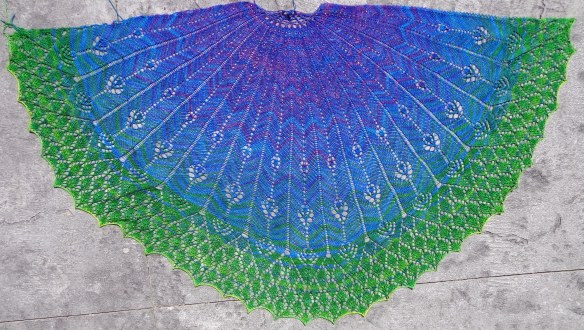
Renaissance Fan by Nim Teasdale knit in The Unique Sheep Luxe (Earthfaire kit) by Deborah Cooke

The beads included in the kit were purple, although they’re hard to see even in this detail shot. They look great on the actual shawl. You can see that I made a slight miscalculation and ran out of the last green. Fortunately, I had a little bit of lime green left from my Bitterblue shawl (also an Earthfaire kit using TUS yarn, and dyed on the same base yarn – it was meant to be!) so I was able to cast off in lime. I like it!

Renaissance Fan by Nim Teasdale knit in The Unique Sheep Luxe (Earthfaire kit) by Deborah Cooke

What do you think?

Moonrise Necklace and Bent Needles

Several weeks ago, I mentioned that I’d had to get a new set of DPN’s because I’d bent my needles. I promised to show you how that had happened. Today’s the day.

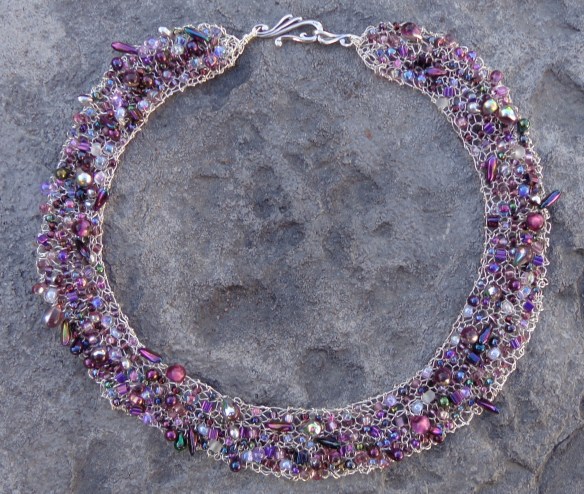
I bent my steel knitting needles by knitting with wire. I was knitting this:Bead Soup Necklace from Earthfaire knit by Deborah Cooke


This necklace is a kit from Earthfaire, which includes both the materials and the pattern. It’s called the Moonrise necklace, and I ordered my beads in the Moonrise on Neptune colourway. It comes with silk thread but I thought it would be cool to use silver-plated wire instead. I also changed out the clasp and used a sterling one instead, since I was spending so much time on the project. The result is wonderful and I like it a lot, but it took a long time to knit this. I had to keep putting it aside to let my fingers heal! Knitting with wire isn’t for wimps, especially when you use teeny needles (2.5mm) like I did. I think that the result was worth a few sore fingertips and even the bending of a couple of DPN’s.

I still have the bracelet on those bent needles and will have enough beads left to make matching earrings.

What do you think?

Finished Celestarium Shawl

You might remember that I was knitting a shawl that was a map of the heavens. The pattern is Celestarium, which shows the stars overhead in the northern hemisphere—each star’s position is marked by a bead and an eyelet.

I finished the shawl last week. At first I was disappointed in the size, because it seemed small, and I thought it was a bit stripey. Then I blocked it and the magic happened. Here it is:Celestarium by Audry Nicklin knit in the Unique Sheep Luxe (Earthfaire kit) by Deborah Cooke

The yarn is a Gradiance colourway from The Unique Sheep on their Luxe base yarn called Celestial Twilight. Luxe is a 50/50 blend of merino and silk, and quite a luscious yarn. Earthfaire offered this yarn with the beads as a kit, and I chose to have the lighter colour in the middle and the darkest at the outer edge.

I wasted a lot of energy worrying that I’d run out of the yarn for the border, even though that skein was larger to ensure there was plenty. I chose a narrower border than I’d originally planned to use, and (of course) had almost half the skein left over when I was done. Now that it’s blocked, though, I wouldn’t have wanted the border to be any wider.

What do you think?

Celestarium Shawl

This year, I’m trying to finish up all the knitting I have in progress, before casting on anything new. I have a LOT on the go, so this is going to take a while. (I also have very little discipline when it comes to knitting and keep casting on more projects, but that’s another challenge. The rationale is that I’m stash-busting.)

My current focus is a circular shawl in gradient-dyed yarn. Let’s talk about that today.

Once upon a time (way back in 2012), a designer created a circular knitted shawl that was essentially a map of the heavens. For every star visible above in the northern hemisphere, there’s a hole and a bead in the shawl. The pattern is called Celestarium. (Subsequently, she did one for the southern hemisphere called Southern Skies.) This is a pretty cool pattern, IMO, and qualifies as geek knitting. There are over 1000 Celestarium shawl projects on Ravelry, if you have some time to browse. Almost 600 of them are completed.

Some time after that, Earthfaire created a kit for the shawl, featuring gradient-dyed yarn from the Unique Sheep and crystal beads. Here’s the product page for the kit, although they don’t have any more.

I did get a kit when they were available, although it’s been waiting on me for a while. (Stash must age before use, you know.) The colourway is called Twilight. Mine shades from purple through to deep blue black. (You could choose to have it shade the other way – the last shade is the biggest skein and is for the border.) This is the same yarn base as my BitterBlue shawl – it’s a merino and tussah silk blend called Luxe. I really like this yarn, probably because I really like raw silk. It also doesn’t have the seracin smell that some silk yarn has, which I really really really dislike.

I’ve been knitting on my Celestarium for quite a while now. It has a lot of plain knitting, with the occasional star – which stands to reason. Even on a starry night, there’s more sky than stars! The charts are huge because there are no repeats: the final chart prints on eight sheets of paper, which then are taped together lengthwise to show the rows.

This is not TV knitting.

Here’s a star:Celestarium by Audry Nicklin knit in the Unique Sheep Luxe (Earthfaire kit) by Deborah CookeSee the little hole to the left of that middle bead? This is from the part closer to the middle of the shawl, where it’s more purple.

(Mr. Math has found a pun for this one, btw. When I drop a bead, he calls it a falling star. When I find it, he asks if I’ve caught a fallen star. Of course, he then advises me to put it in my pocket and save it for a rainy day.)

Round shawls that increase in diameter at a regular rate are called pi-shawls, and are based upon a design by Elizabeth Zimmerman. (My Urdr shawl was another of these.) What happens is that the number of stitches doubles at set intervals, which creates circular bands of the same stitch count. Clever designers make magic happen in these bands. When knitting a pi-shawl, I find that the first few charts are done really quickly, then the stitch count gets high enough to slow me down. The Celestarium shawl is knitted with fingering weight yarn, so the final chart has 576 stitches in each round. (The Urdr shawl was knit in lace weight, so the stitch count doubled one more time on that one.)

I’ve finished the body of the shawl, knit some extra rounds around the outside and am now knitting the border. I chose a traditional Shetland border called Wave Lace. It’ll look much better blocked, but here it is, still bunched up on the needles, but stretched out a little bit on the rug.Celestarium by Audry Nicklin knit in the Unique Sheep Luxe (Earthfaire kit) by Deborah CookeI actually pulled two stitches off the needle accidentally when taking this shot. =8-o

800 rows of border to go, then it’ll get a good block. I’m looking forward to seeing it then – blocking lace is magical.

What do you think?

Those Wyrd Sisters

I was going to tell you about a new shawl project today, but instead, I’m going to show you another one that I finally finished. (Yay!) That post about the new project has been bumped to next Friday.

When I was writing the Dragon Diaries, I did a lot of research on the Wyrd sisters in Norse mythology, also called the Norns (or sometimes the Nairns). These three immortals decide the fate of all living beings – in the myths, they’re spinners, but in Zoë’s books, they’re knitters too. Around about the same time, I was intrigued to discover that a knitting designer had created a trio of shawls to celebrate these three sisters. I had this idea that I’d knit them all to commemorate the publication of Zoë’s story.

I finally cast on in 2013.

I did finish the first one, Verdandi, pretty quickly. Verdandi is the sister who governs the present, so I called my project “Is”. This is a triangular shawl, and I knit mine in Fleece Artist Nyoni. This mohair, wool, silk and nylon blend is discontinued (so that’s a Ravelry link), which is too bad because it’s a scrumptious yarn. I still have a bit in the stash in another green colour. 🙂

The post about my completed Verdandi is right here.

Then I cast on the second shawl, Urdr. Urdr is the sister who governs the past, so my project is called “Was”. That was in September 2013. This is a huge round shawl knit in very fine laceweight yarn. The idea behind the design is that this shawl is supposed to represent the well at the root of the world tree, Yggdrasil, which the sisters tend. I used a gradient colourway from the Unique Sheep called Brigid, which made me think of copper cauldrons and ancient goddesses. (You can see Brigid on this page of the Gradiance colourways. It’s in the middle of the fourth row. Mine didn’t look quite like this sample, but each base yarn takes colour differently. Mine was very teal at the one end and quite a warm grey gold at the other with no mauve or blue bits—actually it has colours like the two middle skeins in the sample.) The base yarn is Ling, which is a silk and merino blend.

Knitting this shawl became a bit of a slog, as the rows at the end had more than 1200 stitches, and I added rows to use more of the yarn. Also, knitted lace looks like nothing until it’s blocked. I was losing heart because I had what looked like a lump in my lap each time I picked up the needles. I told Mr. Math about two weeks ago that I had to finish it, and he said “What’s the rush? You’ll just cast on another one.” Such was my mood that I wasn’t so sure of that. Maybe this would be The Last Shawl.

I should have anticipated that blocking would change everything. it’s such a magical process. Imagine my surprise when my lump stretched out to look like this:Urdr by Anna Dalvi knit in Unique Sheep Ling with beads by Deborah CookeIt’s at least six feet in diameter and so lovely that I can’t stop looking at it. The yarn is dyed in gradients, which means that there are six skeins in the set, and you change from one to the next as you knit.

Here’s a detail shot, after blocking, on the couch. You can see the colours better in this shot, although IRL, the gradation is more subtle and the middle is less blue than it looks here:Urdr by Anna Dalvi knit in Unique Sheep Ling with beads by Deborah CookeIt’s supposed to have nupps (which are little knitted knots) but I don’t like knitting nupps so I put beads in those places instead. Because I didn’t make nupps, I used less yarn. I wanted to have the entire gradation of colour, though, so I added repeats to the border. I also added more beads to the outside edge. Details are on my Ravelry project page.

It was totally worth it, and I’m ready to cast on another shawl, if not two! I’ll tell you next week about my nerd knit in that raw silk and merino blend (in another gradient colourway from the Unique Sheep, also with beads). There’s also the third Wyrd sister’s shawl to knit. It’s called Skuld, for the third sister who controls the future. My project will be named “Might Be” and I have some lovely Fleece Artist yarn set aside for it. I’m going to try to be good, though, and finish the lace stole that’s on my needles and only one third knitted before casting on another. (Ha.)

Urdr by Anna Dalvi knit in Unique Sheep Ling with beads by Deborah CookeUrdr by Anna Dalvi knit in Unique Sheep Ling with beads by Deborah CookeWhat do you think of my Urdr?

Bitterblue Shawl

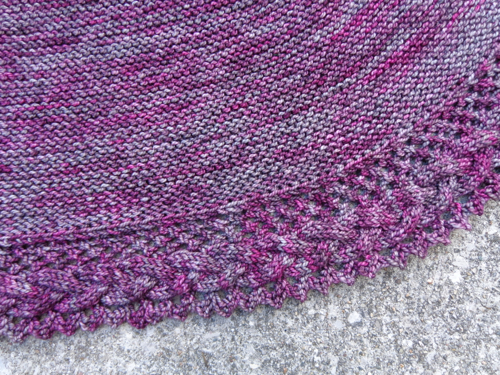
I told you a while back about a shawl I was knitting in gradient colours, following a pattern called BitterBlue. Well, now it’s done and I’m very happy with it. Because I chose not to block it, it’s between a large scarf and a small shawl in size. Blocking would make the points stand out more on the border and would make it larger, but I like how scrunchy the garter stitch is. Plus I just love the colours.

Here it is:Bitterblue by Barbara Benson knit in Unique Sheep Luxe (kit from Earthfaire) by Deborah CookeI did make some changes to the pattern – some planned and some inadvertent user errors – and you can read about those on my Ravelry project page, right here. The base yarn is really nice, and I realized that I have another kit from Earthfaire in the stash that came with the same yarn. I caked up the yarn for that project up, and will tell you about it next week.

What do you think of this one?

French Cancan

This is a small shawl that I just finished. It was all together in a kit that I bought from one of the vendors at the Knitters’ Fair in September, and so pretty that I had to cast on right away (even though I had lots of things on the needles to finish). The pattern is French Cancan, and the yarn is Zen Yarn Garden‘s Serenity DK. Wow, what a scrumptuous, squishy yarn! It’s a merino and cashmere blend, and the colour is simply gorgeous.

Here’s the finished shawl, although I haven’t blocked it.French Cancan by Mademoiselle C knit in Zen Yarn Garden Serenity DK by Deborah CookeI don’t really like blocking garter stitch, but prefer to let it do its own thing. The braid doesn’t really need blocking as the points already sit out nicely, so I’ll probably leave it be.

 Zen Yarn Garden Serenity DK It has a lovely crescent shape and drapes nicely over the shoulders. It takes 2 skeins – one for the garter stitch body and one for the border. I was (of course) worried about running out for the border, but I had some of the second skein left over. The finished shawl is smaller than I’d hoped, more of a scarf than a shawlette. This is funny because I saw a sample when I bought the kit, so my expectations should have been in line with reality. OTOH I’ll probably wear it more than I would have worn a shawl, because it’s just the right size for wrapping around my neck under a winter coat. I suspect I’ll be making another of these – I quite liked the pattern, and the edging pattern was easy to memorize – and maybe I’ll make a larger one.

What do you think?

Icicle Mittens

I subscribe to Rowan‘s knitting magazine, partly because I love the patterns and partly because I love the photography. These “magazines” are really beautiful books.

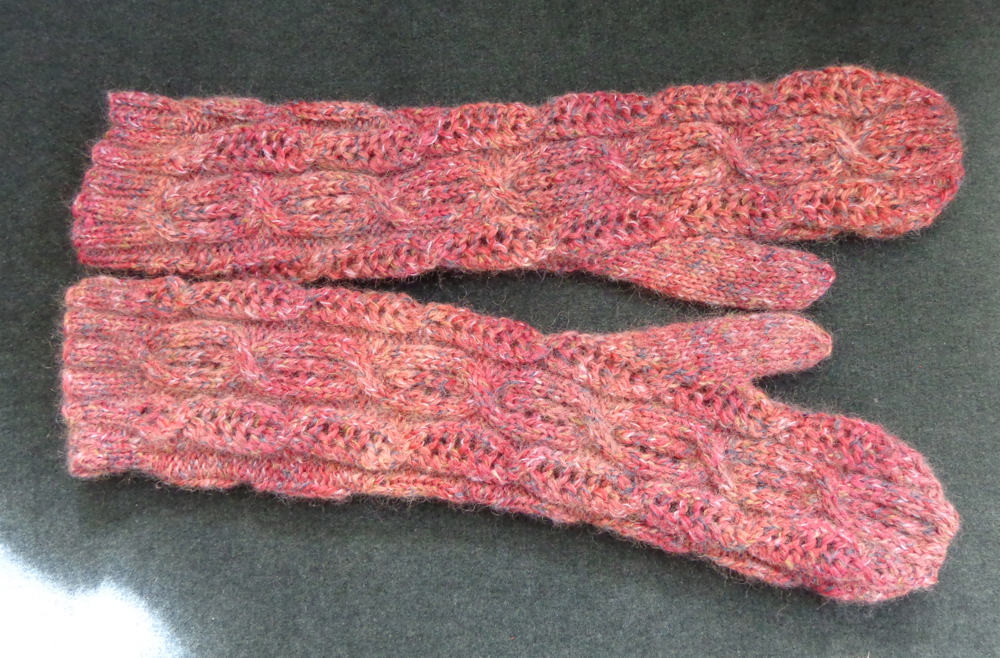
Each year, magazine subscribers receive a gift from Rowan. It’s usually yarn with a pattern, and is a good way to try out their yarns. Usually, I don’t quite knit the pattern supplied with the yarn. Sometimes, it just goes into the stash and doesn’t get knit at all. This year, I decided to just do it, and knit the supplied pattern. Here’s the result:Icicle Mittens by Martin Storey knit in Rowan Colourspun by Deborah CookeThe pattern is called Icicle Mitts (although it’s Ice Cable Mitts in this Ravelry link), and it’s by Martin Storey. The yarn is Colourspun in Jervaulx – you can see that there’s variation in the colour of the yarn as it goes. The colour is fairly true in this picture, and not as vividly red as shown on their website. These were a pretty easy and quick knit, and are surprisingly warm, even with all the holes in the lace. They come up to my elbows, so I’m not sure when I’ll wear them, but they’re pretty. Here’s my Ravelry project page with some notes.

And they’re one project that was finished this winter!

Thrummed Mittens

This past week, I needed some knitting that wouldn’t bend my brain – or require me to follow charts. (It has been a pretty intense week, writing-wise.) So, I put my lace projects away for a few days, and opened a mitten kit I’d bought. My husband is always complaining that mittens aren’t warm enough, because the wind goes through the little holes. When I saw these kits for thrummed mittens, I knew they’d be just the thing.

A thrum is a bit of roving, tucked inside the mitten. It’s actually knit into the mitten, and there are bunches of them in a thrummed mitt, stitched in at intervals. You end up with an insulated mitten. The story is that these kinds of mittens were invented in Newfoundland and Labrador, where people are motivated to keep their hands warm.

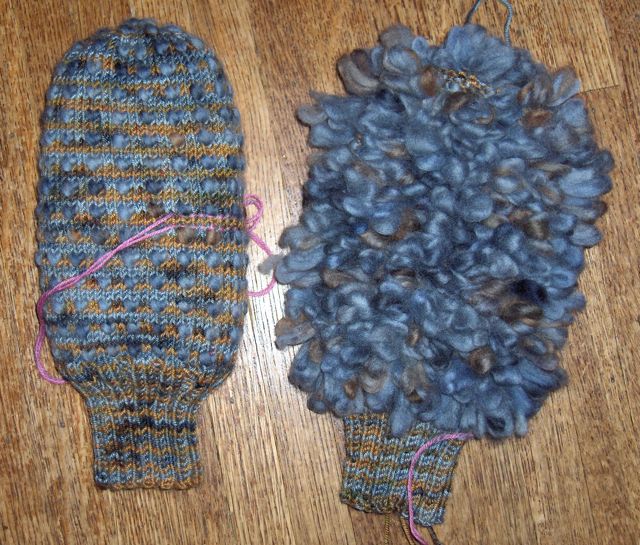
Here are mine – they don’t have thumbs so far, but they have thrums!

Thrummed Mittens in Waterloo Wools (kit) knit by Deborah CookeThe one on the left is right side out, just the way you’d wear it. The one on the right is turned inside out, so you can see the thrums. It looks as if it would be good for dusting, doesn’t it? The pink wool is a lifeline where the thumbs need to be knitted in. The yarn is handpainted and I like how the variegation came out in both the knitted part and the roving inside.

These were fun to knit, once I got the hang of making thrums. I’ve raided my stash for mitten yarn for myself, and I’m going to buy some more roving to make thrummed mittens out of that.

Have you ever knit thrummed mittens? Worn them? Or have you tried something new in your knitting lately?