The Water shawl by Sylvia McFadden has been in my queue for a long time, even though the stitch pattern in the inserts is one that always gives me trouble. (That’s a Ravelry link.)
I made her Waiting for Rain shawl in 2017 in two colours of MadTosh Dandelion. It looks like this:
It’s a very long and skinny shawl, and better if I can wrap it around my neck twice.
Here’s one of the official images for Water:
It’s so pretty!
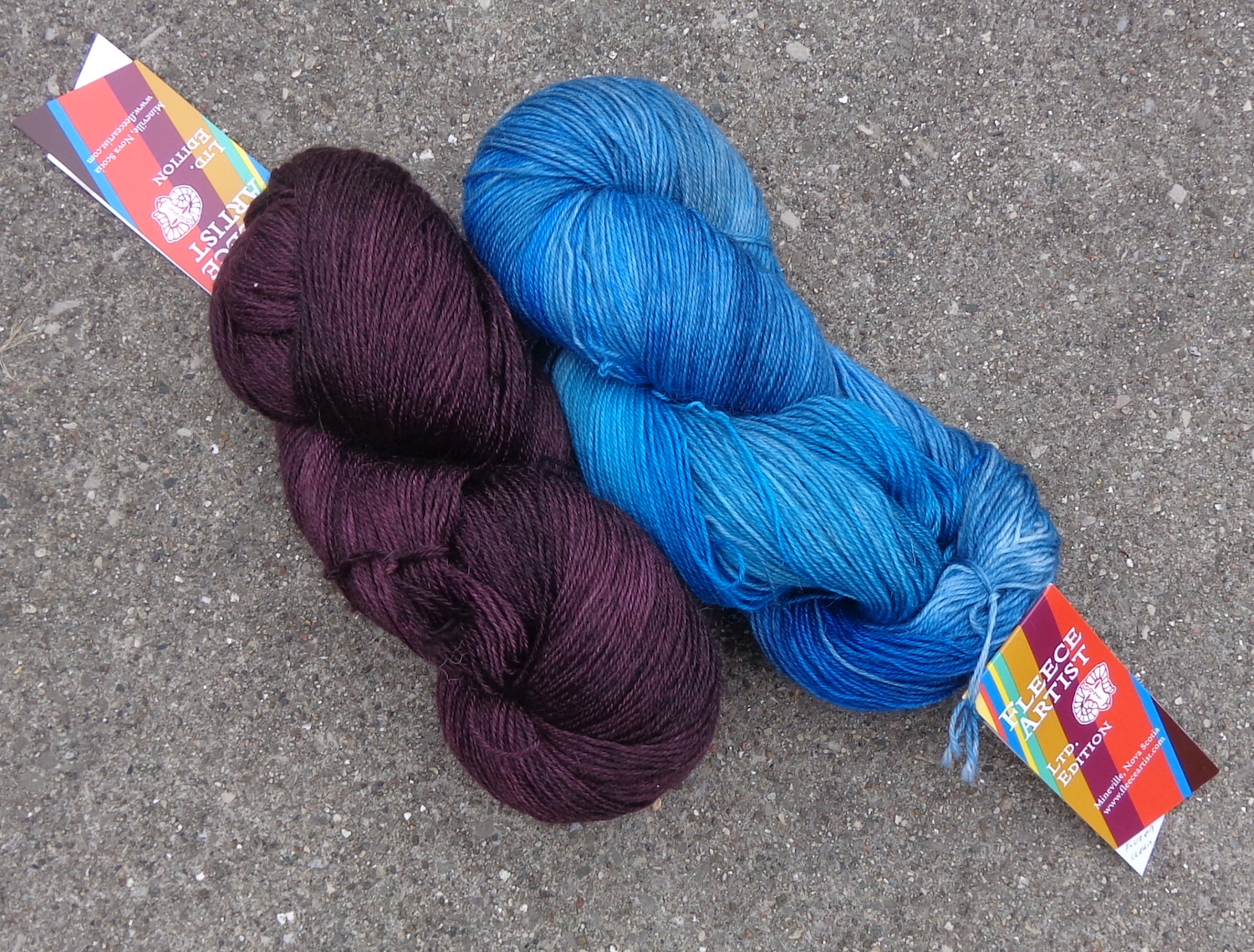
I decided to knit mine in Fleece Artist Anni, a mohair and merino blend. (That’s a Ravelry link.) I’m using the colourway Frozen Ocean, the perfect mix of blues. Here it is in the skein:
I also bought a colourway called Plum. It’s a light fingering weight which makes it a little bit skinny for the pattern’s specifications. As a result, I dropped down to a 3mm needle (instead of the specified 3.75mm) to get a fabric I like. My shawl, of course, is coming out smaller, so I’m thinking I’ll need to do more repeats.
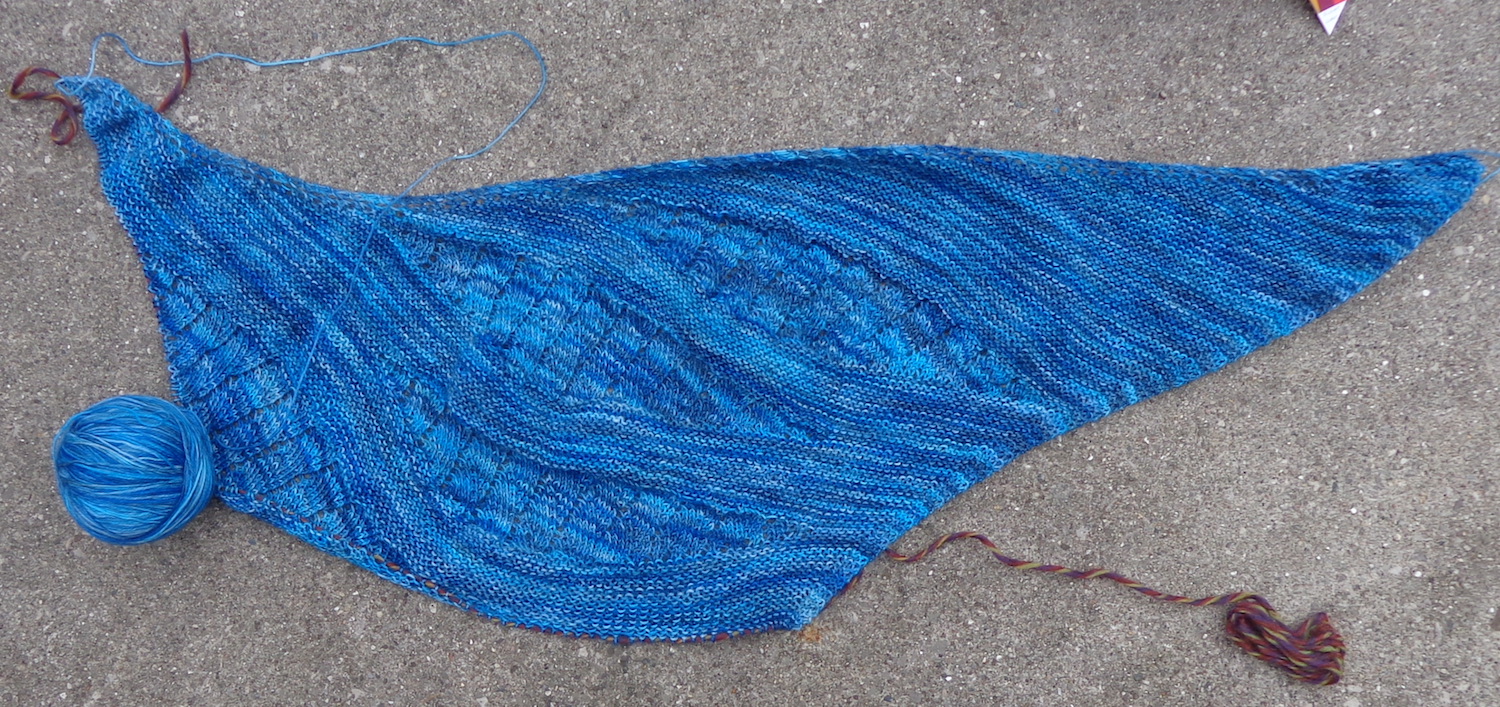
Here it is so far:
The lead edge is at the top and it’s pretty tight at this point. I hope it relaxes when the shawl is blocked.
I think I’m still having trouble with that pattern stitch. It doesn’t look like the photo from the pattern:
But I like it enough to keep going. It’s all twisted stitches so reknitting it isn’t an appealing option. I’ll just continue and be consistent. 🙂
Overall, I’m pleased. It has a wavey watery look to it that I like a lot. Onward!
I apologize for the silence here on the blog. My last post was at the end of January. I had my busiest month ever in February and barely had time to turn around.
We’re having what has to be a false spring here. The chipmunks are awake, the grackles have returned and the snow is gone. The hellebores are lifting their buds from the soil and the daffodils are a few inches high. Even knowing that the snow will probably be back one last time, the sunshine and milder weather is wonderful.
In the midst of all my writing and publishing jobs, I did acquire a new doll. 🙂 Of course, she has a different body sculpt from all the other girls, so I’m doing some sewing for her now.
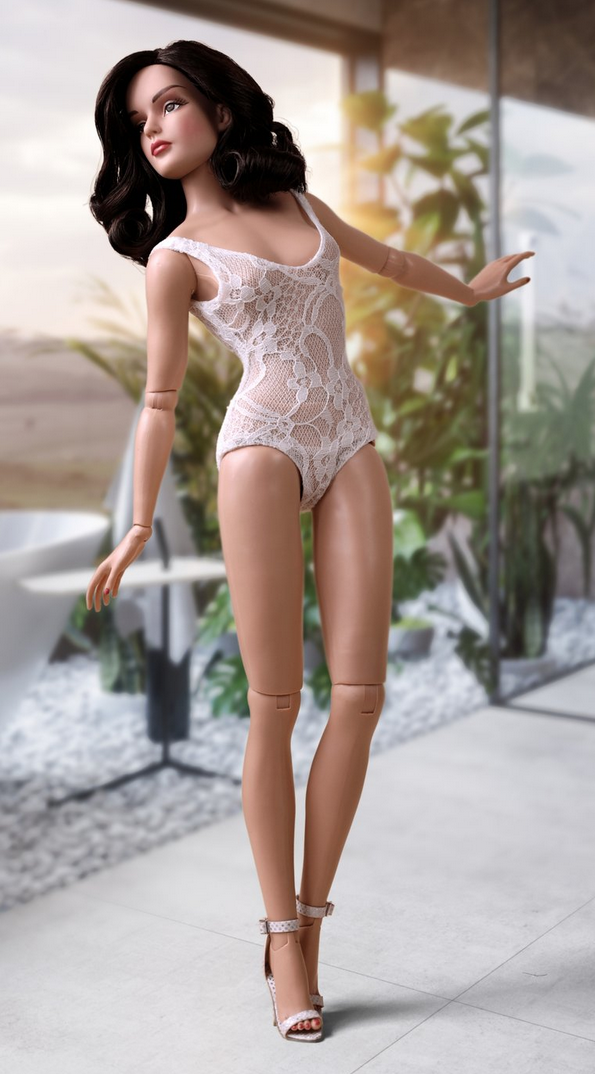
She is Amazing Grace #3, a Robert Tonner doll sold through the Virtual Doll Convention, and the first Tonner doll I’ve bought new. She’s 16.5″ tall with the RTB-101 body sculpt. (They still have Amazing Grace #1, the blonde, in stock. The redhead and brunette are sold out.)
2024 Amazing Grace #3
This doll has a lot more articulation and flexibility than the Tyler Wentworth dolls, even the BW body sculpt (my fave). I have mixed feelings about her proportions. I wanted to adore her as soon as I saw her in real life. I like her, but I don’t love her yet. Maybe that will come in time. (Maybe I should have ordered the redhead….) Her hands and feet seem big to me, but there you go. At any rate, she has clothes in the works, though I’m not sure she’ll have sisters.
I have a few projects to share with you, but need to take some pictures first. We’ll start again tomorrow, with a shawl that’s in progress. I’m also finishing up a sweater for myself, which is reminding me of a sweater I knit years ago. And of course, there are new things for the girls.
I’ll be back tomorrow with knitting pix. I hope February treated you well!
Last summer, I showed you a top-down cardigan I’d designed and knit for the girls in many sizes, from Monster High to Barbie and finally to Tyler.
I’ve also showed you this Tyler-size version. It’s knit of Koigu KPPPM in colourway 513P – KPPPM is 175m for 50g. I knit this one a little longer and also did some back neck shaping to make the front of the collar sit better. It’s modelled by RTW Rouge Sydney Chase, with a matching dress.
For the dress, I used the free pattern T-Shirt Dress for Tonner Dolls by Samira Jessica (that’s a Ravelry link) but divided the color. It’s a top-down knit with cap sleeves that are created when you cast off for the arms. I started with Sugar Bush Drizzle, held double, in Pink Puddle. At the waist, I changed to the Koigu KPPPM. I didn’t rib the skirt (as the pattern instructs) but just knit it in stockinette, then purled one row and cast off purlwise. I thought that might keep it from curling at the hem, but the hem still wants to roll up, even after blocking. I also added a little kickpleat at the center back. 🙂
I quite like this little dress, so I made a variation of it for Tyler in a different colourway. Here are the two of them together – Sydney is still wearing the first one – the light isn’t as good in my office this time of year as it was on the steps in the summer, but you can see the little kick-pleat on Sydney’s dress. Tyler has one, too. (Don’t you love Tyler’s shoes? They’re sling=backs, too. I want a pair myself.)
The top of Tyler’s dress is Sugar Bush Drizzle held double – the colourway is Monsoon Mauve – and the skirt is a fingering weight yarn leftover from a sweater knit for me, The Loving Path Fibre Arts High Twist Sock. It came with a dyed-to-match Kidsilk Haze type yarn, The Loving Path Fibre Arts Aura Lace. I held the two together to knit a Felix for myself. (Those are Ravelry links., the last one going to my project page.) The colourway is Bewitched, a glorious mix of greys and blacks with flicks of purple and green. No photograph can do it justice.
I wasn’t so fussed about the way the top-down cardigan looked on Sydney. It makes her shoulders look quite broad, which wasn’t the feminine look I was after. So, for this one, I knit a side-to-side cardigan in the Aura Lace to coordinate with Tyler’s new dress.
Here’s the sweater laid flat.
It has been blocked but those fronts want to roll. This was a bit of a surprise as I’d thought they might drape – sweaters knit like this in human size have cascading fronts. But on these needles, the fabric ends up too stiff to cascade, thus it rolls.
I knit the sweater from front to front – casting on at the front edge, knitting to the side seam, putting the sleeve stitches on a holder, knitting across the back, putting the other sleeve stitches on a holder, knitting to the front edge and casting off. I then sewed the shoulder seams, picked up the stitches for one sleeve in the round and knit down to the cuff, then repeated for the other sleeve. The only seams were the teeny ones at the shoulder.
Here’s the sweater on Tyler – I had to cover her hands to get it on, btw:
I put a pin in it because I’m still thinking about the fastening, since it won’t cascade. It wants to be a double-breasted sweater jacket. With a pin at the waist, the fronts curl back like lapels. I put a clear snap at one side and three little black beads on the outside. The other side will stay tucked under when it’s closed. It’s a little more formal look than I expected, but this Tyler seems to like it.
I’m going to knit another version, but from cuff to cuff and without the extended fronts. I may pick up a collar afterward, and am thinking of adding a cable, too.
I have a sweater for myself to show you next week. 🙂
Happy new year! I’ve been really busy so far this year and have fallen behind on my weekly posting. There were also a lot of projects not-quite-done, but I’ll try to get back on track now.
First up, some sewing for Tyler.
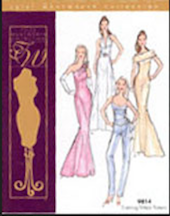
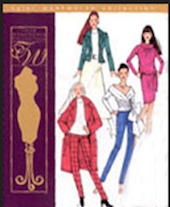
I stumbled across these in my search for sewing patterns for Tyler Wentworth. They were published in 1999, so they would have originally been printed patterns. They’re pretty tough to find in that format now.
This is a picture from the archive at Dreamcastle Dolls, a fantastic resource for identifying and dating Tonner Dolls, accessories etc. These patterns are shown as available accessories from 1999 and these are the three that you can find as digital downloads on Etsy.
From the listing at Dreamcastle, it looks as if there were two more patterns at least in the planning. I’ve never seen these elsewhere, so it’s possible they were never actually published. (??) Too bad – that blazer and raincoat at the far right look just about perfect to me!
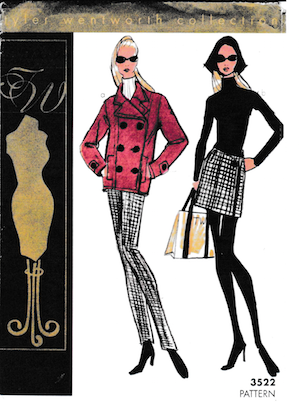
Today, we’ll talk about TW 3522, the Weekend Wardrobe. This pattern includes a peacoat, pants, a turtleneck, skirt, tights, socks and a tote bag. In that way, it reminds me of those Vogue Wardrobe patterns, which I like a lot, the ones that give you enough pieces to make a little capsule wardrobe.
As usual, I printed it out at 100% and sewed a muslin of the coat and the trousers. They fit, so I was off to the races.
I made a few changes right away. This pattern has a 3/8″ seam allowance – usually doll patterns have 1/4″ seam allowances, so that left a lot of extra fabric, especially around the curves. Also, the cutting line is drawn thick, so if you cut on the outside of it, the seam allowance gets close to 1/2″. After a battle royale to get the sleeves inserted in the coat without tucks on the muslin, I decided to trim all seam allowances to 1/4″ on my pattern pieces.
There are a lot of nice touches in these patterns. The trousers have a faux slash pocket at the front. The jacket has welts for faux pockets (the doll can’t put her hand in the pocket like the drawn model…although that could be changed. Hmm.) and there are bands on the sleeve cuffs. (I think they’re drawn backward in the illustration and did mine the other way, so the tab goes over the sleeve.)
Here’s Tyler in the whole ensemble.
I cut the good version of the pants from a very thin pleather in mauve. This came from I Sew For Doll and is the thinnest fake leather I’ve ever found – there are thickness variations between colours and the black is the thinnest of all. Each piece is 30 x 45cm – I used just over half to cut these pants for Tyler. There’s enough left to make pants for Silkstone B and maybe a bit after that. This is #12 purple.
Pleather doesn’t fray since it’s a woven base with the leather surface fused to it, so there’s no need to finish the seam allowances. I used a slightly longer stitch length than I would have otherwise, as the pleather surface tends to drag on both the presser foot and the feed dog plate of the machine – if it drags too much, the fused surface separates from the woven base. (Ask me how I know.) I tried a lighter embroidery foot but it made no difference.
I top-stitched the outside leg seam to keep the seam allowances to one side and to give the pants the look of jeans. The pants have a back opening, which looks fine when the doll is standing, but gapes open when she sits—as I so often do, I added a tab to one trouser back for a little extra discretion. These went together really well and I’m pleased with them. The waistband looks loose, but the pleather doesn’t stretch so the doll can be posed better this way.
The turtleneck is sewn of knit fabric and the entire back opens, closing with snaps. While I understand the practicality of this, it’s not my favorite solution. The one shown here is the third attempt – the other two are in the trash. My concern was finishing the seam allowances as jersey will fray and run. I tried to serge the first version, which is what I would do for a human-sized top like this, but the curves were too tight. I’m just not that accurate on the serger, so that was a fail. I did, though, learn that having the back entirely open meant that the top gaped open below the waist – it’s a knit fabric, after all, so it pulled open over the hips. On subsequent versions, I sewed a partial back seam, from the hem almost to the waist.
Here’s Tyler doing some push-ups so you can see the back modification to the top.
For my second attempt, I used the overlock stitch on my machine, but wasn’t any happier with that result. It was just too bulky. Number three was the winner – I remembered that I fuse knit interfacing to the hems on my t-shirts to stabilize the seam allowance, so I cut fusible knit interfacing into 1/4″ wide strips. I fused it to the seam allowances all around the pieces of the top – not the sleeve cap or armscye, since they need to be stretched to fit – then assembled the top using straight stitches. I stitched a second row 1/8″ inside the sleeve seam, then trimmed it. All the other seam allowances could be trimmed down to 1/8″ because they were fused. This worked brilliantly, and I used clear snaps to close the back of the top.
I extended the top for a dress cut of a different knit fabric, which Sydney is wearing here. I made Sydney a little belt, too. The center back seam on the dress is sewn from hem to the widest point of the hips, but I’m thinking it could have been sewn almost to the waist. Because the fabric stretches, that would still have worked.
The one detail I don’t love is the thickness of the turtleneck, especially where it overlaps to fasten in the back, but I don’t see a way around that. There’s a lot of layered fabric in a small area with the seam allowances. I trimmed them right down, but it’s still bulky.
I cut the peacoat of a fabric that looks like chalk-stripe wool in scale. (It’s probably polyester.) The collar is cut on the bias, so I seamed it at the center back to make it symmetrical at the front, as one would do with a human-size coat. That gave the collar a bit more bulk at the center-back, so I cut the undercollar of lining instead of the main fabric. This coat is lined with Bemberg rayon, which I think is perfect for the girls.
I also added a half-belt at the back to draw in the coat a bit. This makes an interesting problem since doll buttons are usually sold in packs of ten – I had to use only six on the front of the coat instead of the eight specified, because there are two on the cuff and I added two to the belt.
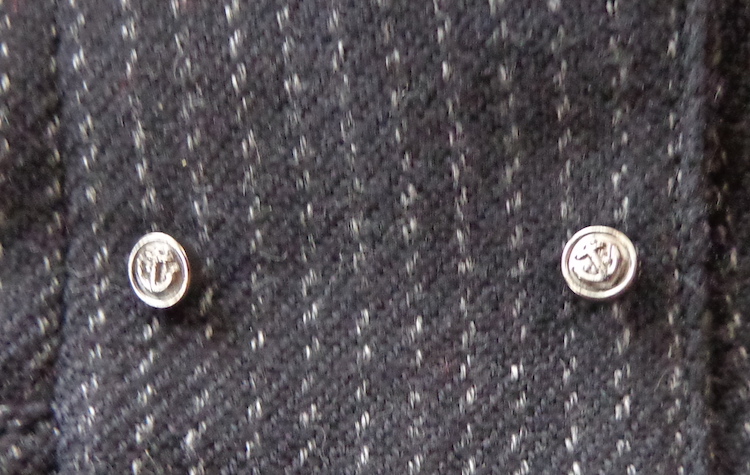
The buttons are adorable, IMO. They’re 6mm buttons with little anchors ordered from I Sew for Doll.
The tote bag is like a big LL Bean tote. I cut this one of grey pleather and lined it with a coordinating cotton print. (The pattern doesn’t include a lining, but it’s simple to add.) I even thought about adding a zipper since I dislike open totes when travelling, but gave up that idea (for the moment). The handles are satin ribbon, which snags a bit, and there are four beads on the bottom for feet. I added a charm, just for fun.
Finally, I knit a coordinating scarf in Kidsilk Haze Stripe, and Tyler’s ready for her weekend away. I still need to make the skirt.
I really like this pattern and am sewing some different colour combinations for the other girls. Weekend trips are more fun with friends!
I’ve been sewing clothes for my dolls again recently – I’ll show you when something is done. There’s a lot of handwork on this particular couturier gown! – and went looking for a video I watched a long while ago. I found a trove of videos made by Mattel for Silkstone Barbies which show fantastic dioramas.
This one from 2012 is called Behind the Scenes of the Atelier. It features the five new dolls, but also a really terrific diorama. It’s like a visit to a Paris couturier in the 1950’s. This is a longer video with some behind-the-scenes commentary from the designer, Robert Best.
The 2015 video – again showcasing five new dolls – takes us to a runway show at a Paris couturier. There’s also a quick visit to the atelier again. I love the colour choices, how the backgrounds are all black and cream (hello, Coco Chanel) so that the dolls really contrast.
There are six dolls showcased in the 2013 video (there was a new Ken that year plus five Barbies) on a ship similar to the Titanic. This one has a fashion editor voiceover and is sepia-toned.
The 2011 video showcases five dolls, and the diorama setting is a train station – the train being the Trans Siberian Express. it reminds me of the opening scenes of the movie Murder on the Orient Express, the one with Michael York.
This video from 2014 spotlights one doll (Fiorella) in an Italian town. I like how it starts in black-and-white then changes to colour.
And this is the one I was looking for in the first place! It’s from 2016 and is the reason my girls now have a Vespa. (Who knew such a thing existed in 1/6 scale?) Again, there are five new dolls, photographed this time in a photographer’s loft – but check out the Paris streetscape! That’s a diorama. I would love the opportunity to explore it more closely.
I went hunting about information about the artist(s) who built the dioramas or any sites that show the dioramas in more detail. There is this video showing the artists building the Russian train diarama, which is huge!
I also discovered that the Silkstone Barbie Fashion Model Collection is coming back, according to Robert Best, which is awesome news. I can’t wait to see what he designs for the girls next.
There were four dolls in 2019, of which I bought only Best in Black, and three in 2020. I bought Best to a Tea. The Gala’s Best is usually listed as the last Silkstone Barbie, but she won’t be any longer. These two are also the only two articulated Silkstones in my collection – this body sculpt is thinner than the original Silkstone doll.
2019 Barbie Silkstone Best in Black
2020 Barbie Silkstone Best to a Tea
2020 Barbie Silkstone The Gala’s Best
Here’s a reference website showing an inventory of all Barbies. FYI, clicking on the images takes you to eBay instead of a larger version of the image. Here’s the Silkstone page.
I should have a finished ball gown to show you soon. 🙂
There’s an unusual confluence of variables in my life right now, which means I’m starting both new writing projects and new knitting projects. It’s amazing to me how similar the two situations are. It’s not just about choosing the project—the bigger issue is getting the combination of variables right. Possibilities abound! I need to get some of them settled so I can start creating effectively.
Let’s talk about the knitting project here.
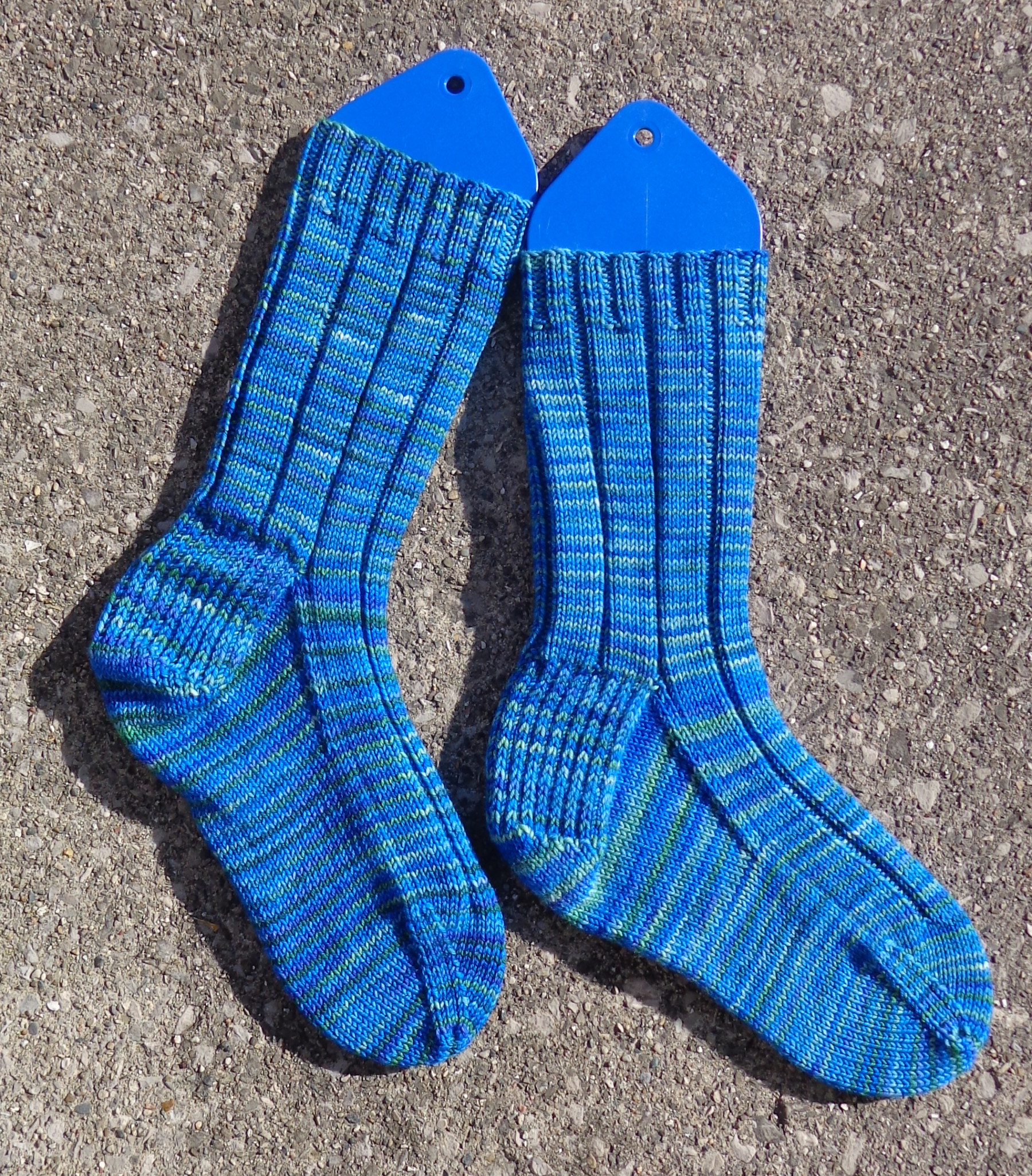
First off, I finished another pair of socks. These are knit in my usual pattern, the one I have memorized, in Fleece Artist Kiki. (That’s a Ravelry link.)
The tag says the colourway is Pansy but I think it’s really Nova Scotia (there’s no purple in this skein). I was excited to get this yarn on sale and realized later that it’s discontinued. It’s quite a thick sock yarn, so I went down to 64 stitches from my usual 72. I knit another pair of socks in another colourway of Kiki and showed them to you earlier this year. It’s a nice squishy yarn and good to have another pair of socks done for the winter. (I may have to cast on another pair of socks, just to have an anchoring project in my currently chaotic world.)
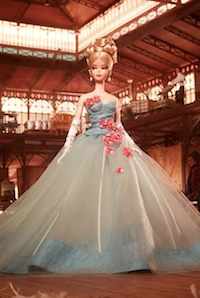
I also cast on a new shawl. Water is a pattern I’ve wanted to knit for a while (that’s a Ravelry link) and I finally found the perfect yarn for it. The designer is Sylvia McFadden and one of the official pix of the shawl is at right. (Click through on the Ravelry link to see more.) You can see that it’s in garter stitch with lovely wavey insertions.
In case you don’t feel clicky, here’s my Waiting for Rain shawl.
In that pattern, the insertions were of a different lace pattern and they were knit in a contrasting color. There was a lot of stripe-y goodness in that design.
I’m knitting my Water shawl with Fleece Artist Anni (that’s a Ravelry link), a limited edtiion yarn that is also discontinued. It’s fingering weight and a blend of merino and mohair. It’s a bit more itchy for me than anticipated, so is a better choice for a shawl than a sweater. The colorway is called Frozen Ocean, which seems very apt.
Here’s how it looks so far:
The color is really not true in this image. It looks very green here, but is actually turquoise. I made good progress but am now at the first insertion and need to pay attention to the lace stitch. This bit isn’t TV knitting. 🙂
Which meant (inevitably) that I was casting around for a TV knit, since we’re binging mystery series these evenings. I’d been thinking of making an asymmetical sweater for the girls, which reminded me of this pattern. Portia is another sweater I always intended to make. (Yes, that’s a Ravelry link.) It was designed by Norah Gaughran for Berroco and has such an interesting design.
I actually have the specified yarn, Berroco Peruvia, but don’t have quite enough of it. I could make the smallest size, but that seems overly ambitious. It’s unlikely that I’ll lose a bunch of weight, sitting on the couch knitting. (That’s a Ravelry link because yes, Peruvia is discontinued.)
So I ended up auditioning yarn candidates from my stash – which is awfully similar to auditioning opening scenes for a book, my daytime task this week. The first candidate was some Rowan Felted Tweed Aran, which is exactly the same weight as Peruvia. (That’s a Rowan link as my colorway is discontinued but not the yarn itself.) Mine is a rosy colour, though, and I’m not sure I’ll wear a sweater coat in that shade. It’s a lot of pink. Beautiful yarn, though. I need to figure out what to do with it now.
Next up, some Debbie Bliss Donegal Luxury Tweed Aran in a scarlet shade. (Another discontinued yarn; another Ravelry link.) Very pretty but I thought the yarn looked too thin when knit to gauge. I could use smaller needles, but then the dimensions of the garment would be changed. Given the design of this sweater, it’s tough to anticipate how to adjust the fit.
Next candidate: Noro Nadeshiko. This is lovely squishy yarn, an angora, silk and mohair blend. It’s a little heavier than Peruvia but I really like the firmer fabric when knit to gauge. I had bought this to make another sweater coat, this one from the original Noro magazine, designed by Mari Tobita, at left. It’s called #18 Shawl Collared Coat. (Yes, more Ravelry links. The problem with a well-aged stash is that everything is discontinued.) This coat has really pretty shaping in the back.
The colourway I have is less stripey than the one in this picture. It’s mostly shades of grey with a little bit of brick-red and a bit of white. I’m concerned that it might look too stripe-y in Portia, but am giving it a try. Here’s what I have so far:
This is the centre-back braid, knit down from the back yoke, so it’s going to taper from here to that lowest point. The red looks more emphatic in the photo than in real life.
After this triangular piece is knit, you then pick up the side panels along the edges and knit toward the front. If I continue with the Noro, I’ll have to make sure that the stripes are symmetrical. I’m just too matchy-matchy to be happy with the result otherwise. I’ll see how it looks when the triangle is done.
With any luck, I’ll soon have both a knitting project and a writing project launched!
My post is a bit late today, because it took me a bit to get all the pictures taken and edited this morning! But here we go.
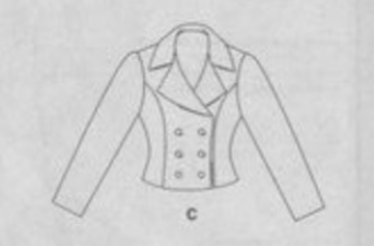
McCalls 3701 is another out-of-print pattern for Tyler Wentworth and other 16″ dolls. It includes a straight skirt, a jacket and a blouse that’s actually a bodysuit.
Here’s the line drawing for the jacket, which is the part that interests me.
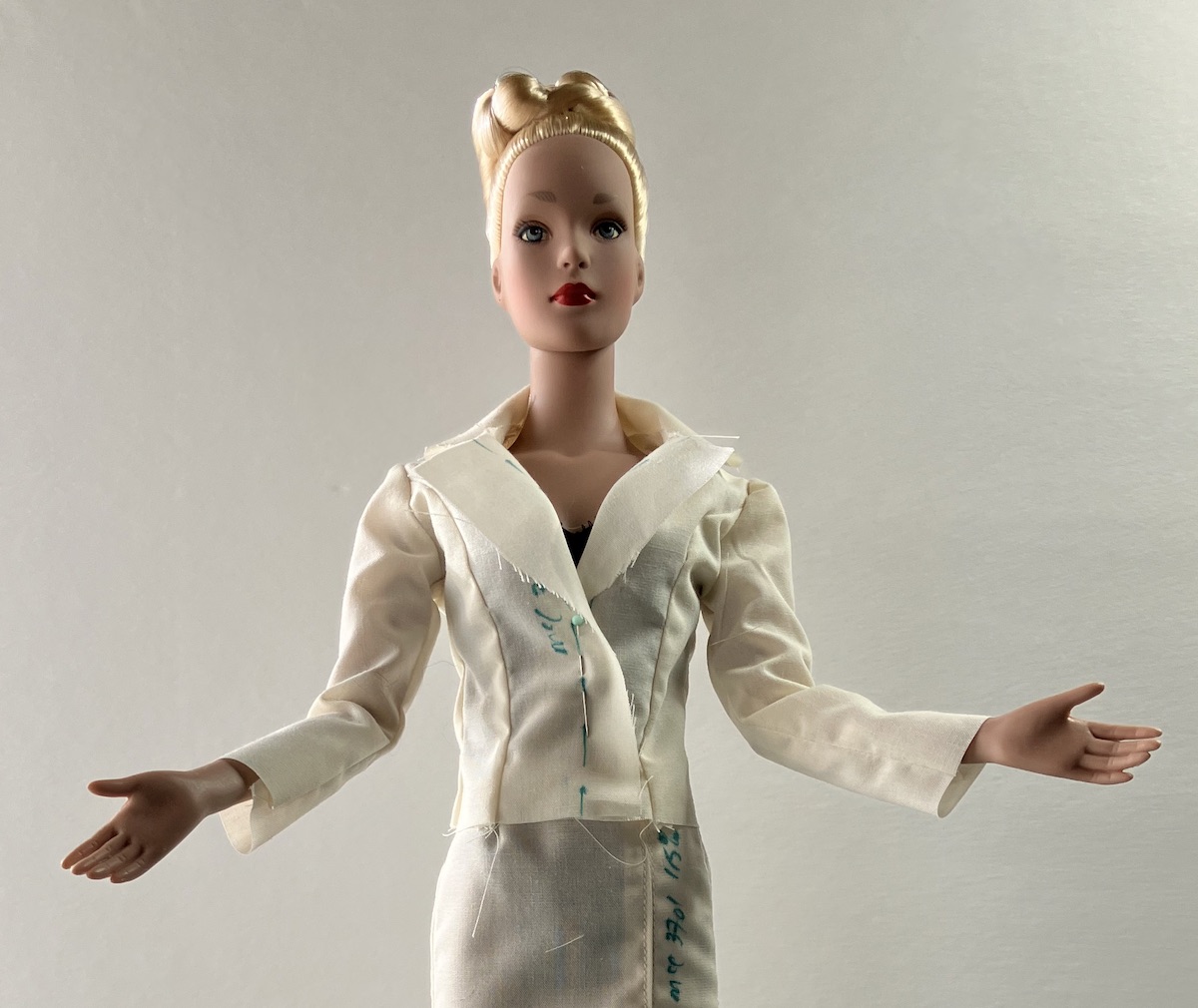
But argh. It’s another digital download without a scale for reference. This time, I had a plan. I printed, cut and quickly assembled a test jacket from scrap fabric. Actually, I ended up doing this three times – printing the pattern at 100%, at 110% and at 115%. I sewed the samples out of plain cotton and cut off the hems. I also left off the collar since it was the main proportions I wanted to get right.
100%
110%
115%
You can see that the 100% version is just too small. The 110% one is a better fit, even though the shoulders are starting to get wide. (Maybe that was a 90’s thing.) The sleeves are still too short and the center front line can’t be brought together over the bust. At 115%, we have a much better fit over the bust – the CF can be brought together until just below the bust, which might be a design choice. The sleeves are still too short. I sewed a mock-up of the skirt at 115%, which she’s wearing in all three images. It was snug through the hips but otherwise fit okay, so I added 1/8″ to the side seams of each front and back piece for the final garment.
You might remember that in McCalls 3845, the sleeves were too short, too, AND they were too short on the DBDoll raincoat as well. This sent me down a rabbit hole, trying to establish whether the original dolls had slightly shorter arms. These are older patterns, after all, and show the original straight arm (SA) doll modelling the garments. Those dolls did have shorter arms, but not enough to explain this difference. The patterns were 1/4″ too short and the difference between the straight arm Tyler body sculpt (SA) and the bendable elbow Tyler body sculpt (BA) is maybe 1/8″. The bendable wrist Tyler body sculpt (BW) has arms the same length as the BA type. That ball joint at the elbow adds a bit of length but not enough to explain the issue with the patterns.
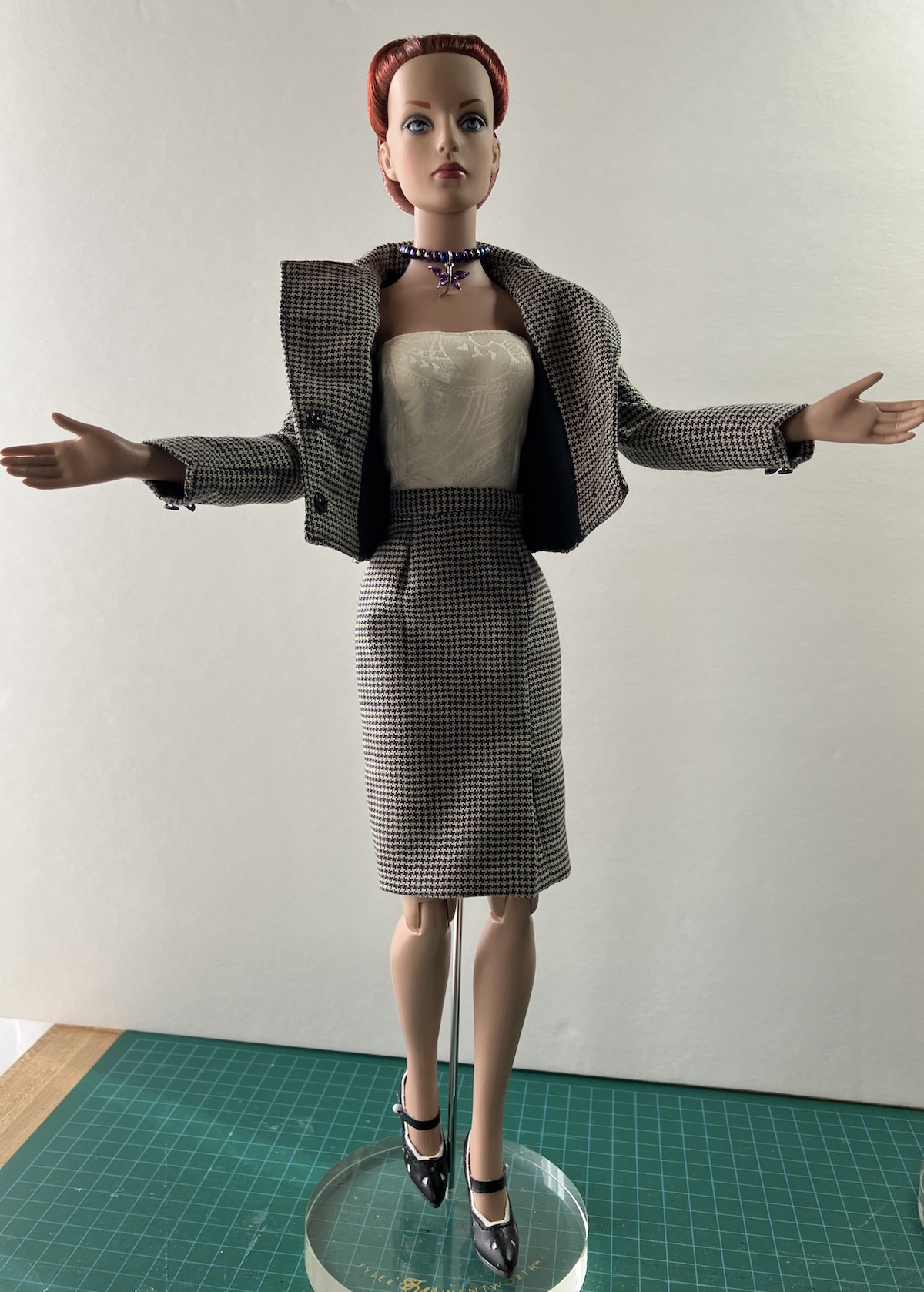
I still had to manually lengthen the sleeves and went with 3/8″. Here’s Sydney in the final suit:
There are buttons on the cuffs, too, which makes me happy. (I’m even happier that I had buttons of this design and colour in two sizes.)
You can see that it still tugs a little bit over the bust – that snap is visible. I think turn-of-cloth might have emphasized this more over the muslin, as the check fabric is thicker than the cotton used for the muslin—plus this final jacket is lined as well.
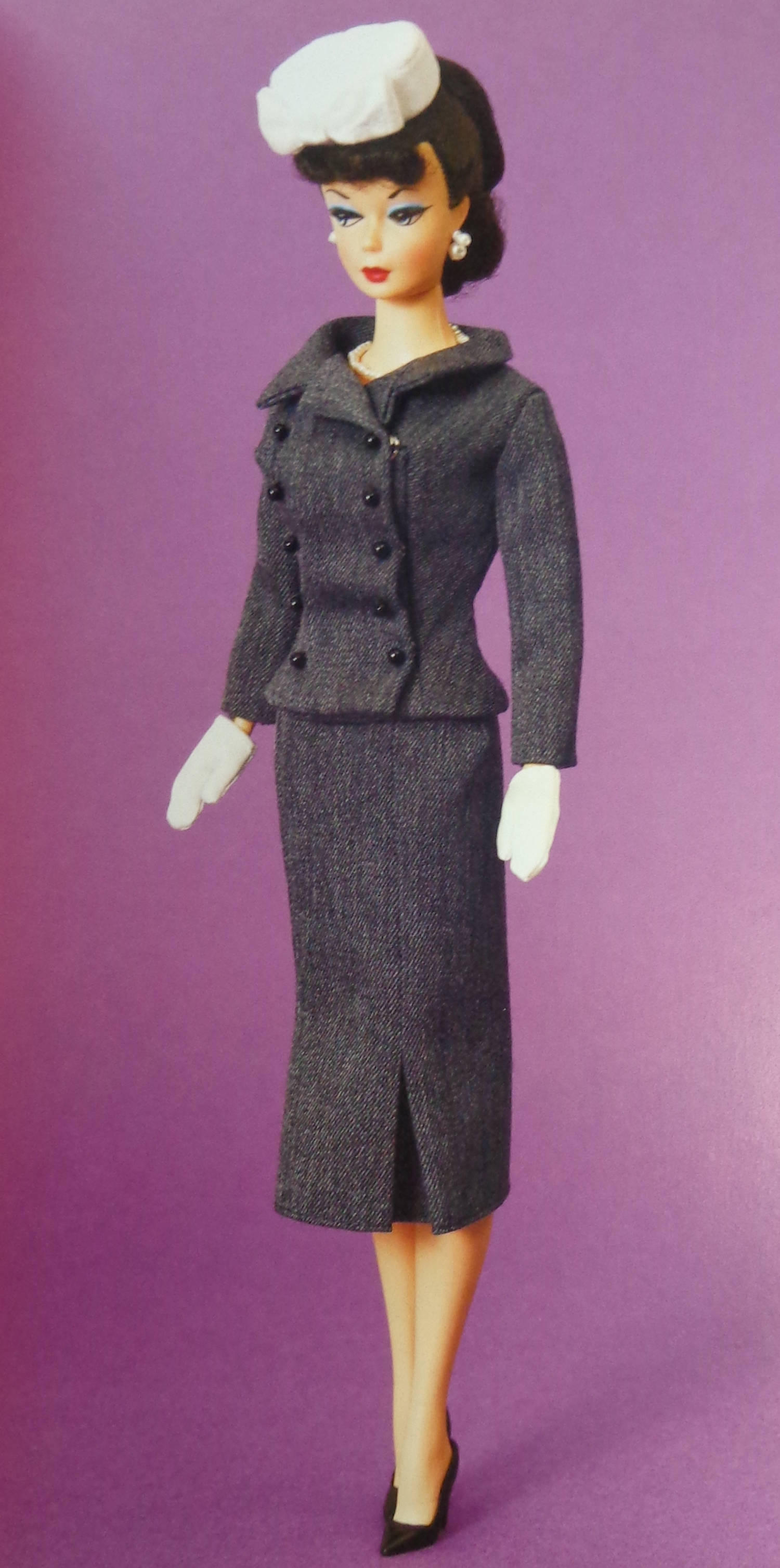
The skirt gave me some issues, the same issues as with this skirt for B, with a similar pleat design. The picture on the left is my version on B: the one on the right is the picture from the book. (Here’s the blog post about this suit for B.)
Double Breasted Suit
The pleat in the skirt is a reverse box pleat (on the suit for B, there are two of them), so if you line the skirt and sew the hem, then the center back seam, the lining and fabric will be together for the pleat. This is fine, but both of these patterns want the waistline turned into the inside – you can’t do that if the pleat is sewn from the top of the pleat to the waist. Hmm.
There are several possible solutions. The easiest one would be NOT to line the skirt. The second is to add a waistband to the skirt, which encases the seam allowances at the waist from both the lining and the main fabric. That’s what I did on Sydney’s suit. I cut a piece of fabric 1″ wide and 7″ long, then trimmed the ends. I think it’s a bit wide, finishing out at 1/4″, so would cut it at 7/8″ if I used this solution again.
The third option, which I thought of later, would be to add a facing at the waist, probably cut on the bias of the main fabric, that would be sewn to the top then turned to the inside. I’d have to sew the bottom edge of it to the lining by hand, but it would also make a nice edge and would retain the waistband-less design of the skirt. Next time. 🙂
You can also see a peek of cream silk in the first photo of Sydney and have a better view of the bodice in this one. I decided that she needed something under the jacket, so made a strapless blouse using the basic bodice pattern from the Fashion Doll Clothing book. I cut it of silk, then lined it – it has a pair of snaps on the back. It also fit perfectly the first time, which was awesome. Next time, I’ll make it a smidge longer. Ah, you can see the cuff buttons on this one!
It’s funny that I chose the same black and cream check for both double-breasted suits, but I do like how it finishes out with the black buttons. Sydney also has the perfect shoes. The one for Sydney has a better back closure on the skirt, too, because I added a tab of fabric to one back piece. Hmm. Methinks Sydney needs some black stockings. All the ones I have are nude (although she’s not wearing any in these pics.)
Phew. I have some silk chosen to make this suit again and will show you when that’s done. In the meantime, that bodice pattern – which has princess seams – has me thinking about ballgowns…
Remember this sewing pattern for Tyler Wentworth dolls, McCalls 3845? Well, I didn’t just make the purse from it. 🙂
The outfit on the left is a sleeveless dress with a jacket – they show the jacket with fur or feather trim. I used velveteen on mine.
Here’s the finished dinner suit. Red crepe, lined with black polyester with red polka dots. The collar and cuffs are black velveteen and I used two black rose beads on the fronts. I like a black purse with this one.
There were issues with this little suit. The first jacket I made was too small—the sleeves were too short and the fronts didn’t meet. I redrafted the pattern with longer sleeves and bigger front pieces so that they met up at the center-front. Since the pattern was a digital download, it’s possible that I didn’t print the pattern at the right % size originally. This is a tricky bit with digital downloads that don’t have any scale on them. I printed the pattern at 100% but that wasn’t right. At any rate, it’s mostly right now. (The sleeves are a bit too wide in this version.)
The red crepe wasn’t the best choice of fabric, since it’s pretty thick. That’s why the bolero doesn’t close when she has the dress on. It’s just bulky. (Without the dress, the jacket closes, but it’s a bit of a bold look.) The fabric was also stretchy in the crosswise direction, which made accuracy a challenge. I thought the fabric was the reason why the bodice didn’t fit as well as I would have liked. It’s just too wide at the top.
But no. I realized that there is a teensy mistake in the pattern.
This is the center piece for the bodice front. Usually, the printing on the pattern indicates the top and bottom by its direction – here, it looks like the larger edge should be the top. But the bodice doesn’t fit well into the top of the skirt this way, and the top gapes open on the final dress as you can see on the red dress above. On a whim, I turned it upside down for my second version of the dress and voilà! It’s PERFECT. So, the label on the pattern piece is upside down. Now, it has my handwritten labels on it. 🙂
Here’s the variation of the dress made by flaring the skirt, with the middle bodice piece the other way around. I cut it of the polka-dot polyester, lined with solid black. The plan was to give our girl an easy change of look with the jacket when she’s travelling. (You know how keen dolls are about globetrotting…)
Here’s the finished dress.
It fits MUCH better at the top front. The ruffle at the hem of the flared skirt is actually lingerie elastic trim, so it stretches, but it’s the perfect scale and it won’t be able to stretch now.
Of course, she needs a different purse for this outfit and I like the red one. 🙂
I also added a zipper to the back instead of the dress closing with snaps, which was bulky in the red version. There were a few tweaks to making that change – because the original closure with the snaps overlaps in the back, while the zipper means the back pieces just meet but don’t overlap. We’ll talk about that in a minute.
I ordered doll-sized invisible zippers online. The zipper has to be long enough to open over the widest point of the doll’s body – that’s her bum. 🙂 For a strapless dress for Tyler, I use a 10cm zipper. If the zipper went all the way to the nape, I’d use a 12cm one. Doll zippers tend to not have stops at the top – or maybe it’s just the ones I have – so it’s easy to zip them up with enthusiasm and end up with three pieces that won’t go back together. The first thing I do now before using a doll zipper is overcast a few stitches at the top of the teeth on each tape.
Because the pieces overlap in the original design, the seam allowances need to be reduced for the zipper. If the center back was marked on the pattern, this would be easy—you’d just make a new seam allowance from that. But the CB isn’t marked on this pattern and I didn’t want to guess since tiny increments can make a big difference with doll clothes. There’s a kind of a tab on the right back so I removed that, making both backs the same (mirror images of each other).
For the zippered back, I also changed the order of construction. The pattern instructions are to sew together all of the bodice pieces, then all of the skirt pieces, then sew them together at the waist and end up having only the center back seam open. Instead, I sewed all the front bodice pieces, then the front skirt, then sewed them together to complete the front. I sewed both back bodice pieces to their respective back skirt pieces, then inserted the zipper. It’s an invisible zipper, so it’s easier to set in when the back is flat. Once the zipper was in, I basted the side seams and tried the dress on the doll. I had to take a little bit extra out of the back to make it fit properly (that would be the seam allowance that I hadn’t already reduced), so I took it out of the side seams.
Here are the backs of the two dresses:
And yes, the red one should lap the other way. I realized I’d done it backwards after I’d wrestled the base of the slit into place (to minimize the gap). In fact, this exercise is what pushed me to trying the zipper – getting the overlap in place was frustrating and I don’t love the result. If the doll bends at the waist, the back gapes open, and there’s a lot of bulk at the center back with all those layers. The metal zipper stop on the black dress is still visible, a sign that I need to refine my invisible zipper installation technique.
As far as using the jacket with the flared dress, I ended up with a small problem – the red purse is an orange-red and the jacket is a cherry red. They don’t go together. (Fortunately, I had shoes in the right shade of red to match the purse!) I’ll cut out another jacket to go with the second dress. I finally found some fake fur that has a short enough nap for the dolls, so I’ll use that in black for the collar and cuffs, but am waffling about the fabric. Should it be solid black lined with polka dots, or polka dots lined with black? The polka dot polyester just feels a bit light for a jacket to me. Hmm.
A well-dressed doll needs accessories, but those little finishing details add up. I’ve yet to figure out what to do about shoes for my dolls – other than buying them for $$$ – but something fun happened recently with purses.
I bought a digital edition of this sewing pattern for Tyler Wentworth dolls, McCalls 3845. It’s out of print – I think it’s about 20 years old – so you can hunt down an old print copy or buy a digital download on Etsy which is (alas) unlikely to be a licensed and legal copy. I wish rights holders would make this older content available again but that seems unlikely to happen soon.
You can see that both dolls are carrying purses. You can’t really see the purse carried by the doll on the left in the dinner suit, beyond it being more square than the drawstring one.
Well, lo and behold, it’s kind of a Birkin bag.
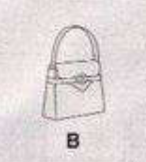
Here’s the line drawing from the pattern instructions:
Hmm. You cut the bag from faux leather and add a buckle to the strap across the front that holds the flap closed.
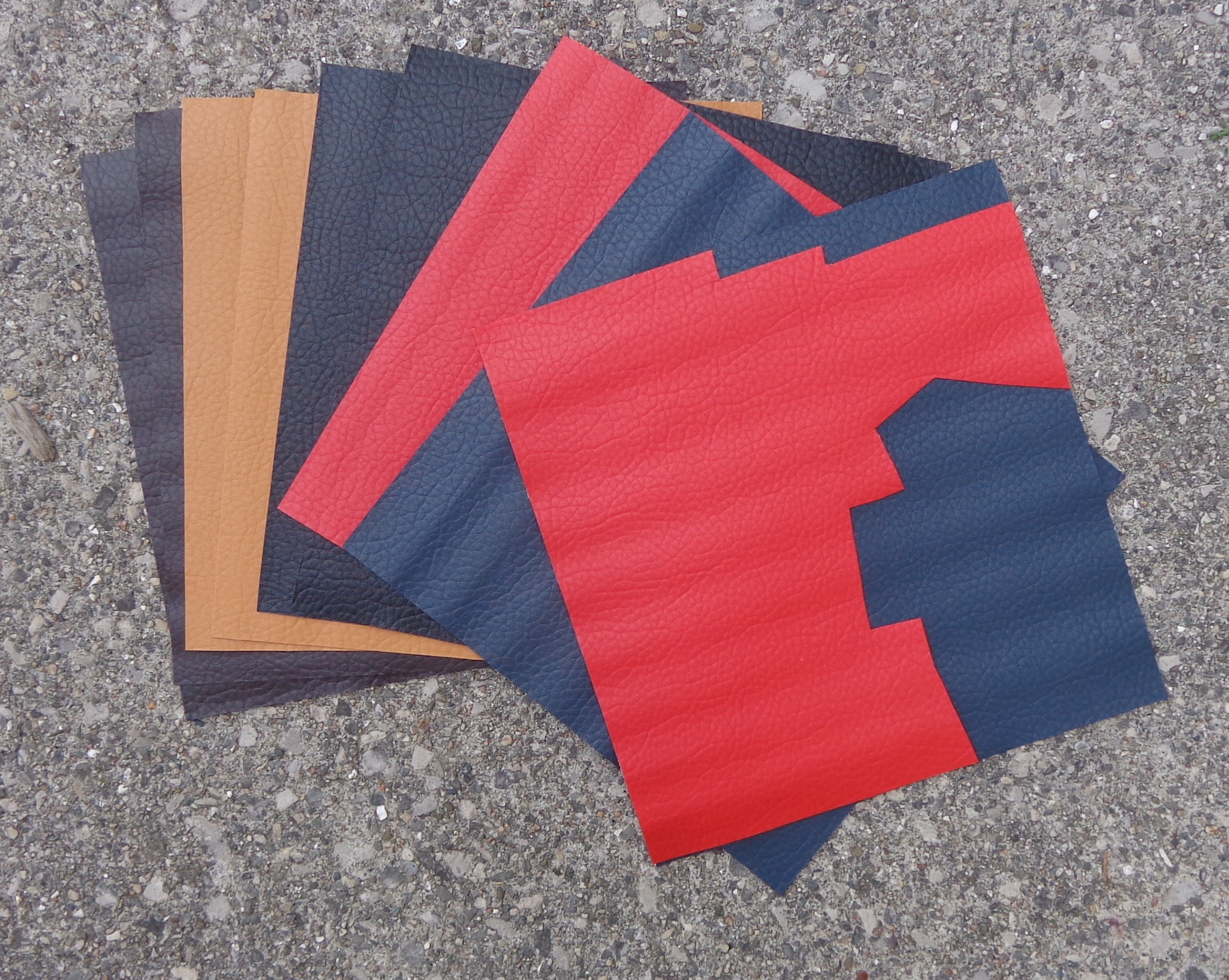
I cut one from a square of fake leather. These came in a package at the dollar store – there are two each of five colours (black, brown, navy, caramel and red) for a couple of dollars. The squares are about 7.5″ x 7.5″. (20cm by 20cm) It took less than half of one to cut out a purse – you can see that I could cut at least one more from the same square. I used a rotary cutter and ruler, btw, to get the straps perfectly straight.
And here’s my first purse:
I think it’s adorable!
It was careful sewing – I slowed down the machine speed – but not that difficult. The toughest part was the corner of each side at the bottom front. I backtacked each stitching line, but I think next time, I’ll pull the theads to the inside of the bag and knot them.
The buckle is one I bought online from China so it’s probably the most expensive element. I ordered 40 more in mixed colours on Etsy for about $16 CA including shipping ($11CA plus $5 for shipping), since I’m using a lot of them. That makes them about 40 cents each. Individually, they’re more like 70 cents each plus shipping. It’s a necessary touch, though.
I’m thinking also that I could use a Sharpie to color the white edges that peek out, or even do one with a contrasting color. Hmm. I put a rolled Kleenex tissue in the bottom to support the shape. Overall, I’m pretty pleased by it.
I’ll be making some more purses from the squares with this pattern since those buckles have arrived. The girls need brown and caramel purses and I’ll try the navy with contrast cream stitching, too.
Next week, I’ll show you the little dinner suit finished. 🙂
My TV knitting has been an entrelac scarf in Noro Silver Thaw. I found three skeins of this yarn at the thrift store, and couldn’t just leave it there. (It’s Noro!)
Noro Silver Thaw is an aran-weight and a single ply yarn with a gratual colour change over the length of the yarn. (That’s a Ravelry link.) It’s also discontinued. This is colourway #11 which is not as bright as many Noro colourways. The Mister really liked it.
I’ve wanted to knit an entrelac scarf for a while. I found this free pattern on Ravelry. I used a 4.5MM needle instead of the 5mm recommended because I preferred the look of the finished fabric.
Here’s the scarf:
The finished size is 67″ x 9″ unblocked. I kind of like the texture of it as it is and don’t plan to block it. (It would get flatter, wider and longer if I did.)
This is great for a long thinner scarf and the Mister is happy with it. If I made one for myself, I’d add another square to the width of the scarf and probably make it shorter. I tend to fold the ends of my scarf over my chest beneath my coat.




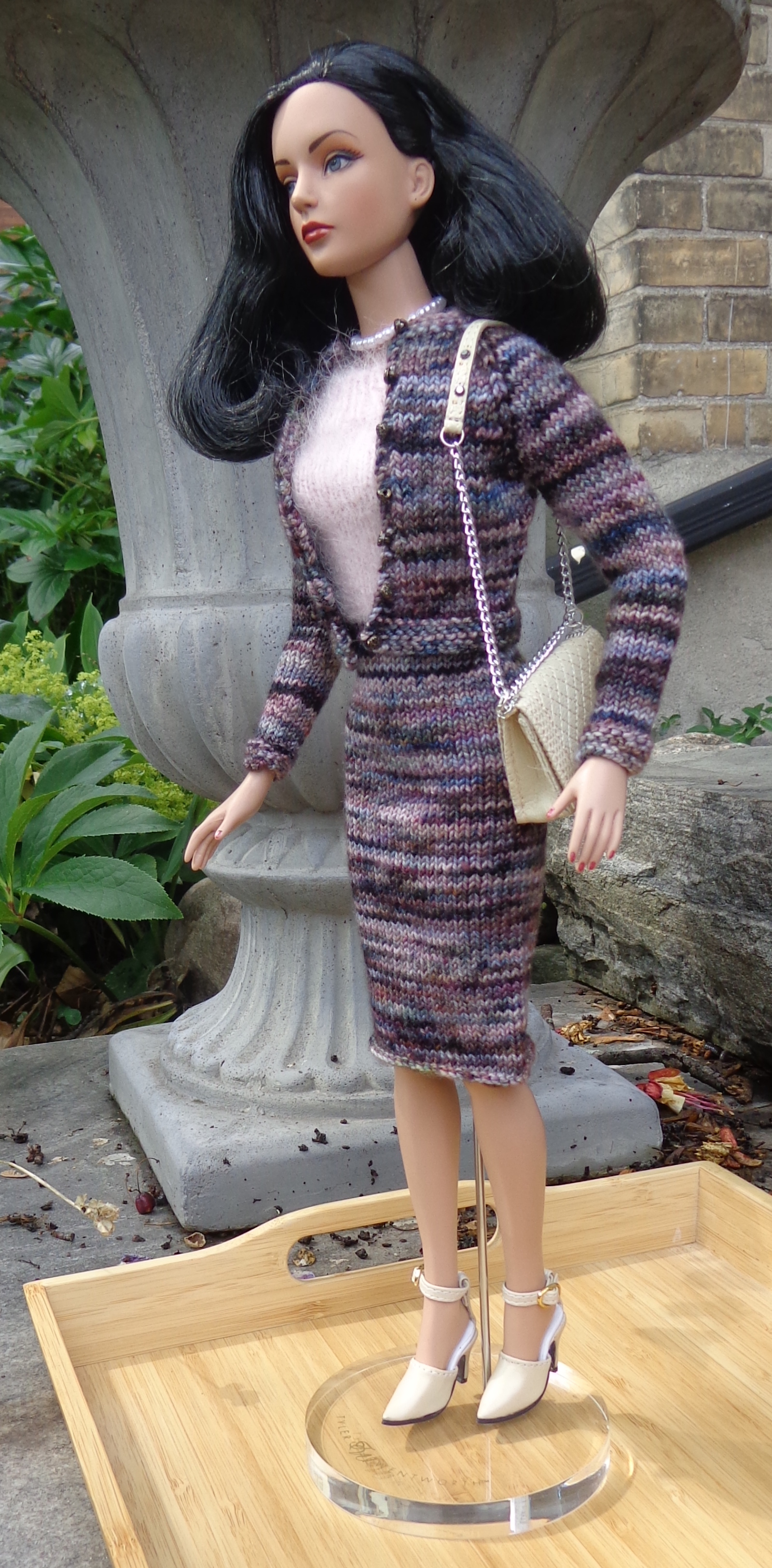
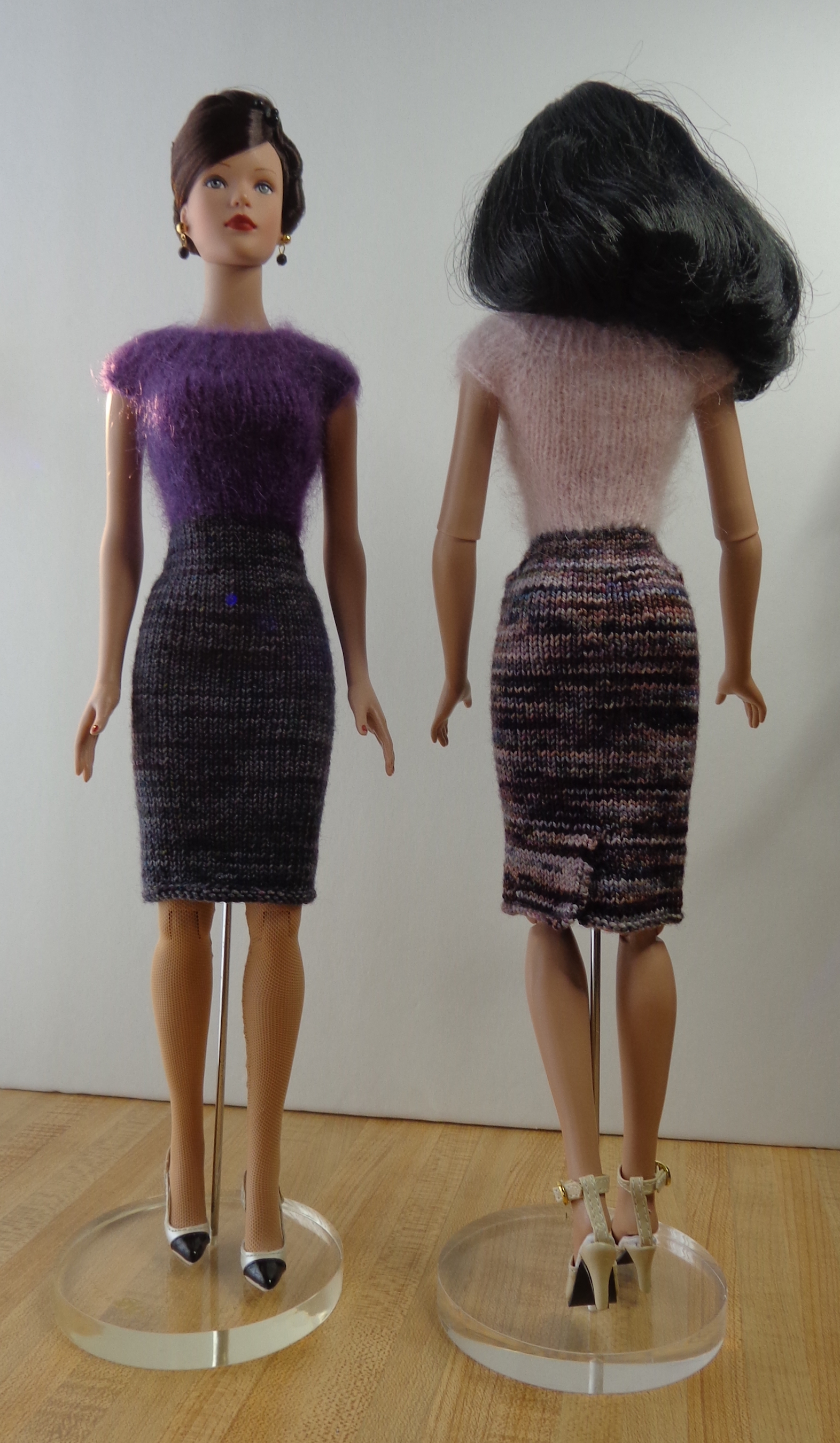
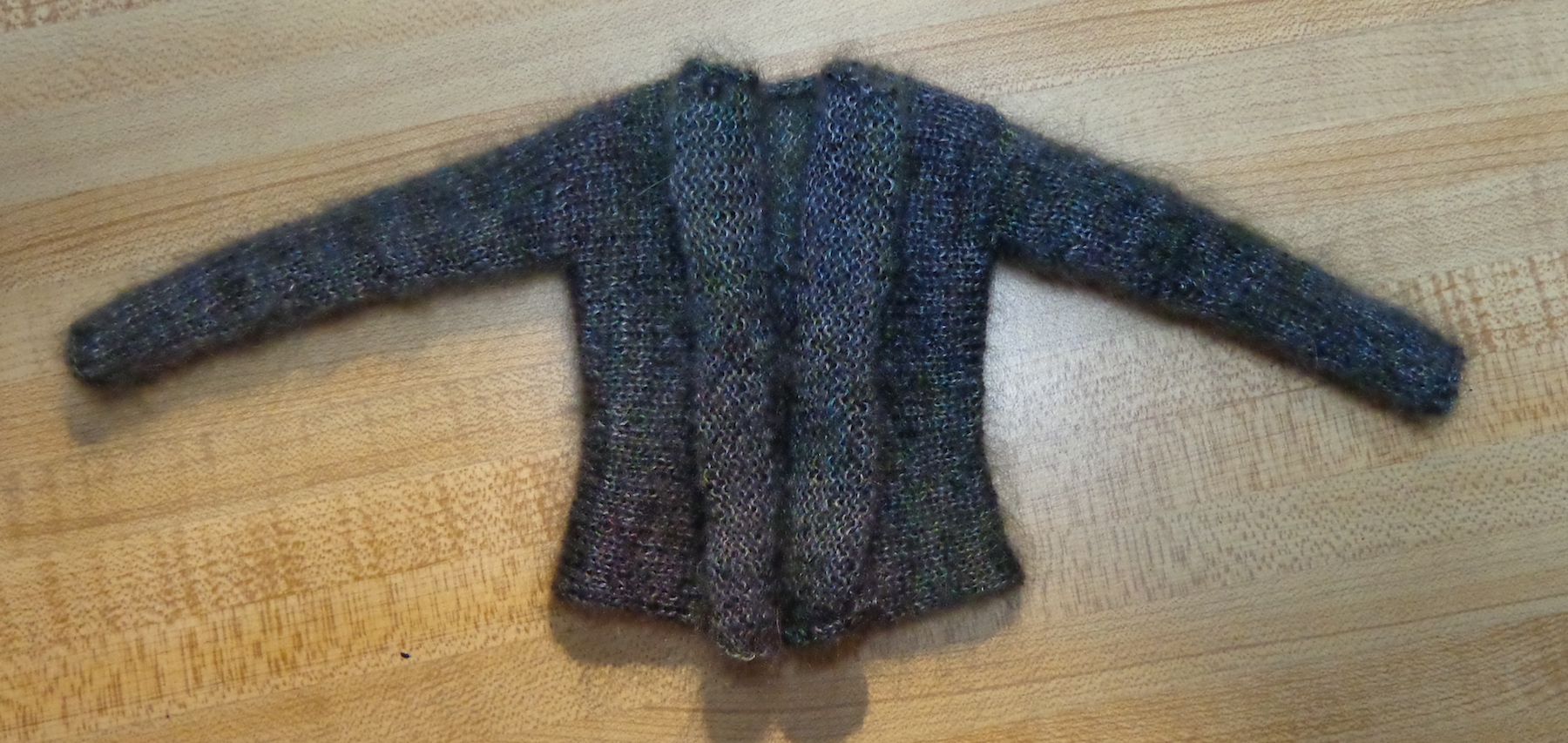
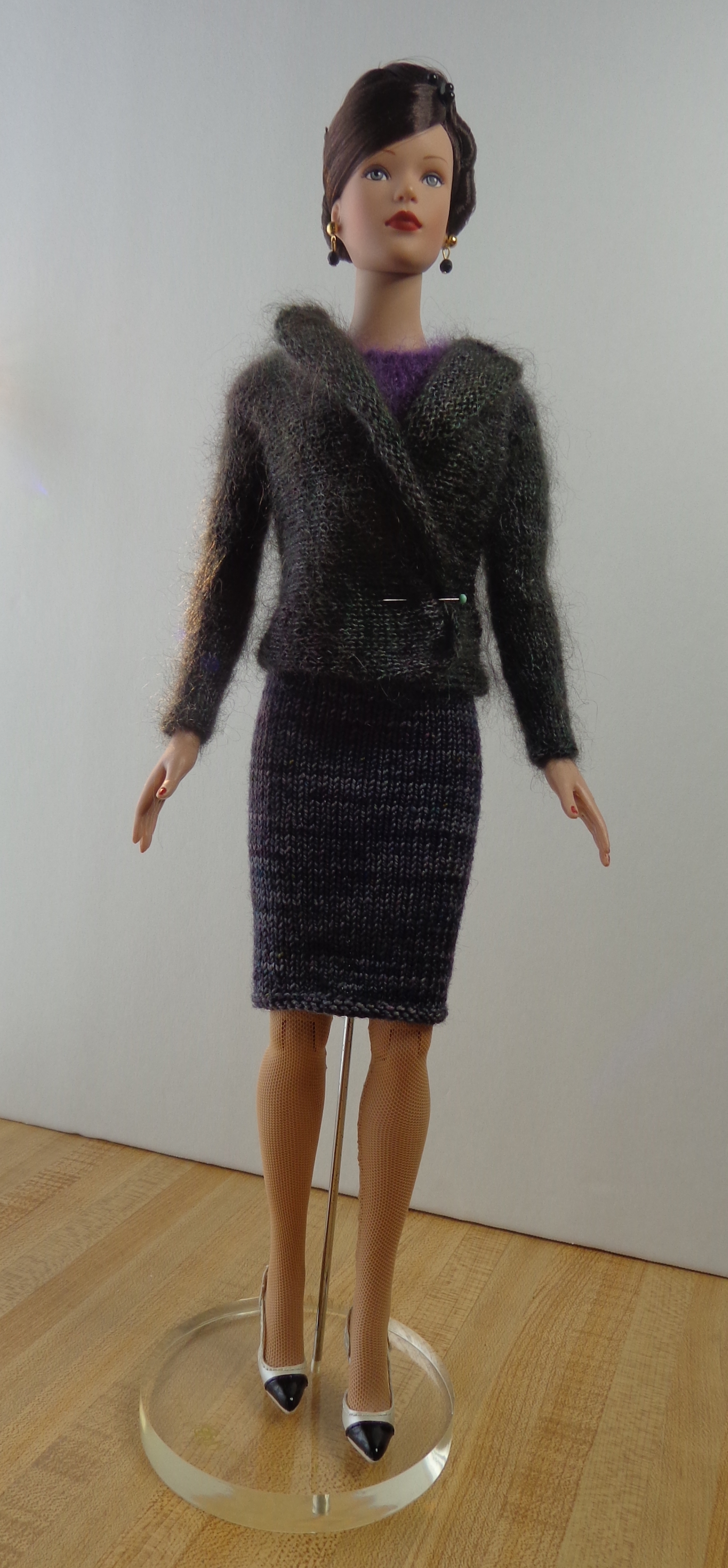















 Alive & Knitting