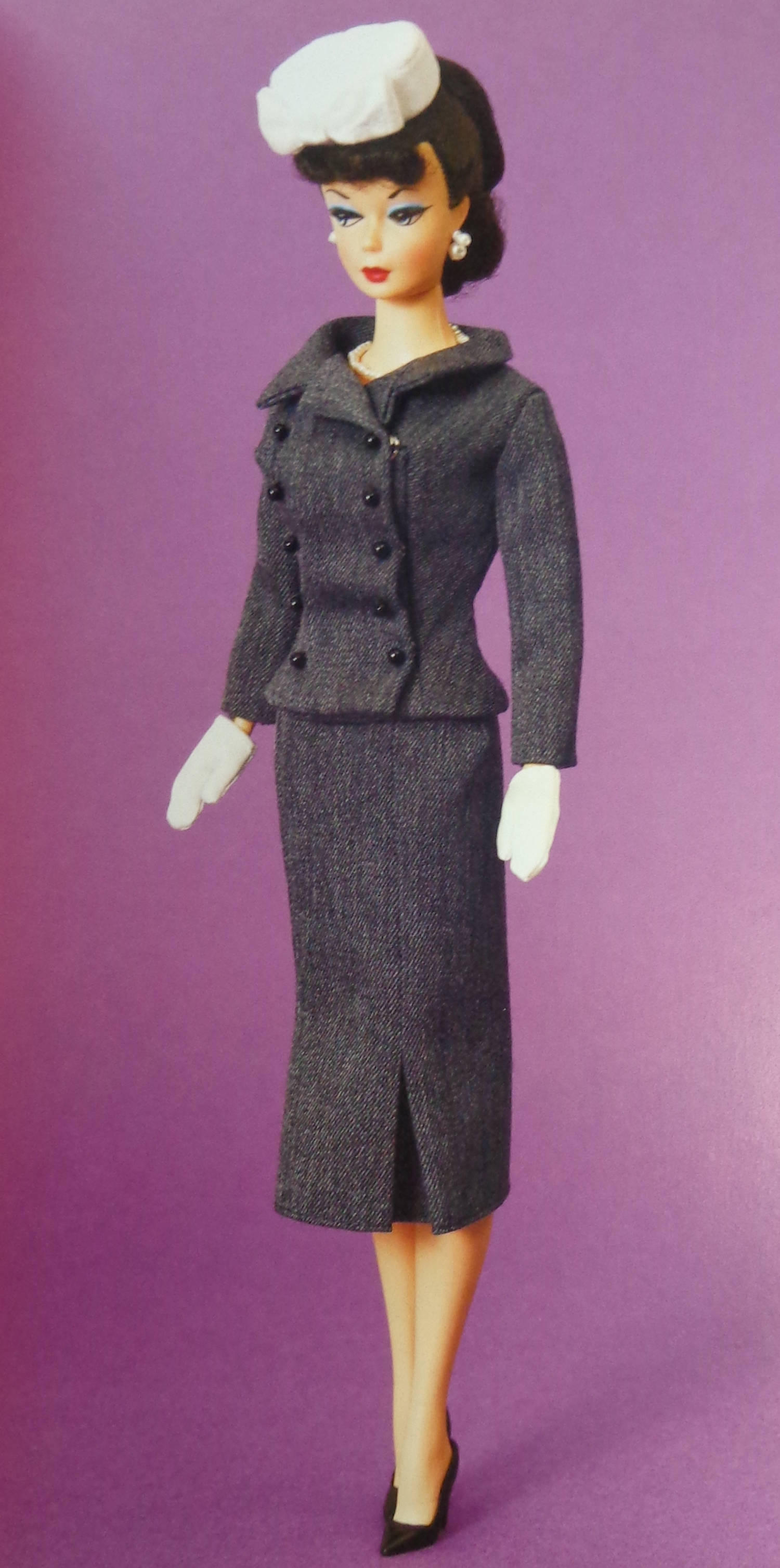
Stylebook Double Breasted Suit

Stylebook of Doll's Dress for Barbie by Katie Mitsubachi
Double Breasted Suit for Barbie from Kate Mitsubachi's book Dress Style

Time for an update on my sewing for Barbie. You might remember that I was planning to make the Soirée ballgown from this Japanese pattern book, Stylebook of Dolls Dress by Kate Mitsubachi, but I got distracted by the Double Breasted Suit instead. That started a little adventure that led me down a rabbit hole.

First, the suit pattern. Here’s the image from the book at right. It’s very cute.

The patterns in this book are written in Japanese, but there are illustrations for the assembly. You can see in the pattern layout below that the dark grey fabric is the main fabric – that’s the skirt, placed on the fold, the jacket cut twice, the sleeve cut twice, and the bias panel to line the skirt which only needs to be cut once – the stripe is the lining and the light grey fabric is the white used for the hat.

Double Breasted Suit for Barbie from Kate Mitsubachi's book Dress Style

For this one, they’d forgotten to include the collar on the layout for the main fabric, but that was easily remedied.

I was less happy that the jacket is supposed to be unlined. I made one version as instructed, but didn’t finish it. I then cut another suit with a lining.

It was a bit tricky to line the skirt, given the construction order. In the end, I changed it. I cut a skirt lining the same as the main fabric piece, sewed the hem, the center back seam (which I made narrower, to allow more overlap for the snap) and then the pleats. I lined the top of the skirt with the bias piece, then hand-sewed that piece over the lower part of the skirt.

For the jacket, I needed a lining pattern piece. I traced the main jacket pattern and laid the back neck facing over it, tracing it. I then folded back the pattern on the front foldline and traced the self-facing of the fronts. Then I had to mark the seam line, and add a seam allowance on the other side before cutting the lining pieces. I also decided to cut the back collar facing in the main fabric, just as you would do with a bigger jacket, instead of in lining as instructed.

This also changed the construction order. I sewed the darts in both lining and jacket, then the center back seam in the fabric. I sewed only part of the CB seam in the lining, so I’d have a way to turn the jacket. I inset the sleeves in both lining and jacket (I basted these by hand first), then sewed the sleeve hems. Finally, I sewed all around the outsides and turned the jacket. When it was pressed and seamed, I added snaps to the jacket front and skirt back. The pattern suggests seed beads as mock buttons, but I had teensy Barbie buttons in black, so I sewed ten of them up the front.

So, here we are with the finished suit:

Double Breasted suit for Barbie designed by Kate Mitsubachi and made by Deborah Cooke

It’s important to press as you go with Barbie’s clothes as the garment keeps getting smaller and it becomes harder to get to the seam allowances. I made myself a little helper, not unlike a pressing ham, but rolling some cotton flannel into a tight tube, a little more than an inch across. I can get that into the waistband of any garment to press it. Sleeves require a skinnier tube, so I rolled more flannel around a dowel. These two funny little rolls are now part of my Barbie dressmaking toolkit.

What leads me astray with Barbie outfits are the accessories, because Barbie doesn’t just throw something on. She pulls it all together. It took me a while to finish the hat for this outfit, not because it was hard but because it was tiny and had to be handsewn. My pillbox hat doesn’t have quite as crisp of an edge, so I’ll have to figure out how to fix that next time. It’s possible I tugged the thread a bit and gathered it slightly.

I became a big fan of Avery mailing labels while making this outfit. They’re a really useful way to temporarily mark the finished size of any element – you cut a template out of the mailing label and stick it on the fabric. I did that with the crown of the hat, which allowed me to sew the band in place with more accuracy.

For the accent on this hat, after much deliberation, I went with a contrast bow like the one suggested in the pattern. There’s more inspiration on this website, though. (Actually, the whole site is pretty amazing as a fashion reference.)

Can this suit be worn without a string of pearls? I thought not. I used the tiniest jelly elastic I could find (it was at Fabricland and is .5mm wide) along with some seed “pearls” from the bridal department at Len’s Mills. I played around with different lengths and also pendants. This one has a black bead rose. I’d love to have a string of pearls that was shorter, but there are limits to how much the jelly will stretch to go over her head. (And clasps are another rabbit hole. I did find this teeny one.) The jelly has a square knot at the back, which has been reinforced with a dab of glue. There will be more on necklaces in next week’s post. They’re like potato chips – it’s hard to have just one.

Of course, she needs a purse. There’s a clutch bag on the McCalls 7550 pattern which reminds me of the classic dimpled gold clutch from days of yore. (I still have one.) It’s really easy to make and just requires a bead as a clasp. I made this one out of a red faux-leather which is very thin. I ordered a piece of it from I Sew For Doll and am using it sparingly. The clasp is a black bead in this case.

Finally, she needed gloves – which are actually mittens even though we always call them gloves. (Why do we do that??) I’m getting better at making these, although they’re still not perfect. Again, the mailing labels help. I traced the finished glove dimensions on a label, and cut it out as a template. I then hemmed a square of the fabric for the gloves so the wrist edge was finished, folded it, stuck the label on the fold and sewed around it. I trimmed it to the glove shape after sewing, not before. They’re tricky to turn as they’re so small, but a little crochet hook helps. These are made from a stretch knit with a shiny coating that looks like patent leather. It’s a very thin fabric. I got it at Fabricland in several colours, including metallics, specifically for gloves. Next time, I’ll try a second row of stitching parallel to the first. It might keep her from poking her finger out between the thumb and fingers of the mitten.

Barbie is modelling this suit on the construction site for my new diorama of a shop. I’ll talk more about that process another day.

Double Breasted suit for Barbie designed by Kate Mitsubachi and made by Deborah Cooke

What do you think of outfit #1 in my Kate & Me challenge? (The problem with sewing for Barbie and having multiple dolls is that now they all want a new suit.)

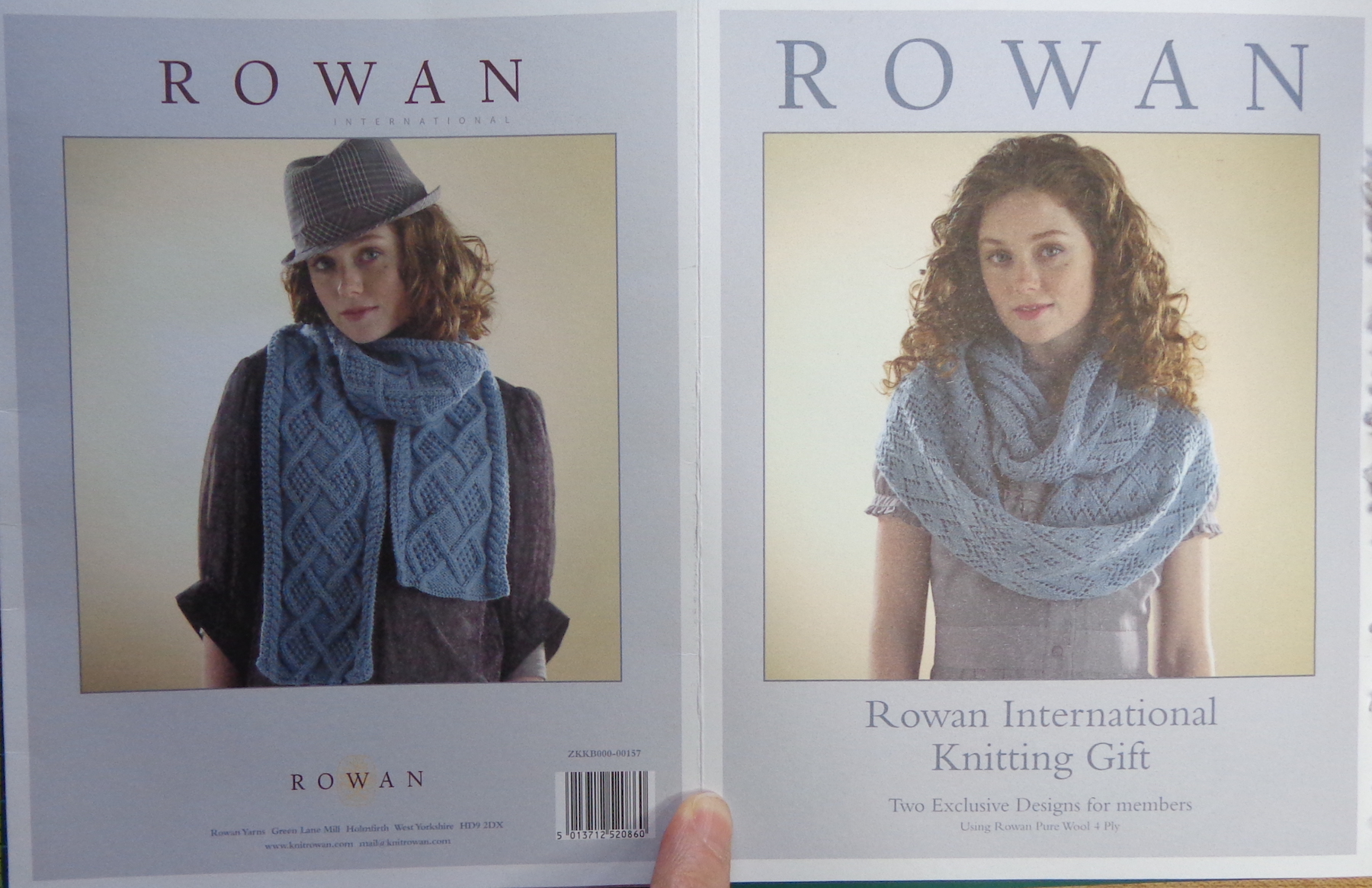
Lace Scarf from Rowan

I’m literally stitches away from finishing my Stripes pullover, but will miss the chance to take a picture of it in time for this post. I’ll show it to you next week instead. It took a bit longer because I had to rip back one sleeve – there was a join in the yarn that made the gradation change too quickly. Once the second sleeve was knitted, that became obvious and (of course) I wanted them to match, so I frogged it back.

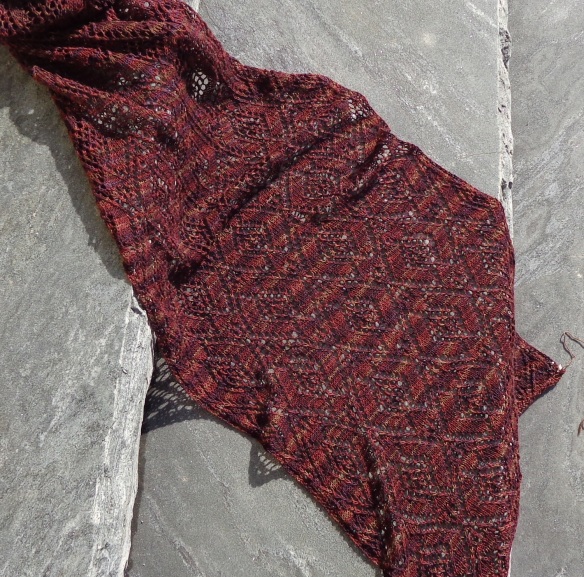
Since I’ve been knitting in the kitchen, I cast on something a little more interesting. This is a lace scarf designed by Sarah Hattan in Rowan Pure Wool 4ply. It was the Rowan subscribers’ gift in (gah!) 2009/2010. Yes, I’ve had it in my stash all that time.

Lace Scarf by Sarah Hatton knit in Rowan Pure Wool 4ply by Deborah Cooke

This was a gift for buying an annual subscription to the magazine. It came with 6 balls of yarn and two patterns – there was enough yarn to make either one. Incredibly, there aren’t any pictures of this online. Give me a minute…..

Here’s the pattern card that came with the yarn. MIne is a bit faded:

Rowan Members' Gift pattern

I’m making the one on the right, which is supposed to be joined in a circle, like a huge cowl. That didn’t seem very practical, so I worked 6 rows of garter stitch instead of doing a provisional cast-on. I’ll do 6 rows of garter stitch at the other end, making it a big scarf instead. You’re supposed to work 2 stitches in garter at either edge, but I changed that to 3 – a two-stitch border always looks a bit lonely to me.

Why did I have this stashed for so long? Well, I wasn’t sure I wanted a big scarf or cowl. I’d thought the wool would make a nice little sweater, but it really isn’t enough yardage for that and the colour (Eau-de-Nil) is an odd grey-blue that is pretty but hard to match with anything. I decided it was time to just knit it up and be done with it.

I like the pattern and it’s pretty easy knitting – just not tv knitting. That’s the second ball of yarn, so it will be pretty long when it’s done, probably similar dimensions to my Earth Stripe Wrap (but with fewer ends to work in! Ha!)

I’ve had a few other Rowan subscribers’ gifts. This was what I did with the six balls of Rowan Denim – I made a bag, just in not the pattern that was included. I still have the yarn gift for the Judy beret. (That’s a Ravelry link.) It’s bright pink. Maybe I should knit that up next.

Miniature Room Kits

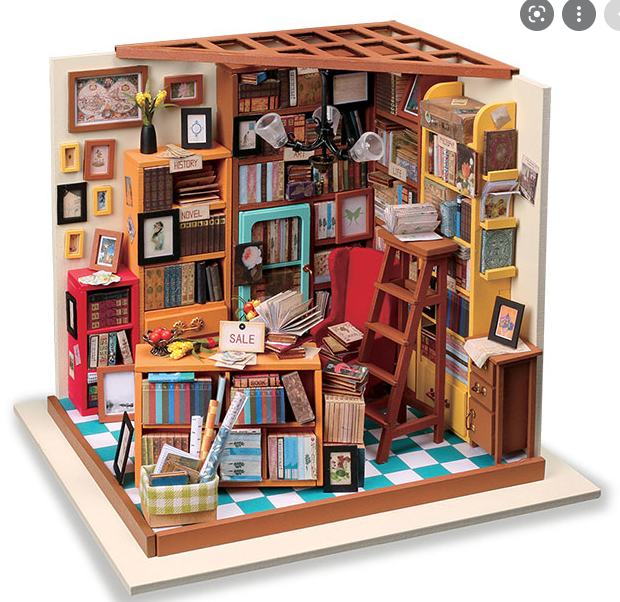
Earlier this month, I discovered these room kits to create scale models. I thought this study were so cute that I ordered one – and then, you know, another (but we’ll get to that).

Harper's Library 1:24 scale miniature room kit
Miniature Bookstore or Sam’s Study or Harper’s Library

These are scratch-build kits, which means you get a box of materials and have to build everything yourself. I thought I might learn some tips and tricks for building my 1:6 scale dioramas. This first kit comes with an LED light – that chandelier lights up when it’s done. It’s a bookstore but I’ll make mine a study by leaving off the SALE sign and the genre signs.

I bought the kit from Minihooo – that’s a link to their website, which has prices in US dollars. My order had free shipping and was dispatched from China. But then, I was at a hobby store with the mister the following week here in Ontario and they had the kits on display – except they were from Robotime or Rolife. The kits looked the same, just the company name changed.

I came home and did some searching online, and discovered the kits are stocked by Mary Maxim here in Canada, with prices in CA$. I bought Jason’s Kitchen from them.

Jason's Kitchen 1:24 miniature kit
Jason’s Kitchen

My first one is called Miniature Bookstore at Minihooo, but online you can find it labelled as Sam’s Study or Harper’s Library. (Yes, the Rolife kit has – or has had – two different names.) There are a lot of people building these kits and documenting the process on YouTube – I feel as if I’ve discovered another dimension of the universe, one that I never realized was there.

While searching all of this, I saw this apartment model and wanted that kit, too. (It was the pool that sealed the deal.)

Miniature Luxury Apartment 1:24 scale dollhouse model kit

I first saw it in MInihooo for $105US (It’s now $135US there. On Black Friday, it was $79.This is a moving target!) but had a look around at other options. There were six different listings on Amazon.ca for the same kit, ranging from $64 to $98 CA, some with free shipping and others not. The company names were all different, including Rolife, Robotime, Wadile and CuteBee. I bought the one from Cute-Eyfud which is fulfilled by Amazon. It appears that they are identical kits, but some may have only Chinese instructions. (There’s one on Amazon.ca with a lot of negative reviews about the Chinese instructions.) If you’re tempted by these kits, be sure the one you choose specifies that it has English instructions. There’s a similar variety of kits on Walmart.ca, at least half a dozen for each style, all listed as being from different manufacturers and supplied by different vendors. The kit is often (but not always) called Time Apartment.

I suspect they’re different distributors for the same kits and that the kits are assembled by the same company. The price variations could be because of the marketing – Minihooo, for example, has a pretty website and sells directly from it; Cutebee seems to have only a storefront on AliExpress. There appear to be slight variations in terms of what comes with the kit, especially glue and paint. There are differences about included dust covers, too – I’ll guess that these kits came with dust covers once but no longer do, so some people get them and some don’t, depending on when that particular kit was made. It might also be that the kits have variations in the additional stuff when ordered in Asia rather than elsewhere.

Amazon being Amazon, the kit I ordered last was the one that I received first. Of course, it came overnight even though I don’t have Prime. The other two came the same day, two weeks later.

The box for Time Apartment is like a little briefcase, with a cute carrying handle. The brand on the box is Cute Room. All the other text is in Chinese.

The other two both say they’re Rolife kits and that they’re made by Robotime. My bookstore is called Sam’s Study.

Let’s look at what’s inside.

The only kit that had paint and glue included was the kitchen that came from Mary Maxim. The study says it has paint included but it’s not there. The apartment says you need to get your own glue. I suspect this is due to how they were shipped – if coming by air, the kits couldn’t include any liquid. The kit from Mary Maxim must have come by boat. The Time Apartment kit also has that mothball smell I associated with dollar stores and Chinatown. It has a music box, too, which is a bit of a surprise. They all have lights and wiring with the box for the batteries but no batteries included, which is fair enough.

Inside, there’s an inventory of parts in each kit.

comparing kit checklists

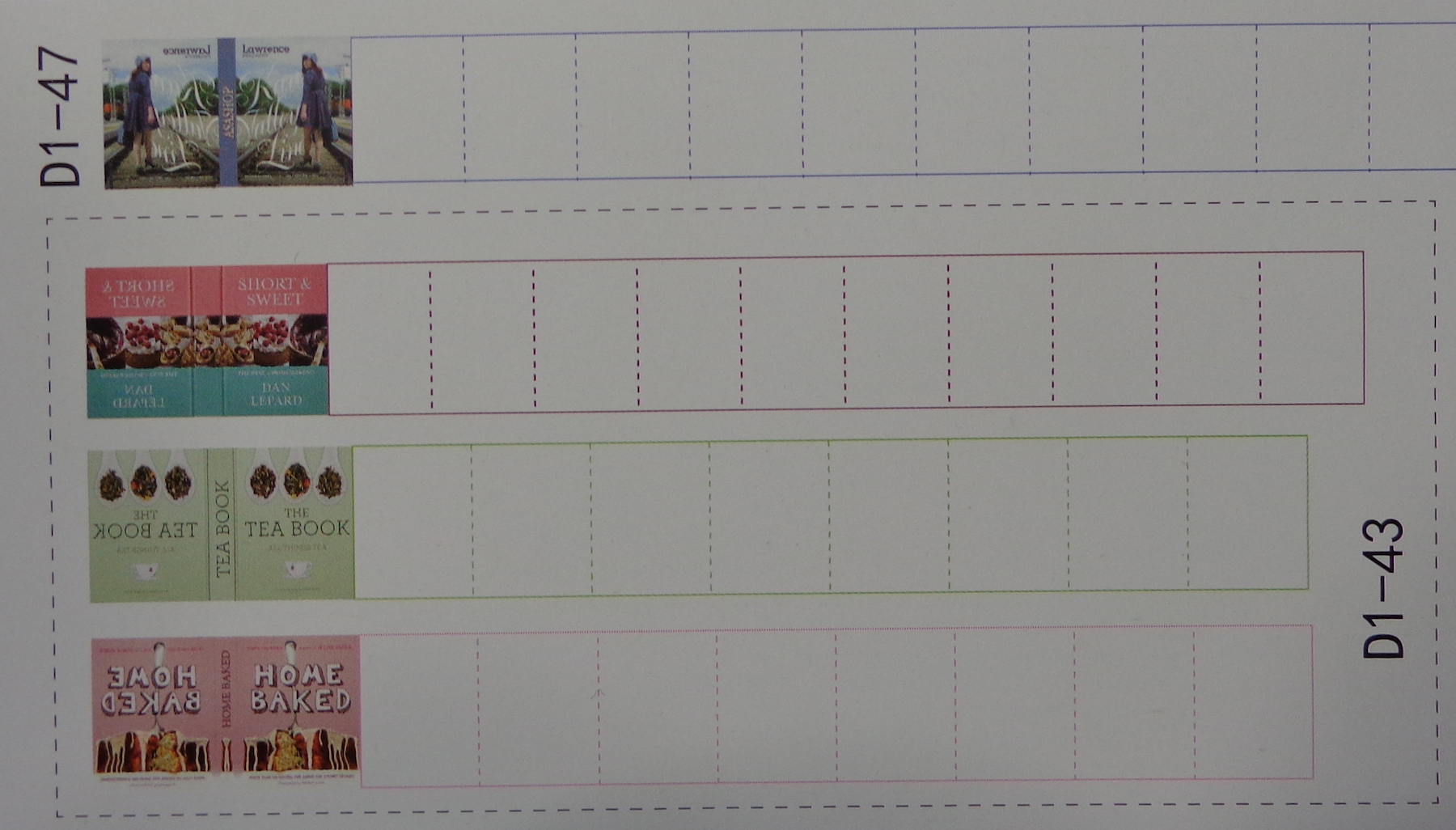
The Time Apartment has a list with measurements and diagrams, but they’re not in scale to each other. I needed to use a ruler when checking the parts. The Rolife kits have printed sheets with each part displayed to size in colour. That made it easy to check them – you just slide the piece along until you find the match. The Rolife kits didn’t inventory all the beads and bits, though, while the Time Apartment did. Out of the three kits, I’m missing one little piece of wood for the ladder in the library, but I can easily make a replacement.

They all have little sayings on the boxes which maybe didn’t translate very well. Under the carrying handle for the Time Apartment is printed “Love Handmade & Enjoyed Life”. The sleeve for Jason’s Kitchen says “Eating in such a nice kitchen alone, you may not feel lonely.” And the sleeve for Sam’s Study says “Pick up a book and taste a sense of isolation. I seem to touch my soul at this very moment.” Hmm.

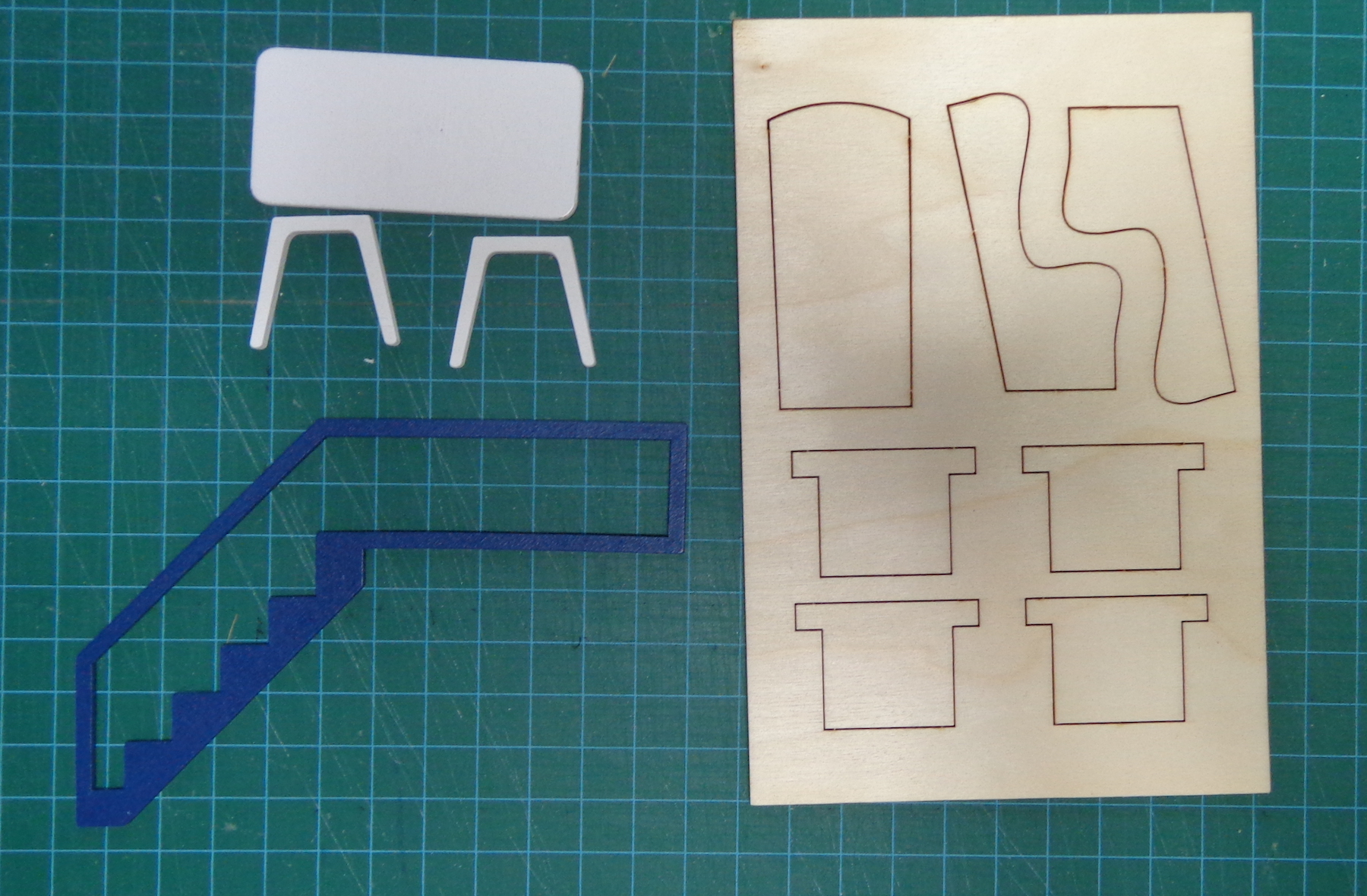
How small is 1:24? Well, the scale means that 1 inch in the model is 24″ in real life. That means that Mr. Math, who is 6 feet tall, would be 3″ tall in this scale. It’s pretty teeny. And one of the first things I noticed was that these kits aren’t in the same scale, even though they’re all listed as being 1:24. Only the Time Apartment is in that scale. I think the Rolife kits are 1:12. (Mr. Math would be 6″ tall in this scale.)

Look at the books:

book miniatures compared

You make the books the same way, by folding the pages like an accordian and pasting them into the covers. Of course, books can be different sizes, from paperbacks to coffee table books, but the Time Apartment books are 3/8″ high. (And the back covers are the mirror image of the front covers!)

Time Apartment Parts 2

That means they’re 9″ high in scale. The Rolife books are 3/4″ to 7/8″ high – in 1:24, they’d be 18 to 20″ high, which is big even for a coffee table book. In 1:12, they’d be 9 to 10″ high, which makes more sense.

The kitchen counters don’t provide a clear comparison – the Time Apartment seems to have a long counter and a small sink (that’s the marble paper covering on it), while the Rolife kitchen (orange) has a small counter and a big sink. But look at the cutting boards, and the cooking utensils. And those laser-cut clothespins!

miniature kitchens compared

And finally, the armchair – this is just the template, but I’ve put it beside the Time Apartment’s half-flight of stairs and kitchen table parts. That would be one big armchair in 1:24! Assembled with the legs on it, it would be as tall as one floor of the apartment.

armchair compared

Of course, the scale matters less between models than that everything within the model is in the same scale. If you wanted to add something, you’d need to keep the scale in mind. Also, because the items in the Rolife kits are a little bigger, the models will be easier to assemble – and there will be a teensy bit more wiggle room for fitting and matching. A smaller scale is pretty merciless, as I’m learning.

I’d started on the Time Apartment while waiting for the other two kits, since I’m making it pretty much as instructed. I’m using carpenter’s glue for the wood and white glue for the paper. I have some E-6000 for the metal, plastic and beads. I also have an X-acto knife and am going through a lot of toothpicks with the glue. I’m making good progress and will show you when it’s done.

It’ll take a bit of time, which is good as I have to think about the Rolife kits. There’s a lot of orange wood in those kits, which means I’ll probably be painting many of the pieces before assembling them. These are fantasy rooms, after all, and I have no fantasies that include orange furniture.

Crystal Twist Complete

Does your knitting project change depending upon where you knit?

Mine apparently does. Just over a week ago, the mister and I decided on a new plan. Neither of us were sleeping as well as would be ideal and my eyes were bothering me. We decided to eliminate blue light after dinner. Nor more evenings watching television, surfing online, or even reading ebooks. Instead, we’re reading paper books. Instead of knitting while watching TV, I’m knitting for a couple of hours in the kitchen each night, then reading. And that means that I can work on all those projects that need a little bit more concentration. While watching TV, I prefer to knit endless miles of stockinette—and whenever a project gets to the point that I need to pay attention, I put it aside. This change means that I’m picking up those projects and getting them done.

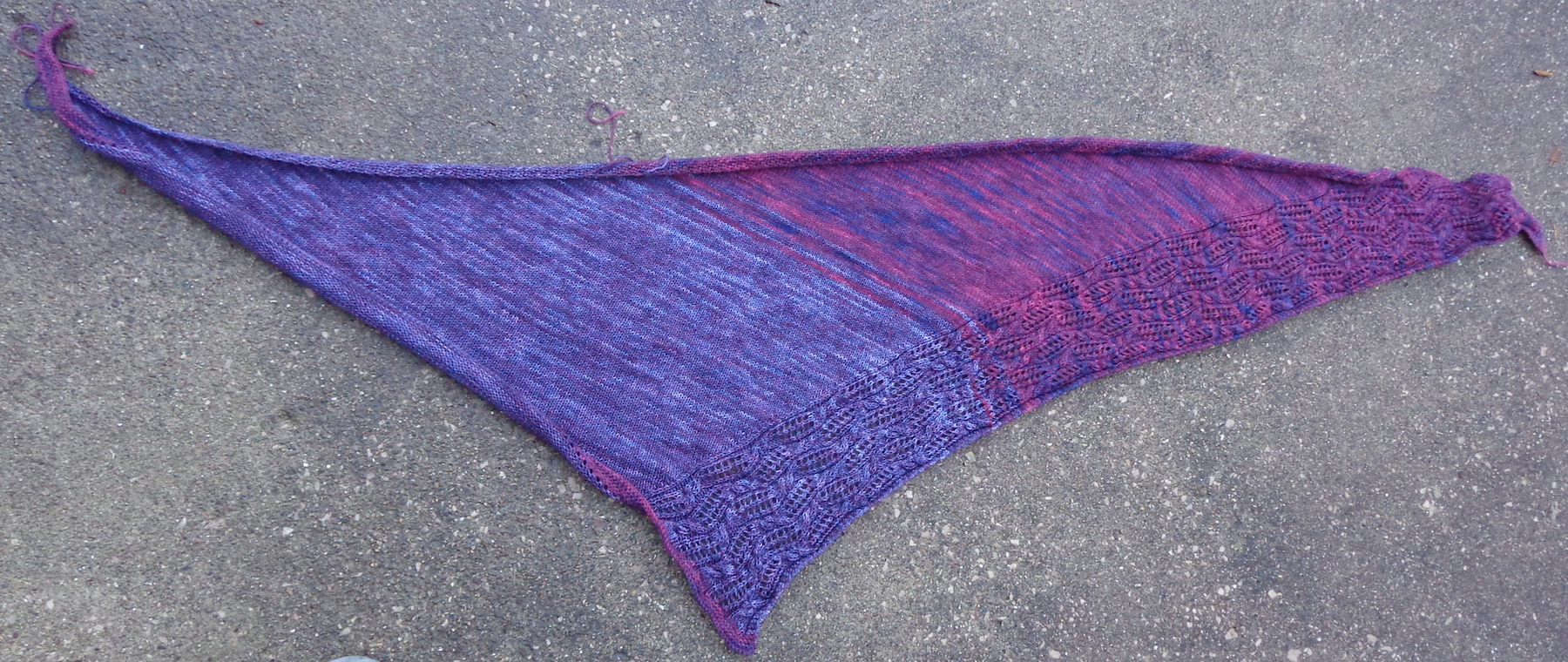
First up is my Crystal Twist shawl, which didn’t require that much attention. (That link is my first post about it: here’s the second post about the size of the shawl after one skein.) There’s just a little pattern bit at the left end of the row, but it was enough that I wasn’t knitting while watching movies. And it’s finished! Here it is, right off the needles.

Crystal Twist shawl knit by Deborah Cooke

The ends are a bit curly because it isn’t blocked. I like the second colour but wish I’d picked something a little darker, maybe a little bluer. That second yarn has a bit of a tighter twist than the first yarn, but that distinction may diminish when the shawl is washed. It’s really only something I would notice.

I switched yarn colours the same 12-row transition recommended by the Unique Sheep: after working colour A, work 2R colour B, work 4R colour A, work 4R colour B, work 2R colour A, then continue in colour B. They photograph quite distinctly, but in real life, the colours of the two skeins appear to be much closer.

Crystal Twist shawl knit by Deborah Cooke

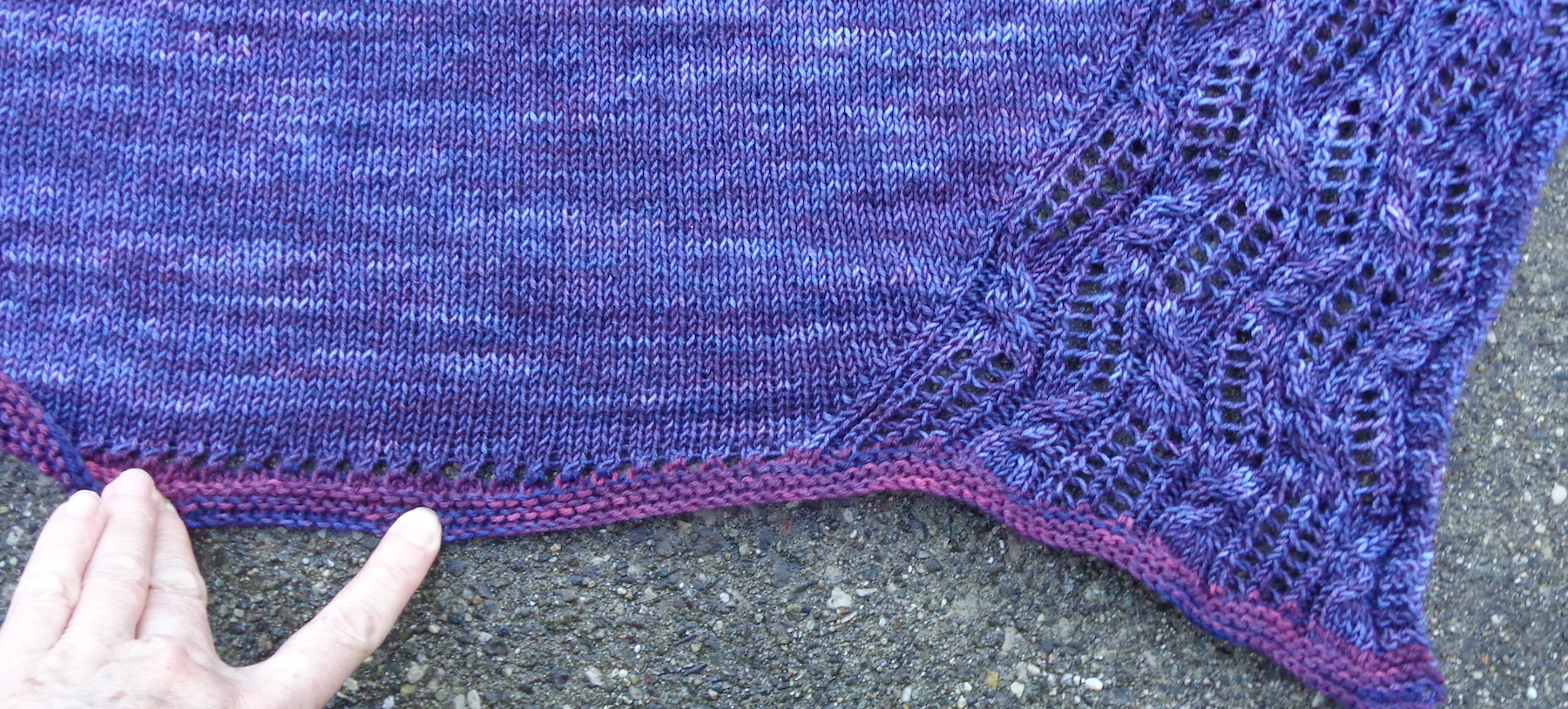
I could have maybe managed another 12-row repeat in the purple, but I would have been playing yarn chicken. Here’s the ending edge, which I worked in the first colour:

Crystal Twist shawl knit by Deborah Cooke

I’m really pleased with this shawl and may make another. I like it in this two-skein size, and if I do make another, I’ll definitely add the beads.

What do you think?

Felix #4 Finished

I finished my most recent Felix cardigan over the weekend, so wanted to show you. I just love how this sweater came out!

Felix cardigan knit by Deborah Cooke in the Loving Path Fiber Arts Aura Lace and High Twist Sock
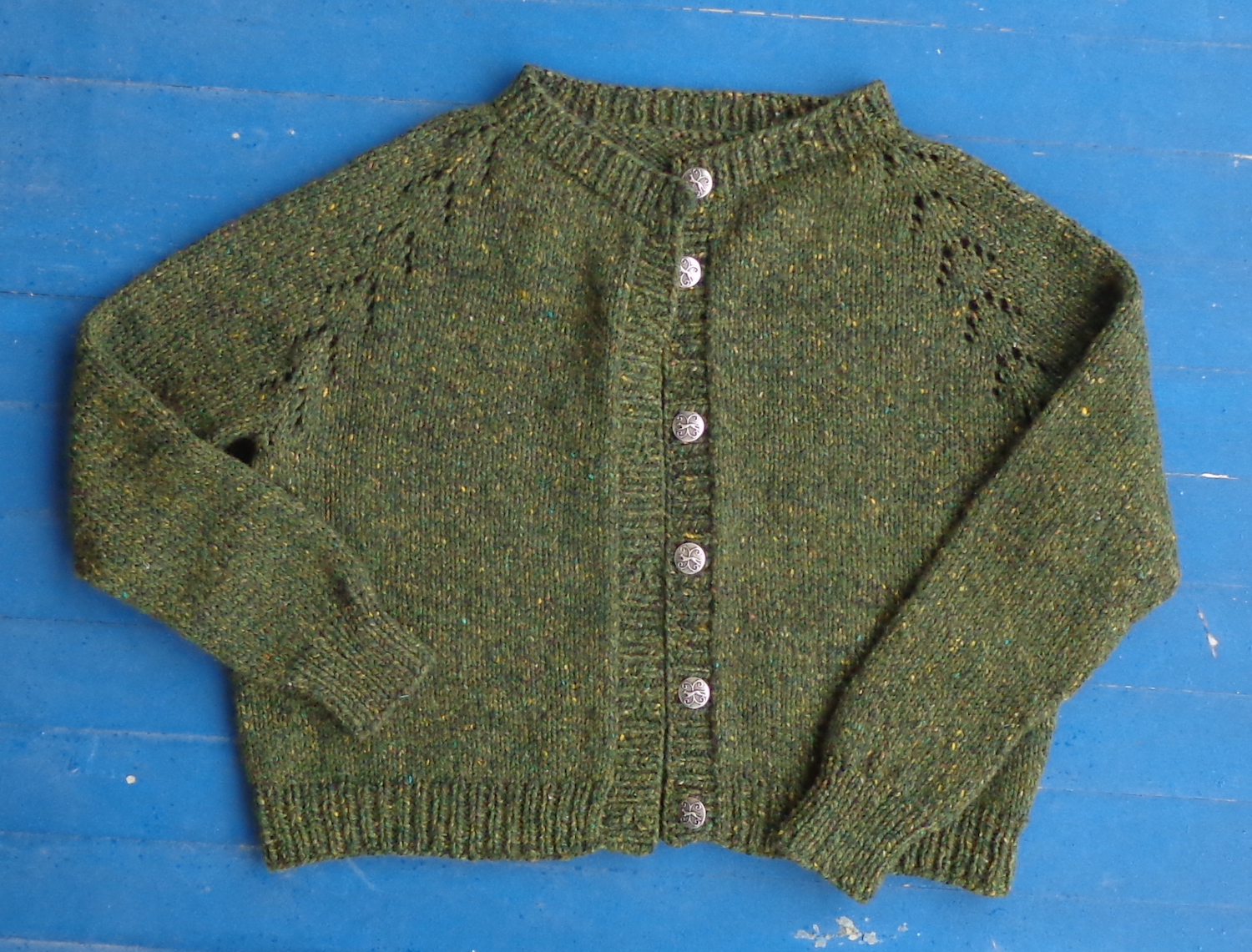
Felix by Amy Christophers knit in the Loving Path Aura Lace and High Twist Sock

The colour is the most true in this image – you can see all the wonderful little flickies of colour in the yarn. This sweater is very soft and drapey. Even though I made the same size as my other Felix sweaters on the same needles, this one is a bit smaller. It took about 750m of each yarn, and they were held together. Here’s my Ravelry project page with details. I think I’m going to get a lot of wear from this one!

It did jump queue because I loved the yarn so much. I’ve picked up my Cheater Stripes pullover again. It looked like this the last time I posted about it:

Andrea Mowry's Stripes top-down pullover knit in SugarBush Motley by Deborah Cooke
STRIPES! by Andrea Mowry knit in Sugar Bush Yarns Motley

I just have one sleeve to finish so will probably be able to show you that one next week.

Felix Update

I finished the body of my Felix cardigan – I told you about it last week – and wanted to show you how wonderful it looks.

Felix cardigan knit by Deborah Cooke

This photo is more true to color than last week’s photo. i just love it! I had 80g of the fingering weight yarn left, so I split it into two 40g balls. We’ll see how long the sleeves end up being. I might manage to have long sleeves, or they might be 3/4. I’m good with it either way. There’s more yardage in the mohair silk, so the fingering weight yarn will run out first.

I had the perfect buttons in my stash. Here’s a close-up of them:

Felix cardigan knit by Deborah Cooke

You can see all the colours in the yarn in this image, too.

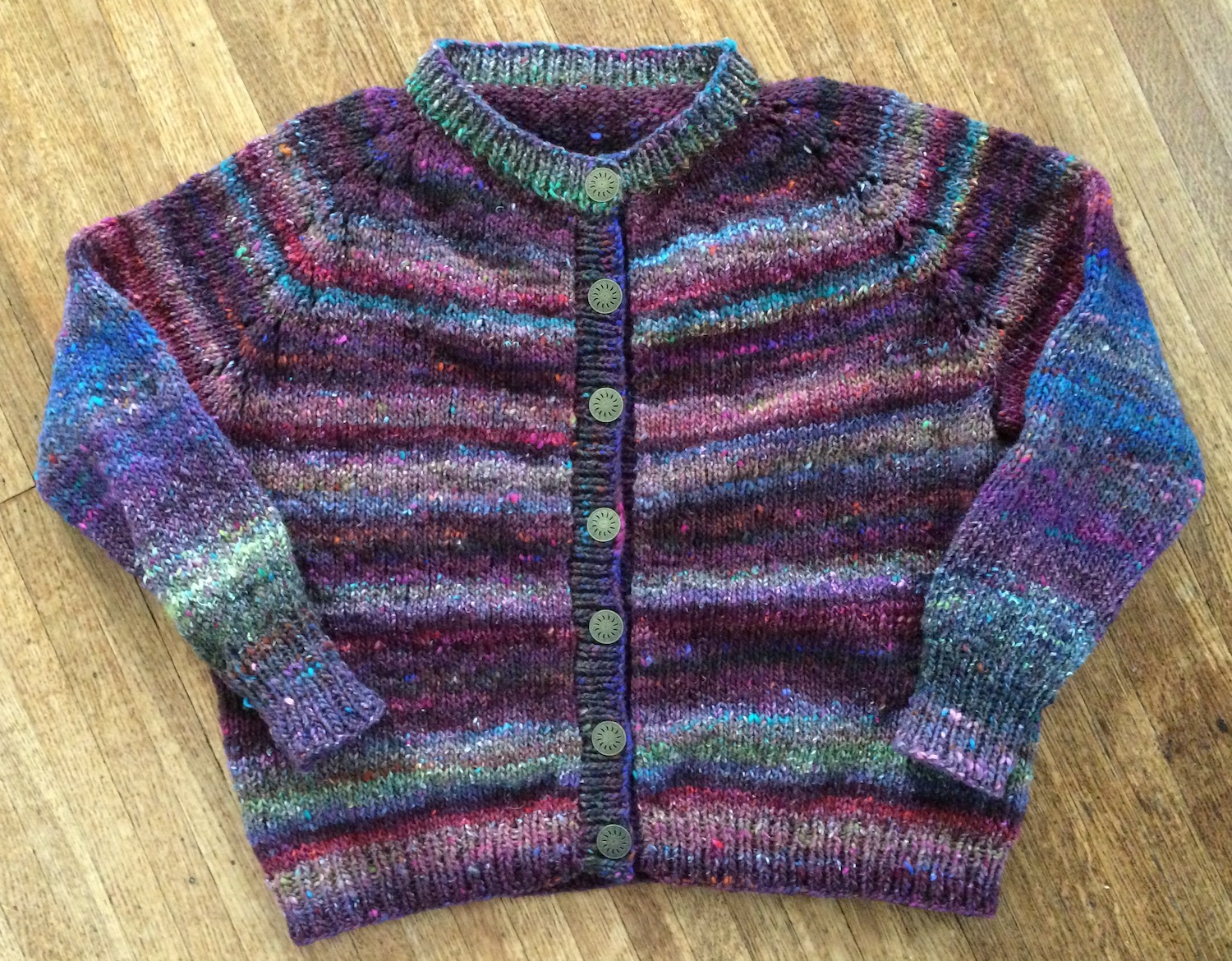
The yarn is knit quite loosely for its thickness, resulting in a very light and drapey fabric. It’s soft and warm. It reminds me of this cardigan, which I knit of Kidsilk Haze Trio. That yarn has three strands of KSH spun together in coordinating colours. It’s discontinued so that’s a Ravelry link. The pattern is called Paige and was designed as a colour-blocked pullover with changing shades of KSH. I knit it all one colour, and split the front to make a long boxy cardigan. My Ravelry project page is here.

Paige by Lisa Richardson, with modifications knit in Kidsilk Haze Trio by Deborah Cooke

But being reminded of this sweater meant I was reminded of something. You can see the gradations in the green sweater in this image and also (aha!) a ball of KSH Trio in Loganberry, which is red.

Felix cardigan knit by Deborah Cooke with two shades of Kidsilk Haze Trio

This has been sitting in my stash because I don’t have enough of it to make a sweater like the green one. I do, however, have more than enough to make another Felix in it—and some coordinating buttons in my stash too. So, I’ll cast on another red cardigan once this grey one is done and the stash will be a little bit smaller.

Sewing Skirts

I’ve been sewing more garments for myself lately, but with mixed success. There are a few reasons for this: I’m picky, I’ve changed shape since my glory days (when I always cut a size Vogue 8 and it always fit), and I’m learning new tricks. Previously, I’ve mostly sewn woven fabrics but have been learning to sew knits. There are new techniques to learn and new tricks, and also some old habits that are hard to leave behind. I’ve also been experimenting with patterns from indie designers instead of just shopping from the Big4. These designers don’t always come to patterns with the same assumptions, which is both exciting and (sometimes) vexing.

Vogue 7947

I love skirts and wear them a lot. It makes more sense for me to sew skirts than pants, and makes for an easier fit, too. One of the skirt patterns I go back to all the time is Vogue 7947. It’s a Five Easy Pieces pattern (they probably don’t make those anymore) including a jacket, shell, dress, skirt and pants. The pattern isn’t available anymore and the photographs are pretty dark on the envelope.

The skirt has a yoke and is slightly flared. The top edge sits just below the waist, which makes it really comfortable. The hem falls just below the knee. It has a side zipper, which is slightly less than ideal, but I’ve never taken the time and trouble to split the back yoke and move the zipper to the centre back. I’ve made this skirt a lot, from a wide variety of fabrics.

Here’s the schematic from the back of the pattern envelope:

Vogue 7947 line drawings

So, when I saw the Ravinia Skirt from Love Notions, I thought “aha! this is the knit version of my fave skirt.” Well, it didn’t quite work out that way, but that’s okay—sewing fails are disheartening, but I always learn something from them. One big takeaway here is that I want to sew knits the way I sew wovens, and that’s not always the best strategy.

Love Notions is an indie pattern company probably best known for their Laundry Day Tee, which is a free pattern download for an a-line t-shirt and a pretty easy knit. I downloaded that pattern, then indulged in a few more because they were having a sale. The patterns are sold as PDF downloads, which you then print and tape together (ugh) or take to a shop to have them printed on a single sheet. All of the sizes are on the same page, the way Burda patterns have always been. Unlike Burda patterns, though, the seam allowances are included. Unlike Big4 patterns, the seam allowances vary in width between companies and even within a design itself. I’m so used to that 5/8″ standard from the Big4. Now I go through the instructions in advance and circle or highlight the seam allowance so I don’t mess up. Love Notions patterns tend not to have notches to match pieces – they have little bars that you need to transfer to the fabric. (I now cut notches instead since I’ve never liked transferring markings.)

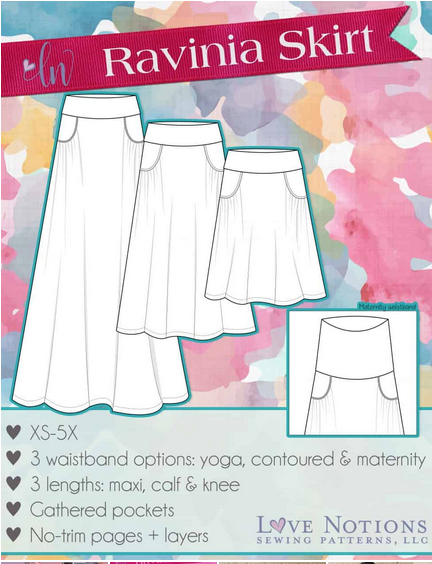
The Ravinia Skirt by Love Notions

The Ravinia Skirt can be cut in multiple lengths, has a full swingy skirt, a contour waistband that sits below the waist (a fave style of mine) and – pockets!

I wanted to love this skirt so much. I made it twice and in the end, I’m just not a fan. It’s comfortable to wear, but I don’t think it’s that flattering. What’s the difference between it and my standard skirt? Gathered pockets, and that is my issue. In the end, I liked having pockets but not how they looked.

I also found this a confusing pattern, and so I did a lot of stitch ripping. I had to read the directions multiple times to figure out what I was supposed to do—since I’ve sewn a lot of skirts together.

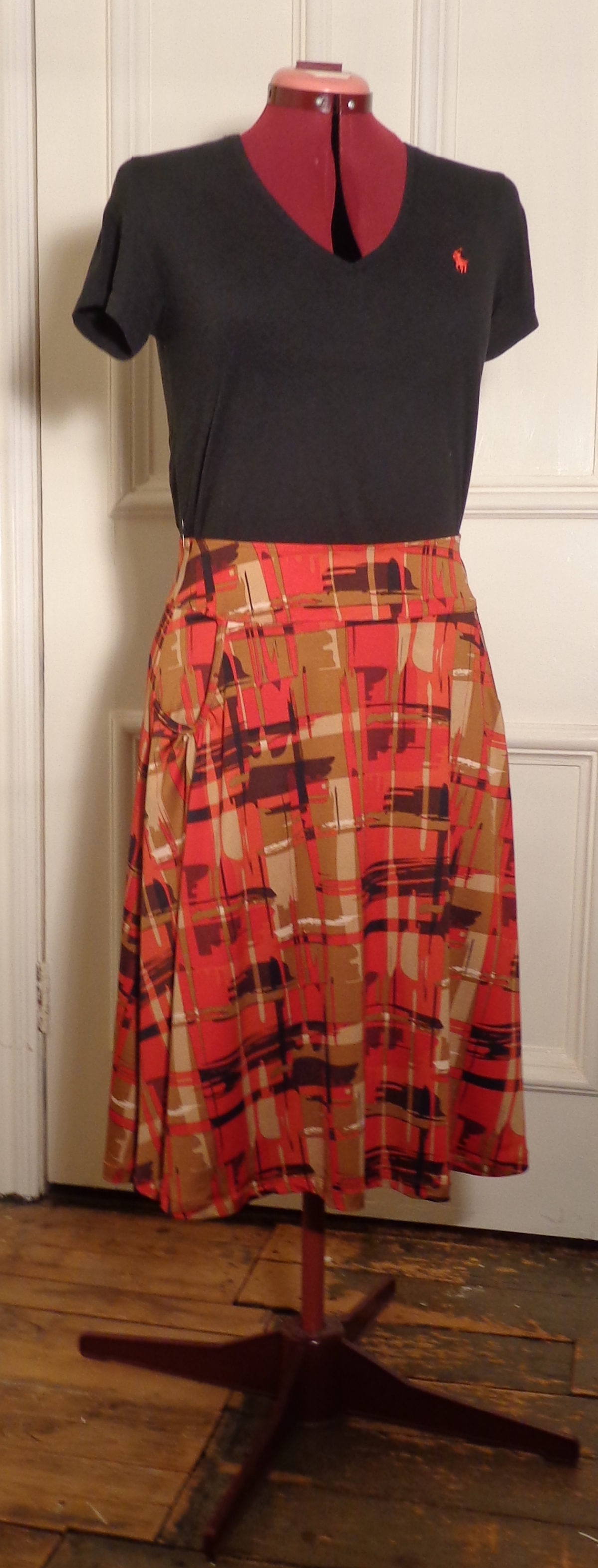
Ravinia skirt sewn by Deborah Cooke

The first version I sewed was in a knit remnant with a red graphic design. I thought I had enough for the shortest version—I’m glad I checked the length before cutting, though. I prefer skirts to be just below the knee and the shortest (“knee length”) would have been above my knees. I’m 5’5″ so it’s not because I’m tall. I added four inches to the skirt length and the finished skirt is just below my knees. I put one pocket piece in backwards by mistake—the wrong side is showing instead of the right, but it’s the pocket facing against the skirt front, so no biggie. I followed the directions to zigzag a length of elastic around the top of the waistband and really disliked how it looked and fit. I ripped it out. As a result, the skirt fits but the waistband is really loose – if I lose 5 lbs, it’ll fall right off. This one isn’t a keeper, but it was a test sew.

You can see that part of the issue is body shape. Nell is rocking this skirt much better than I do, but then my tummy is a little more fluffy since lockdown. (Nell remains as svelte as ever and I had to pin it at the back for her.) So, it’s possible I’ll like this more after I lose those pounds – but I’ll have to redo the waistband.

On this one, I used the option of binding the pockets with a self-facing, the way you’d bind the neckline of a t-shirt. This looks nice, but it’s really thick and stiff, which doesn’t keep those pockets from bulging. There are six layers of fabric under the top stitching: the skirt, the pocket lining, the edging and seam allowance on the back, plus the edging and seam allowance on the front. To be fair, this is my issue – the pattern instructs you to top-stitch the binding in place without turning under the seam allowance on the inside of the pocket, then to trim away the excess. This would leave a raw edge on the inside of the pocket, which I thought might fray with wear. I also thought it might be visible.

Here on my pocket, you can see the wrong side of the fabric on the facing, which was my mistake. You can also see that it’s a puffy little gathered pocket and that the weight of it pulls the side seam toward the skirt front. It reminds me of a medieval purse. 🙂

Ravinia skirt, pocket detail, sewn by Deborah Cooke
Ravinia skirt sewn by Deborah Cooke

I cut a second skirt in the calf-length variation out of a really soft drapey knit which is black with flowers. Of course, the fabric weights more and there’s more of it, so I tried the option of adding power mesh into the back of the waistband in an effort to defy gravity. This very effectively tightened the waistband—too much. I couldn’t wear it. I didn’t want to rip out all the stitching, so I just cut off the waistband, making the skirt 1/2″ shorter. I cut a new contour waistband, trying it on before attaching it to the skirt and shortening it to a snug fit before attaching the skirt. it’s comfortable now and I have more confidence in it staying up than the red one, but I’m still not smitten.

Nell, however, looks great in it. (Even if the picture is on a bit of an angle.)

On this one, I piped the edges of the pocket. I did not use cotton cord as suggested by the pattern, because this skirt will be machine washed and when it is, the cotton would shrink. I used a black polyester cord from my stash instead. I think this is a better finish than the top-stitched version, but it’s still bulky. There are six layers of the knit in the seam allowance – the skirt and seam allowance, the pocket facing and seam allowance, and the two seam allowances from fabric covering the piping – but it’s all in the gathers. This leaves the edging less bulky and stiff than the first option, but doesn’t keep that pocket from being puffy. In this softer knit, it really pulls the side seam forward.

Ravinia skirt, pocket detail, sewn by Deborah Cooke

And in the end, I just don’t love the skirt. This project doesn’t feel like a win, but I did learn a bit about edging pockets. The funny thing is that I discovered that I have a linen skirt that I don’t love so little that I’d forgotten I had it. It’s a Vogue pattern, too, but I don’t know which one. I love the fabric and it has my fave a-line shape—but it has front slash pockets. They’re not gathered, but they still change the look and hang of the skirt. At least I’m consistent.

I’m going to give the black skirt a try this winter. I’m going to make a long-sleeved t-shirt of the same black print and hem it to fall just at the base of the contour waistband. That might work as I like having a top and skirt that go together to look like a dress.

I may also try to modify it to have flatter pockets. If I give that a try, I’ll let you know. In the meantime, I cut another Vogue 7947.

Another Felix Cardigan

As I mentioned last week, we went to a knitting event a few weekends ago, and some yarn demanded to be adopted. It’s so pretty that it jumped the queue—even though the sweater isn’t finished, I thought I’d show you the yarn and my progress today.

The yarn is from The Loving Path, an indie dyer, and was put up in a kit for Love Note, a pullover pattern from TinCanKnits. (The dyer’s link goes to Etsy and the pattern link goes to Ravelry.) It included two skeins each of a fingering weight yarn (High Twist Sock) and a mohair silk blend (Aura Lace), both dyed in the same colourway (Bewitched) and intended to be held together to knit the sweater. I wasn’t sure I wanted a pullover but realized once I got home that the yarn combo would work perfectly for the Felix Cardigan. (Another Ravelry link.) I’ve knit this three times and love it.

Here are my three previous incarnations of Felix:

Felix Cardigan by Amy Christoffers knit in Rowan Renew by Deborah Cooke
Felix in Rowan Renew
Felix Cardigan by Amy Christoffers knit in Rowan Renew by Deborah Cooke
Felix in Rowan Renew
Felix knit in Noro Cyochin by Deborah Cooke
Felix in Noro Cyochin

Felix is a shorter boxy cardigan, knit top-down with a lovely eyelet detail on the raglan increases. All three of these were knit with a single strand of Aran weight yarn. These two yarns together will be more like a DK weight, but Love Note is knit on even larger needles than Felix. The result is a lacy airy fabric, like this:

Felix cardigan, in progress, knit by Deborah Cooke in yars by The Loving Path

The fabric is soft and squishy, and as light as a cloud. I just love all the gradations in this hand-dyed yarn. It’s all silvers, greys, blacks with hints of turquoise, blue and pink. This looks lighter than the actual yarn in real life. It was a dingy day so I added a lot of light, which means you can see the colours but the shot is slightly over-exposed. It really appears as a smoky black with flicks of other colors. I have some buttons in my stash which perfectly mirror that combination, too.

Another great thing about this is that I’ve known for a while that I need a black cardigan. I have a Hebrides on my needles in solid black Kidsilk Haze but haven’t made a lot of progress—since I tend to knit at night while watching TV, thin black yarn isn’t the best choice for my eyeballs. I’m almost half done this Felix in a week, so (as long as it doesn’t get stuck on Sleeve Island) I should have that black cardigan soon. I’ll show it to you when it’s done.

And finally a bit about admin. I feel the need for a little more organization here on the blog. I’ve been cutting back on my online time (which had crept upward during the pandemic) and am spending more time with my many projects. This is all good but I’ve ventured beyond just knitting. As projects near completion, I want a plan for posts. I’ll keep knitting posts on Wednesdays but will put sewing posts on Fridays and anything related to dolls on Mondays. That should give you an idea what to expect when you visit.

Tarragon the Dragon

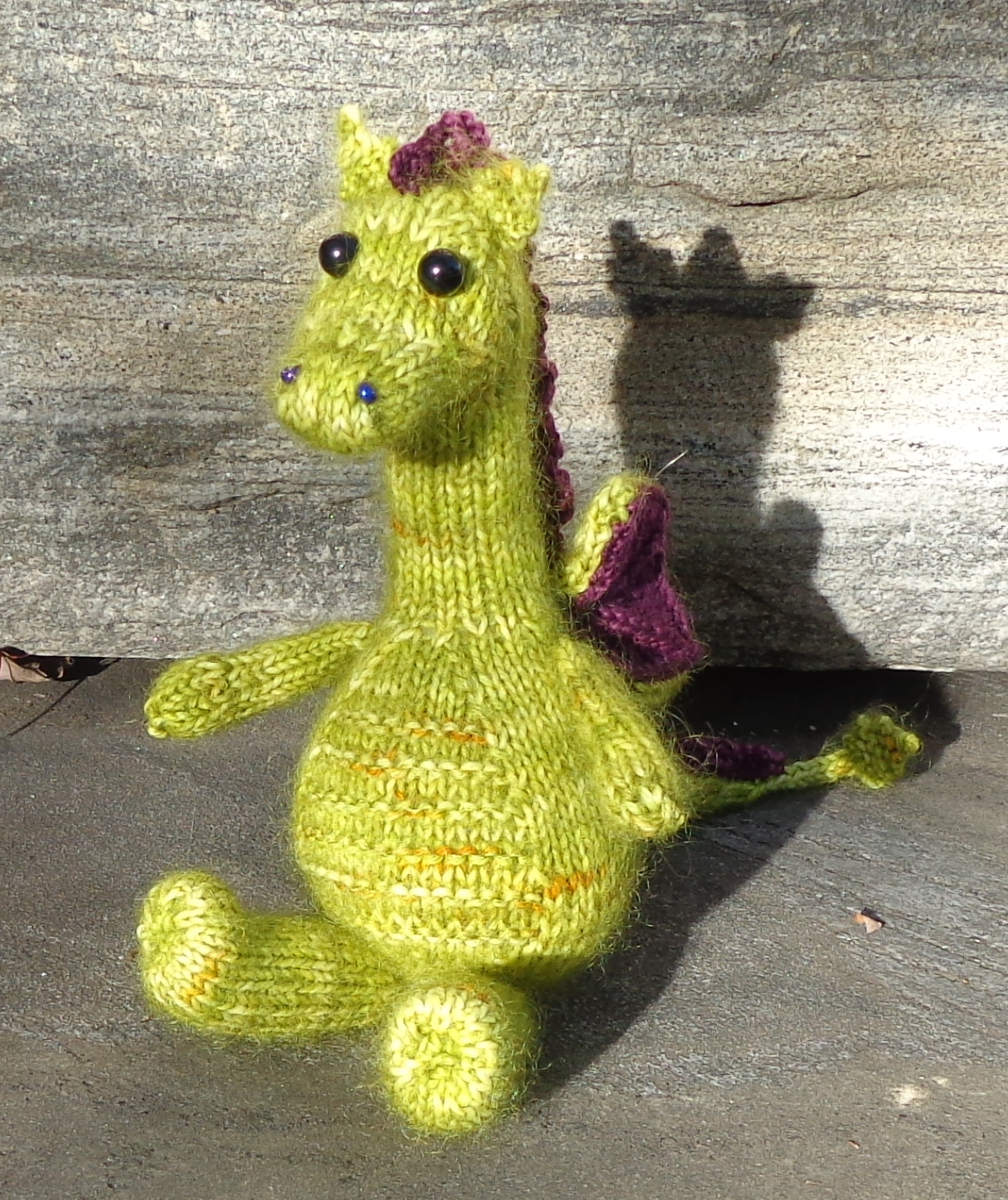
This little guy has been sitting around for a long time with just one arm and no eyes. I finally got him finished up this past weekend, and he’s just as cute as I’d hoped.

Meet Tarragon:

Tarragon the dragon knit by Deborah Cooke

This is a free pattern by Knit-a-Zoo – you can download it here on Ravelry.

I knit him out of a fingering yarn—Lichen & Lace 80/20 Sock, in Citron—held together with a strand of Rowan Kidsilk Haze in the fabulous shade called Jelly. He’s not just lime green: he’s fuzzy! The contrast colour is Shibui Knits Sock. (It’s discontinued so that’s a Ravelry link.) All the yarns came out of my stash of partial balls so I’m not sure how much I used.

I did make a few changes to the pattern. I added ears, as suggested by other Ravellers, and used a navy seed bead for each nostril. I also made the wings in two colours, suggested on Ravelry, and am really pleased with how they look. There are a lot of projects for this little guy on Ravelry and I’m not sure who first suggested the contrast wings or the ears. Both are terrific ideas!

Like most toys, this dragon is a bit fiddly to assemble but totally worth it. I couldn’t find small enough eyes until after I’d stuffed and sewn the head – I came across them quite by surprise, but then, you never know what you’ll find at Len’s Mills – so maybe I’ll have to make another. This guy has button eyes instead.

I love the detail at the end of his tail!

We did go to the Woolstock Fleece Festival last weekend, which was held in Paris, Ontario, this year, and it was wonderful to be able to squish yarn again. There were a lot of indie dyers in attendance and the displays were beautiful. I found a purple handpainted sock yarn that’s perfect to finish my Crystal Twist Shawl. I bought a cake of a gradient dyed fingering yarn – Merino Silk Shawl Length – from Coriand3r Knits, which was just what I’d been hoping to find for the Don’t Panic shawl by Nim Teasdale. And I fell hard for yarn from The Loving Path—I bought a kit for a Love Note sweater from them but am knitting a cardigan with it instead. That project has jumped to the front of the line, so I may have a finished project to show you soon. All in all, it was a wonderful day. 🙂

Green Socks

This past weekend was Thanksgiving in Canada. After cleaning and cooking and cleaning, I’m behind on everything after the holiday. It was a really good dinner, though, and everyone went home with some leftovers.

My completed knitting project today isn’t very exciting—it’s a new pair of socks for me. I like them, though, and given that I’m behind on everything, a new pair of socks suits me just fine. I knit these from stash yarn—Rowan Fine Art is discontinued. (That’s a Ravelry link because it’s not on the Rowan website anymore.) I liked this yarn a lot even though it was comparatively expensive when it was new. When it was discontinued, I stashed quite a lot of it. The colours are rich and it’s handpainted—they did the colour variations in a very regular manner, though, which means it makes patterns in the knitting like a variagated yarn.

Here are my new socks, knit in Lapwing:

socks knit in Rowan Fine Art by Deborah Cooke

They took 76g or about 3/4 of a skein.

This is the pattern I have memorized that varies slightly as I knit. I cast on 72 stitches on 2.5mm needles—I wrote up this pattern for my niece a while back and you can find it here. Since this yarn is thinner, I could have used 2.25mm or even 2.0mm needles.

When you look at the skein, there are four colours in the handpaint: a light almost-lime green, a medium green, a dark olive green, and a blue-green. It’s kind of interesting how they end up pairing off and making spirals of pooling. I like the efect in socks but would be less happy with this pooling in a sweater. You might remember that I made a shawl in Rowan Fine Art in a reddish-brown colourway called the Starling Wrap. You can see that there were four colours in that colourway and they paired off into repeating stripes, too. That’s something I’ll need to keep in mind as I use my stash of this yarn.

Starling Wrap designed by Marie Wallin knit in Rowan Fine Art by Deborah Cooke

And here’s an interesting project with Rowan Fine Art Aran – the same yarn in a heavier weight – by DayanaKnits, using planned pooling. This project is possible because of the regularity of the colour repeat, and I find it fascinating. Have a scroll through Dayana’s projects while you’re on her blog. She’s a prolific and talented knitter.

I’m off to a knitting fair this weekend for the first time in years. I have a little list and am hoping to find some graduated dying by local knitters. It’ll be great to have the chance to smell the yarn fumes and squish the skeins again!