Chullo Hats

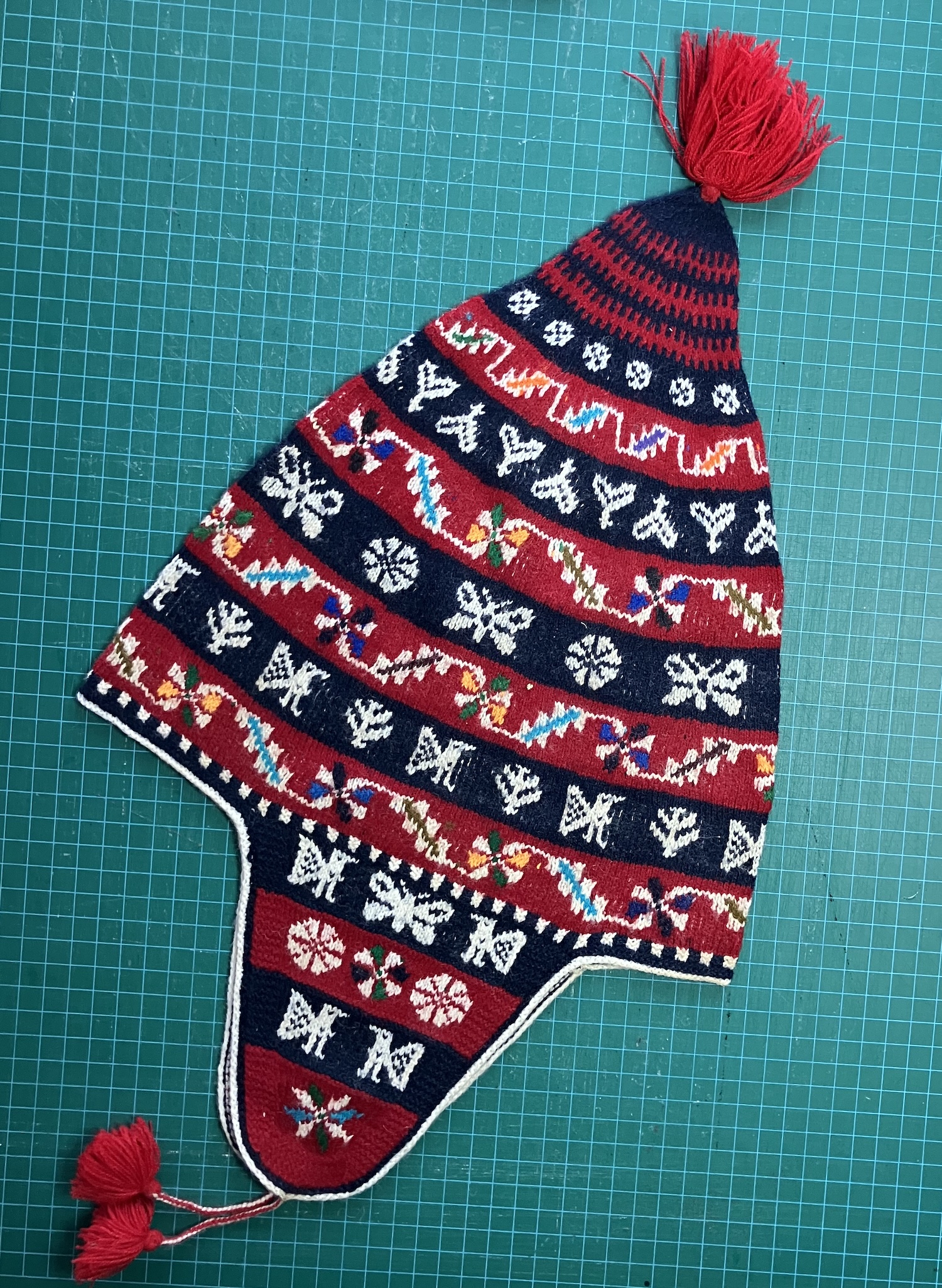
Here’s another UFO found in that stash – an unfinished chullo hat.

chullo hat knit by Deborah Cooke in Knitpicks Palette

This hat is knit of Knitpicks Palette and was a kit. Here’s the Rav page for the Andean Chullo Hat pattern, which is still available. Here it is at Knitpicks. The kit, which isn’t available any longer, came with several balls of Palette – I’m thinking maybe 8 colours. Palette is a fingering weight wool, which comes in a lot of colours.

I remember the pattern being a bit of fun, as there were numerous motifs that you could place on any of the sections and knit in any combination of the colours to make your hat your own. Have a peek at the projects on Rav to see the many variations. Of course, I had to march the llamas around the hat, though they might have shown up better if I’d knit them in the white in the kit. It’s also possible I mucked up the decreases at the crown because the circumference does diminish very quickly. (?)

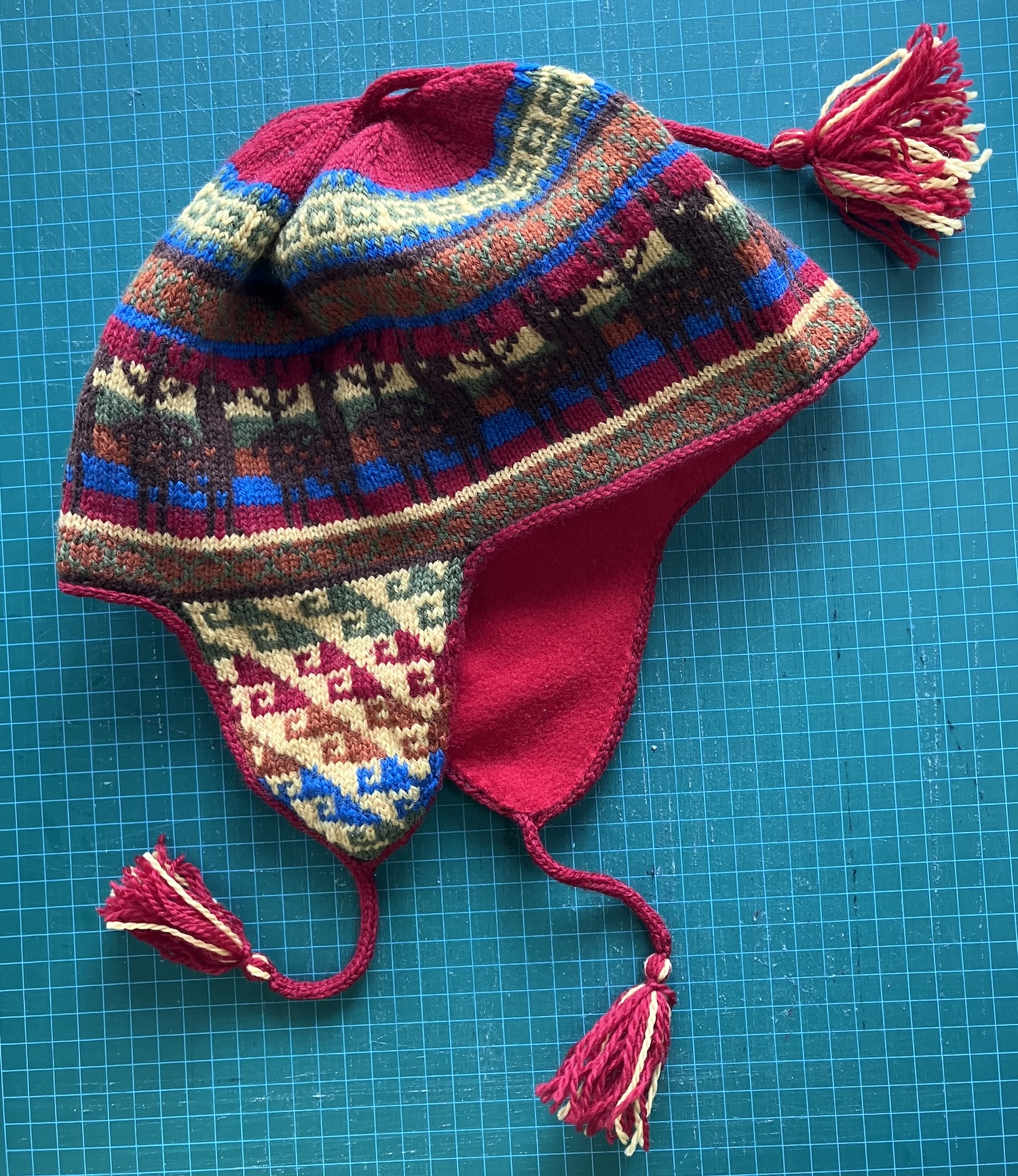
This hat stalled without the tassels, partly because of the chullo hat shown below. I didn’t knit this one – I bought it at the Mountain Equipment Co-op a billion years ago (give or take). (In the 90s there were a lot of South American knits available for sale.)

South American chullo hat from the Mountain Equipment Coop

It’s knit of a yarn that seems a lot like Lopi Alafoss – but its special magic is that it’s lined with polar fleece. The mister grabs this hat whenever it’s really cold.

inside of South American chullo hat bought at the Mountain Equipment Coop

I meant to do the same with my chullo hat, but was stymied as to what shape to cut the pieces for the crown. Now I realize that the creator of this hat avoided that challenge by only lining the main part of the hat and the flaps. I’ll do that with mine.

We also have a couple of chullo hats from one of the mister’s trips to South America. He hiked the Inca Trail back in the day (to end up at Machu Picchu at dawn) and it was so cold that he bought two hats from the local knitters. Both are chullos. He wore this navy one.

South American chullo hat

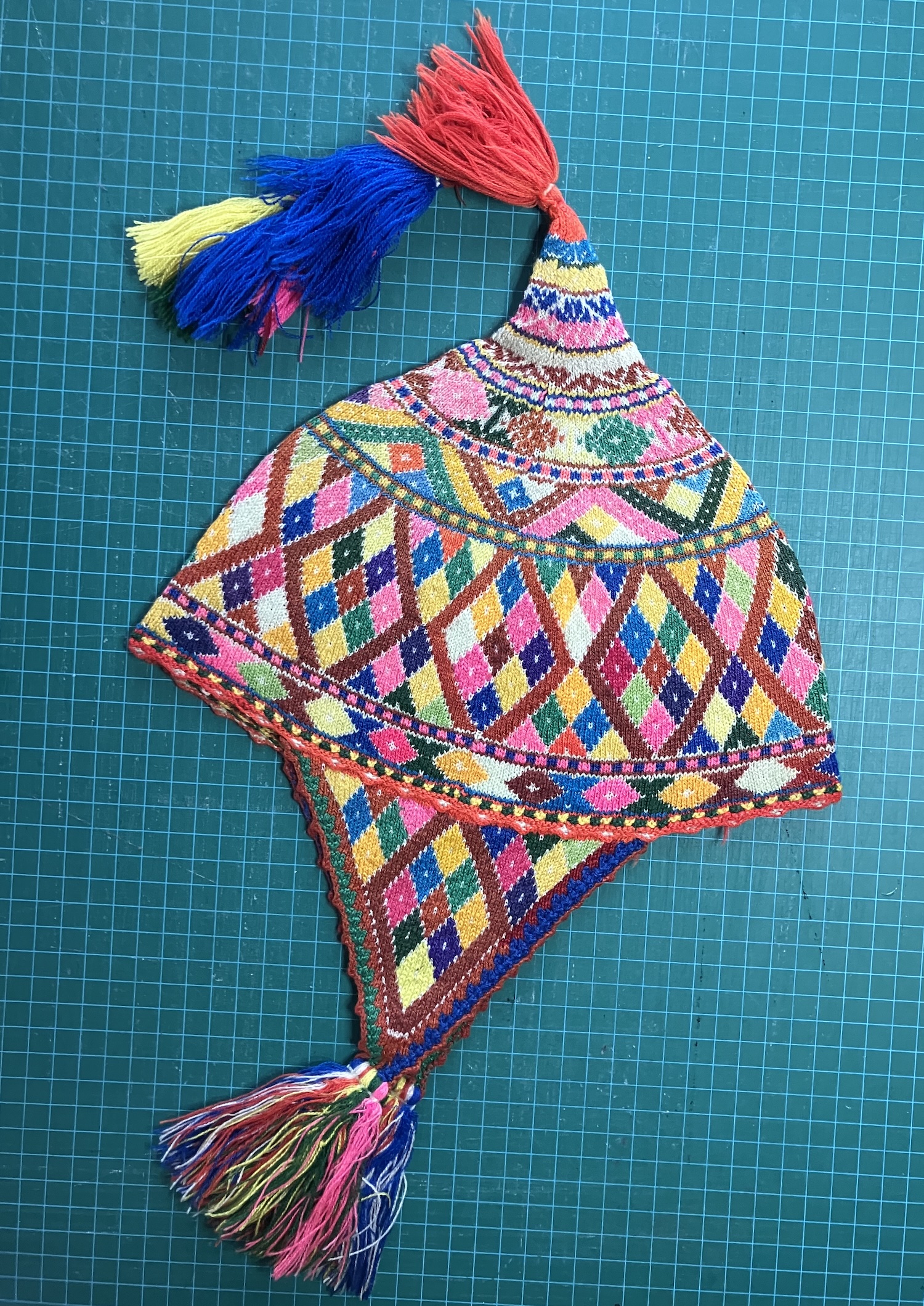
He bought this second hat just because, and I’m glad he did. It’s so beautiful.

South American chullo hat

The wool is so fine, it’s almost thread. Look at the detail.

detail of South American chullo hat

Someone had a very fine set of needles! I love that the colour placement is apparently random. It’s such a lovely piece of work – and very inspiring.

And here, finally, is my own lined and finished chullo.

chullo hat knit by Deborah Cooke in Knitpicks Palette

Another Bag Finished

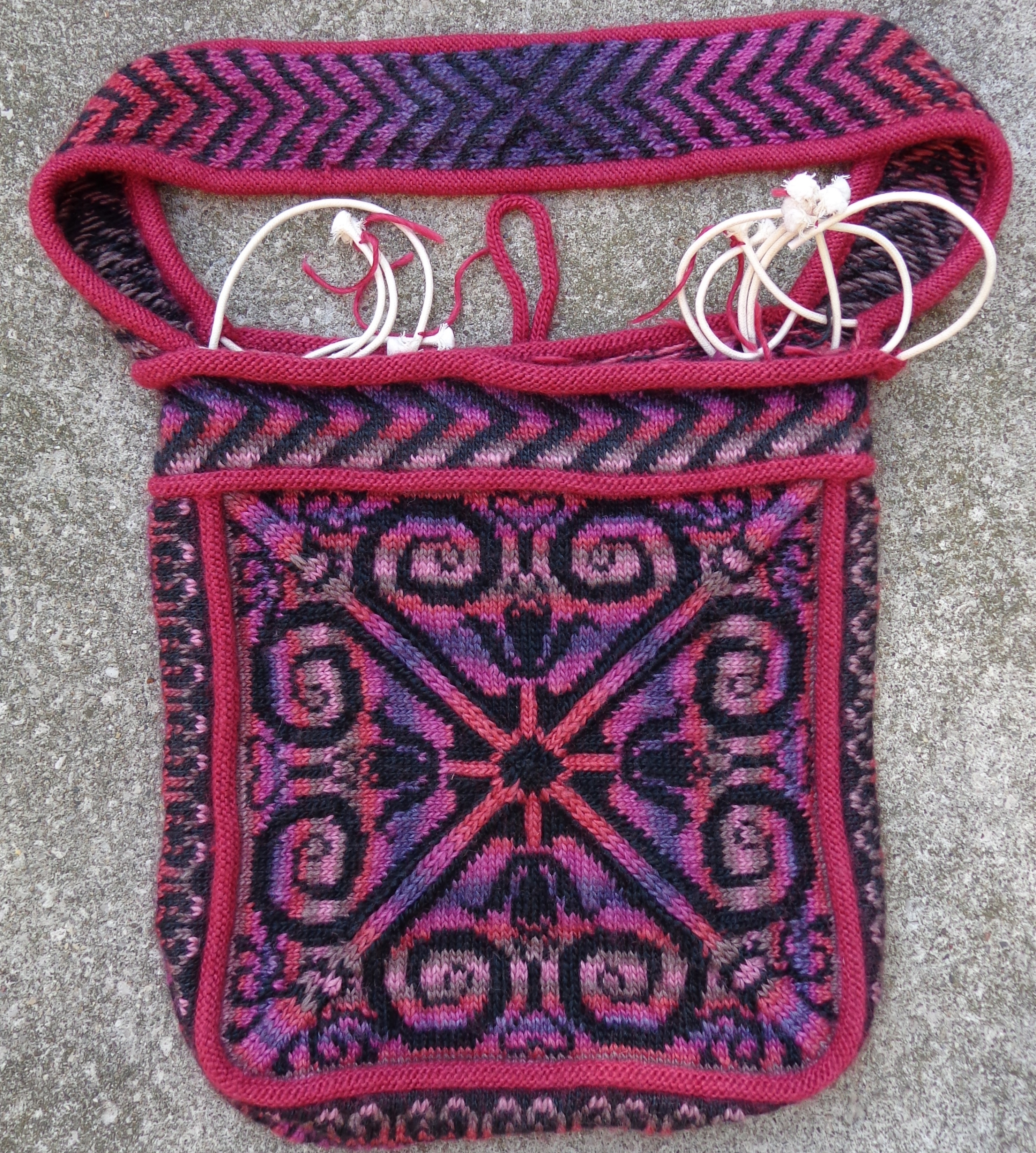
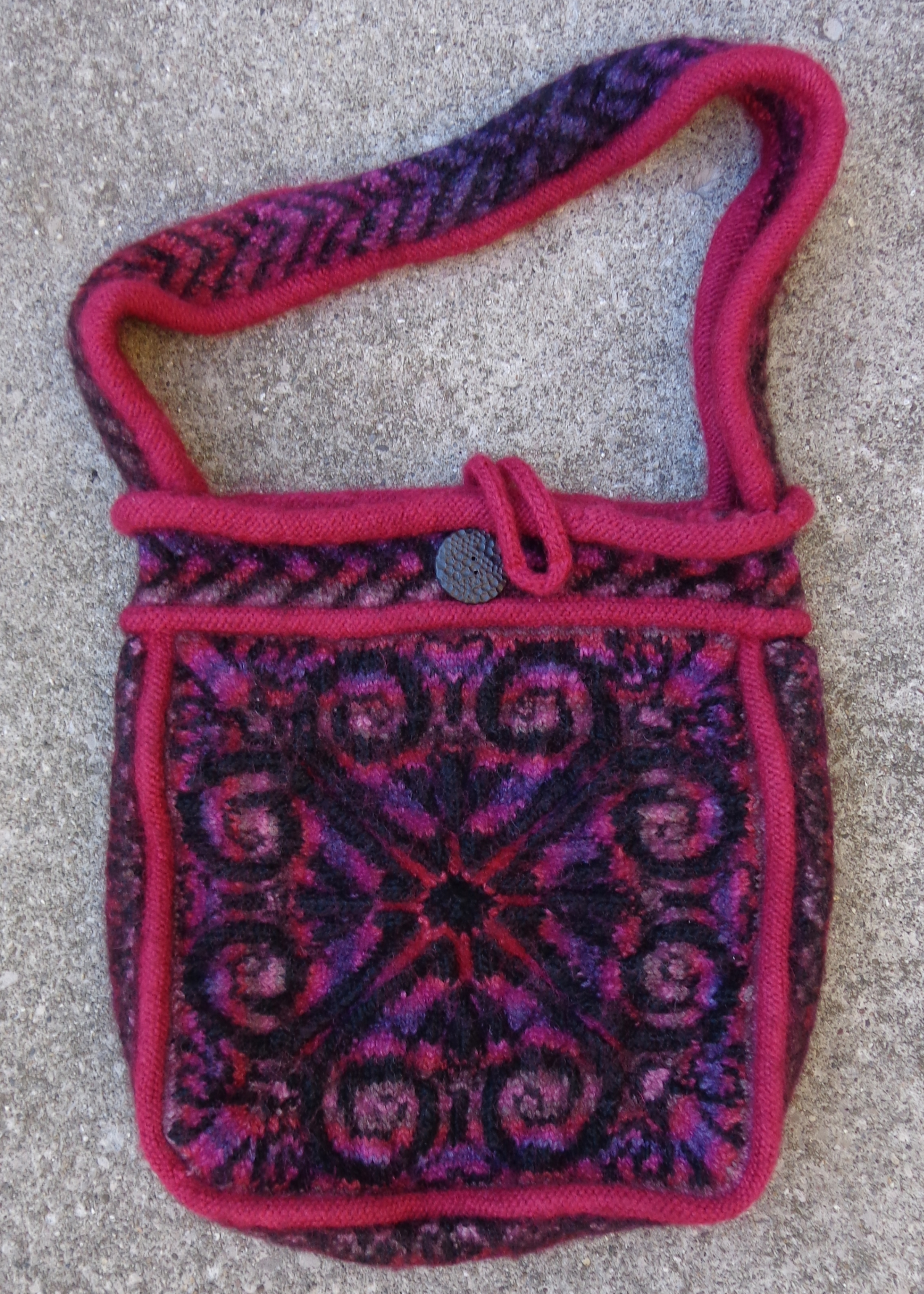
I found this bag partly completed in a stash of WIPs. The pattern is Sipalu and I knit it in Patons SWS. (That’s Soy Wool Stripes in the red mix and Soy Wool Solids in the solid red. I used another yarn with the same content for the solid black, Gjestal Garn Bris. I suspect that yarn is discounted. The SWS is.)

Sipalu Bag by Kerin Dimeler-Laurence knit in Patons SWS by Deborah Cooke

My Ravelry project page says I knit it in 2011 and finished it in 2013 – but that, alas, is not entirely true. It was completed this far – as above – but the lining pieces were only cut out and unassembled. They were stashed away with it.

Here’s my original blog post about it.

I added piping to the interior of the red bands and you can see them in the picture above. That one is a before-felting picture – the one below is after felting. That button is a porcelain one from a local maker and I just love it.

Sipalu Bag by Kerin Dimeler-Laurence knit in Patons SWS by Deborah Cooke

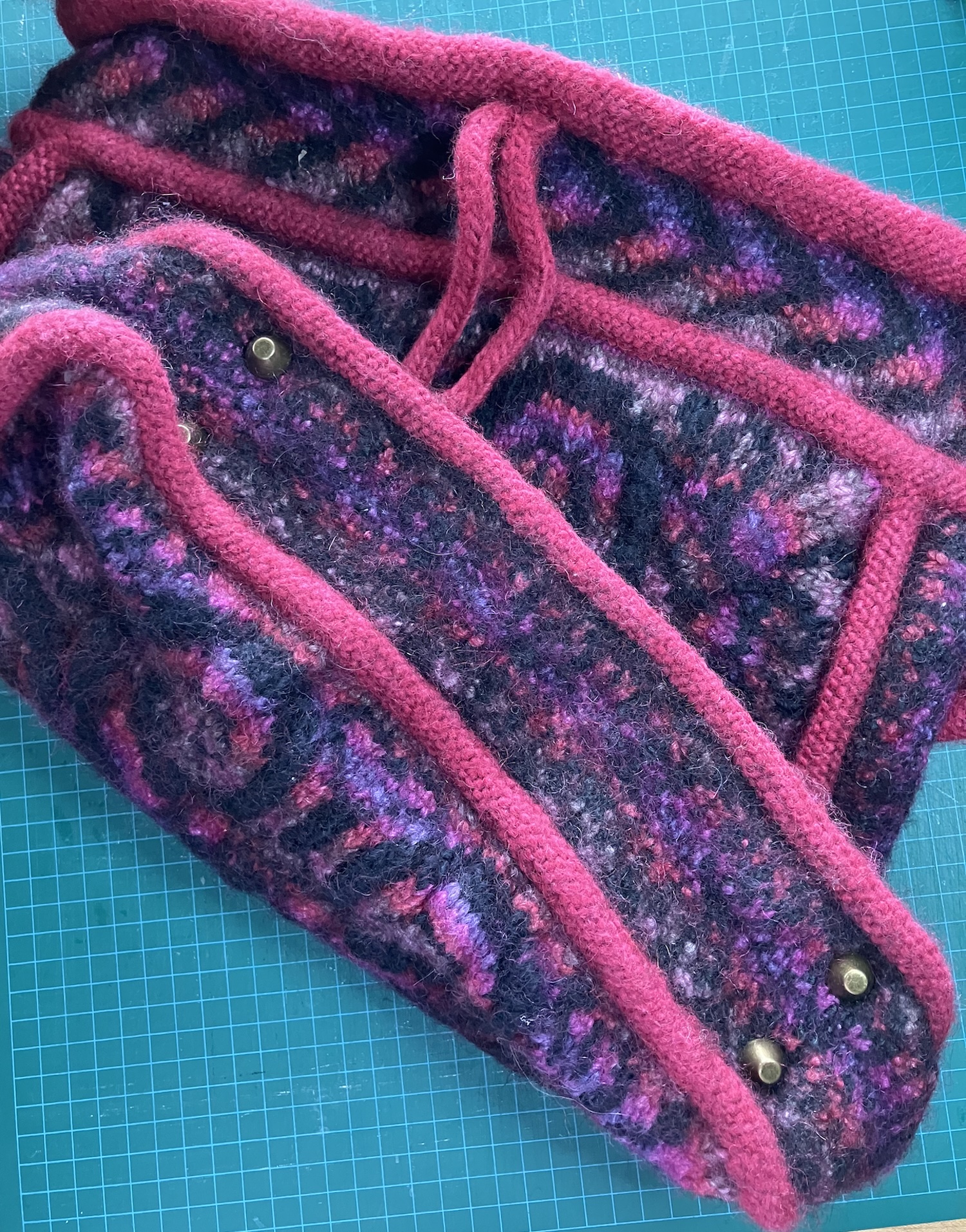
So, the lining. I suspect I put this aside because the construction of the zippered edge was a little complicated. I had assembled the lining for the body and put a pocket on it already.
Base of Sipalu bag knit by Deborah Cooke in Patons SWS

I’d also secured a plastic base in the bottom with some purse feet. Ikea makes these thin ones that come in packs of two, and you can cut them to size with a utility knife. The colours change with each new batch, but I always have a few in my materials stash.

Now that tricky bit. The bag is essentially a box and is maybe 3″ deep, so I needed to centre the zipper between two pieces across the top, between the handle ends. Once I got out my ruler and made a plan for that, the lining came together quickly. There was a good bit of handsewing, to line the handle and secure the bag lining, but it wasn’t that big of a job.

Lining of Sipalu bag knit by Deborah Cooke in Patons SWS

Why is it that these incomplete projects that sit waiting for years always take a very short period of time to finish up? It happens every time.

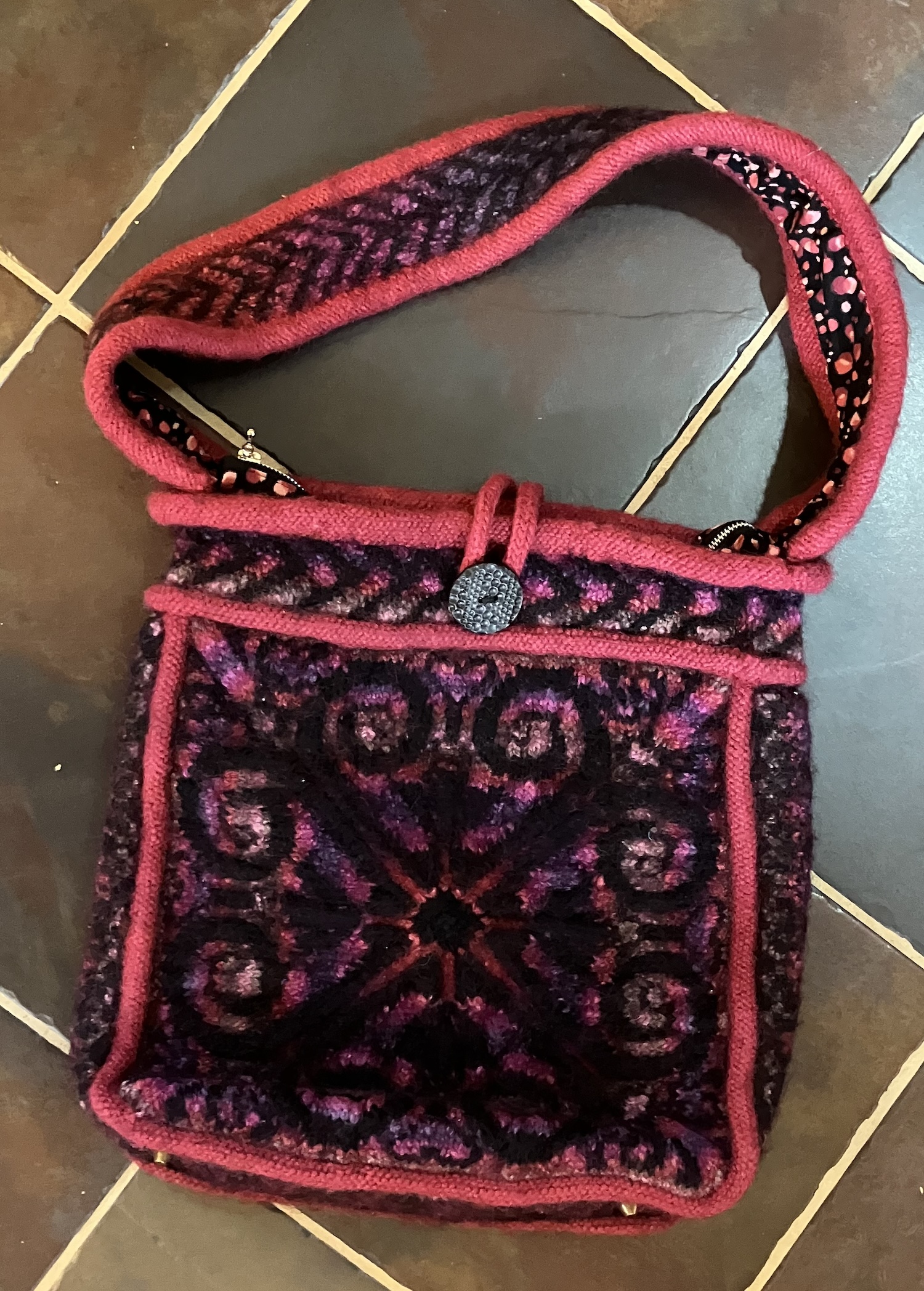
And here’s the finished bag. It looks a bit dark in this pic, thanks to a dingy day – but it’s DONE!

Completed Sipalu bag knit by Deborah Cooke in Patons SWS

Unfinished Purses & A Beet

There are more projects in this stash of UFOs. Here’s the next one in my finishing queue.

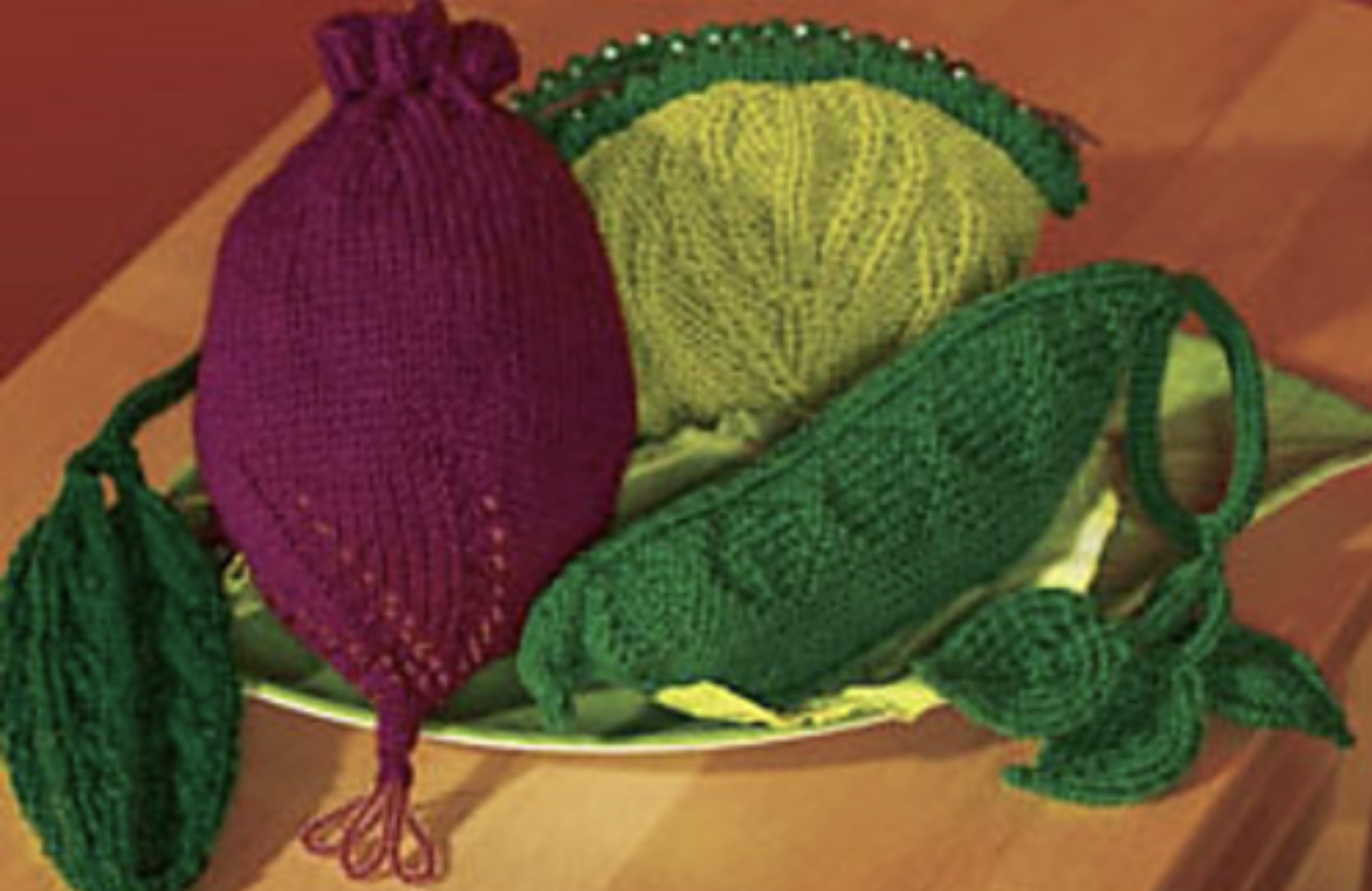
This was a kit from Knitpicks with instructions and wool for six fruity purses, called The Elegant Edibles kit. (That’s a Ravelry link – the pattern is no longer available.) I remember thinking these were so cute.

Here are the official pictures from Knitpicks:

Elegant Edibles purses from Knitpicks

I did not remember that it was 2008! I finished the kiwi and the orange purses by 2010, and they’ve been waiting patiently ever since to be finished up. Enough!

Here’s how I found them:

Orange purse from Elegant Edibles Knitpicks kit, knit by Deborah Cooke
Kiwi purse from Elegant Edibles Knitpicks kit, knit by Deborah Cooke

These are really cute knits and I like that there are beads for the ‘seeds’. I made some changes to the pattern, noted on my Ravelry project page here.

I suspect what happened was that I didn’t like how floppy they were and wasn’t sure what to do about it. In the KP pix, they look more like pillows than purses to me. I did felt them a bit, which gave them a little more substance. I also decided against the handles shown in the pattern and adapted the leaves from the bunch of grapes for the orange. Those leaves are felted as well.

And now to finish them up. I found some coordinating zippers (there were zippers in the kit, but who knows where those ones are now) and pinned them in. I also cut linings and interfacing for those linings – in fact, I’ve cut buckram for the outer curve on each one. The kiwi one doesn’t have a handle at all, but my Rav stash lists the bin (in the attic) where the remaining yarn is supposed to be. (It was there at some point. Is it still there? I’ll have to go up and see.) I’m thinking a long i-cord in the green would be a good choice for a handle on the kiwi bag. If the yarn is gone, I’ll do one in black.

The beet and the grapes are also cute, but I have no idea what I did with the pattern. Hmm. If I find the yarn, I’ll hunt down the pattern. I do remember that the brighter purple (for the beet) was called Fairy Tale. 🙂

Did I use up the KP yarn on this Norah Gaughran beet? Here’s my Rav project page, and yes, the purple is the KP yarn. The green is Patons Classic Wool Worsted, so the green from the kiwi purse might still be in the stash. I’ll have to go hunting…

Beet by Norah Gaughan knitted by Deborah Cooke

A Tale of Two Purses

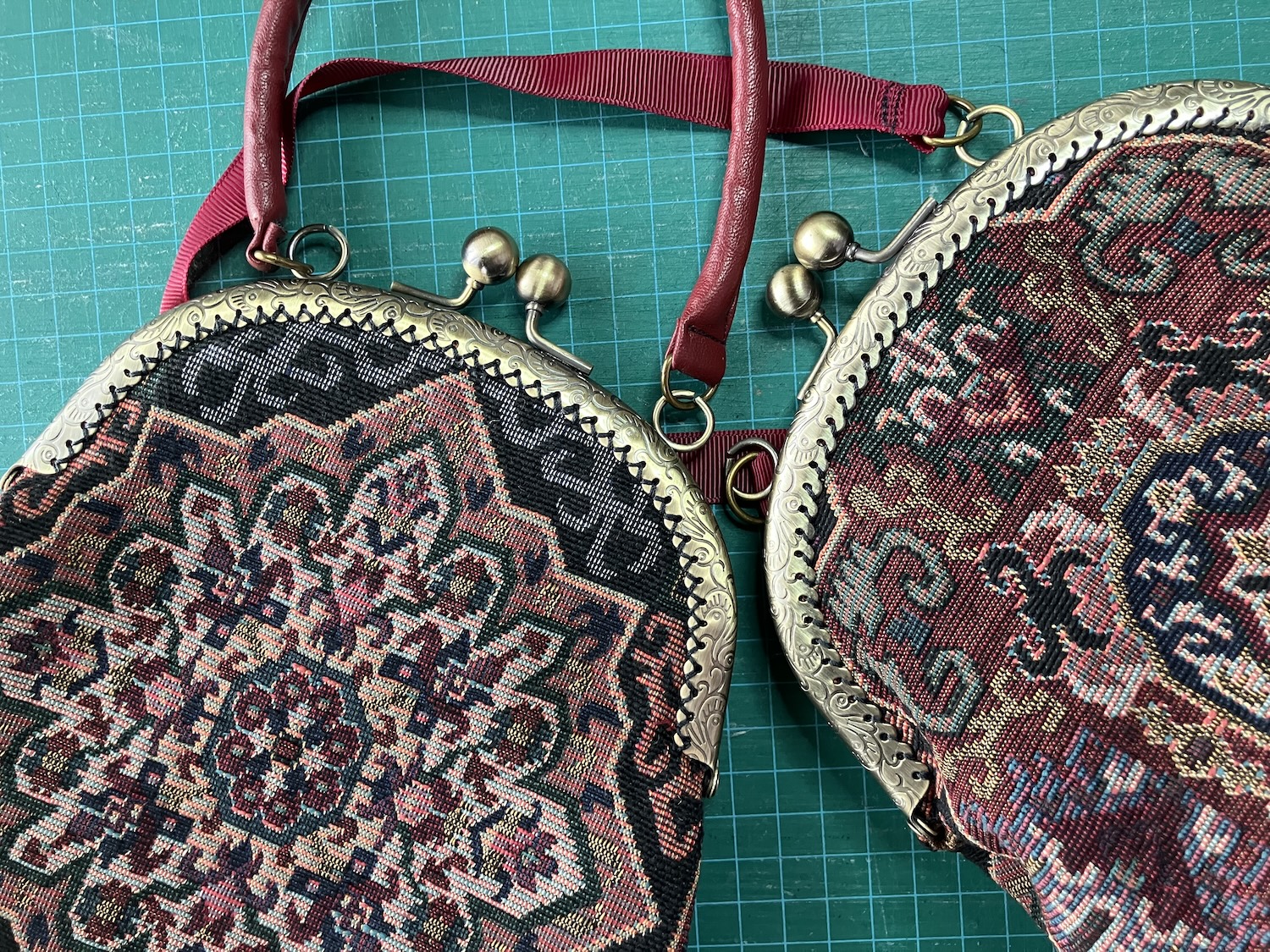
A while ago, I bought several of these metal purse frames when they were discounted at my local fabric store. I liked the curved antique gold ones with the detail on the frames. I finally got around to thinking about them, and making a purse with one of them.

It turns out there are two kind of frames – as well as many styles. One kind has holes like this own, so the bag is sewn into the frame. The other is smooth, and the bag has to be glued into the frame. I’m not fussed about the glue option, so am glad that I inadvertently bought the kind I prefer. Here are my two bags, as a preview, then we’ll look at each one and the differences between them.

two finished purses made by Deborah Cooke

The one on the left is the purse I made first.

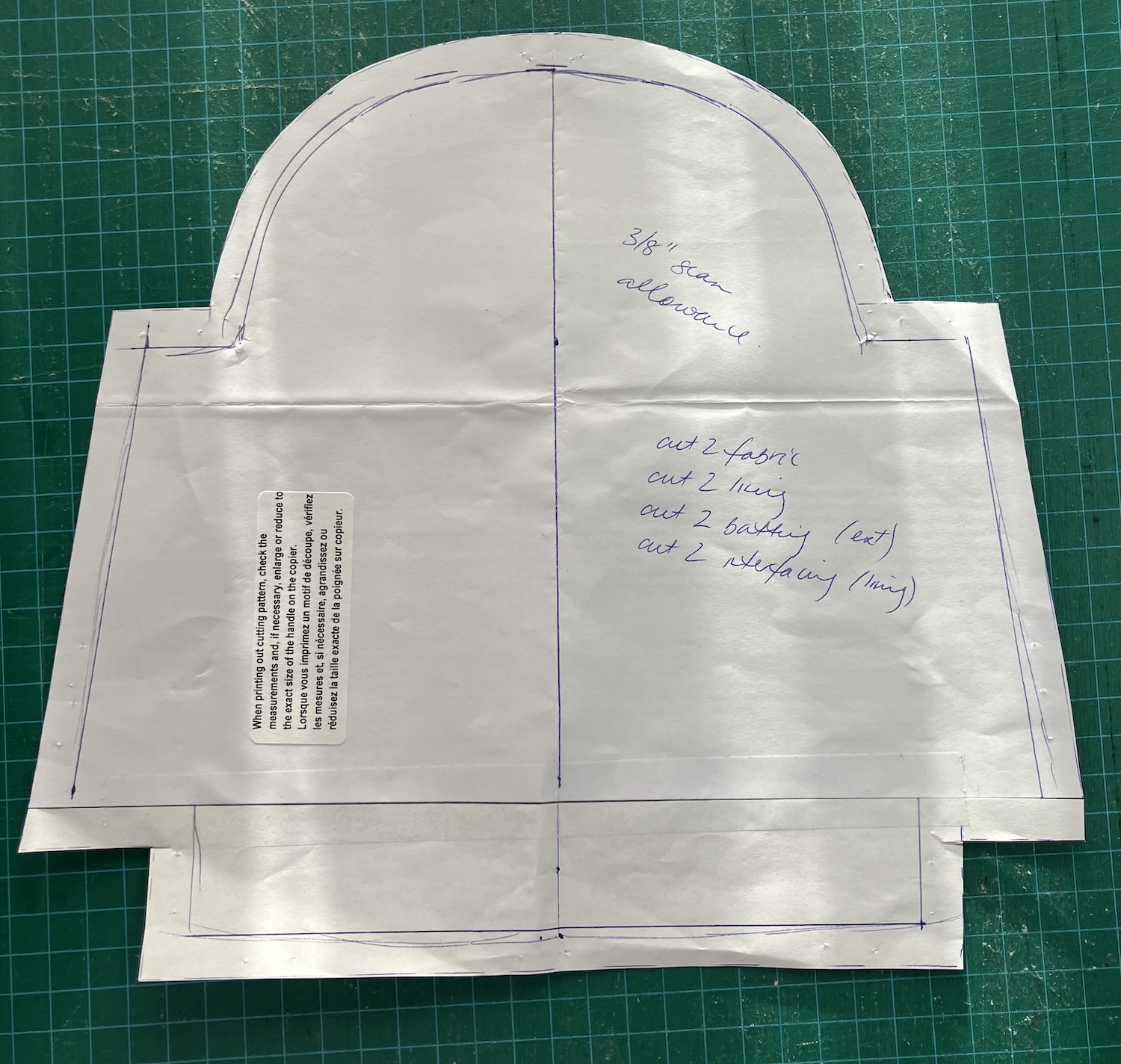
pattern for first purse made by Deborah Cooke

The package for the handle contains a template but is pretty minimalist in terms of instructions. I traced the curve of the handle and created a pattern, then cut it from a tapestry fabric that I love (there are pieces in the stash from some pillows) and a coordinated lining.

Featuring a motif from this tapestry fabric on each side of the bag determined the size of my bag. Since it’s a very heavy upholstery fabric, I didn’t use any interfacing or padding. I could have used some interfacing on the lining, but didn’t. I did add a small pocket to each interior, since I like having a little pocket inside my purse. (Perfect for a hotel key card that I don’t want to lose.)

I sewed the lining first, only sewing an inch at either end of the seam at the bottom. I then pressed that seam as if it was sewn, giving me a nice crisp edge for closing that up once the bag was done. When I sewed the outside of the bag, I top-stitched all three seams so that the seam allowances would stay put. The bag is boxed out by sewing across the bottom corners.

Once the bag was constructed, turned and the space in the bottom seam of the lining was sewed up, I gave it a good press, then top-stitched around the top curve that goes into the frame. This made it a little easier to jam that edge into the gap in the purse handle – when I could see the top-stitching on the inside, I knew it wasn’t pushed in far enough. I basted the handle in place, then stitched it all together with a topstitching thread.

Here’s that first purse:

first purse with metal handle made by Deborah Cooke

The result is fine, but the finished bag doesn’t have much wiggle room at the top. The purse is very flat – I can just slide my hand inside. Hmm.

I did some searching online and came up with this tutorial at So Sew Easy. It’s for a different frame – there are so many styles available – but you can follow it to make a pattern to fit your frame. This tutorial shows how to adapt the tracing of the handle to create more fullness in the bag. Ha. Look at the difference between my two pattern templates:

pattern for first purse made by Deborah Cooke
pattern for second purse made by Deborah Cooke

The one on the right has been folded and didn’t want to lie flat for the picture. The bottom edge is straight.

Here’s the bag made from the second pattern:

second purse with metal handle made by Deborah Cooke

It’s much fuller. I’d even call it puffy. I would have loved to have included the top of that octagon shape beneath the handle – the yellow-ish outline – but there just wasn’t enough of the fabric for that.

When sewing the handle to the first purse, I used two stitches per loop, making a zigzag, but really, it doesn’t need this much reinforcement. And this sewing is hard on the hands – less is better! (You can see that I missed one zig on the left of the handle.) For the second (on the right) I just did one stitch per hole.

stitching on purse handles, purses made by Deborah Cooke

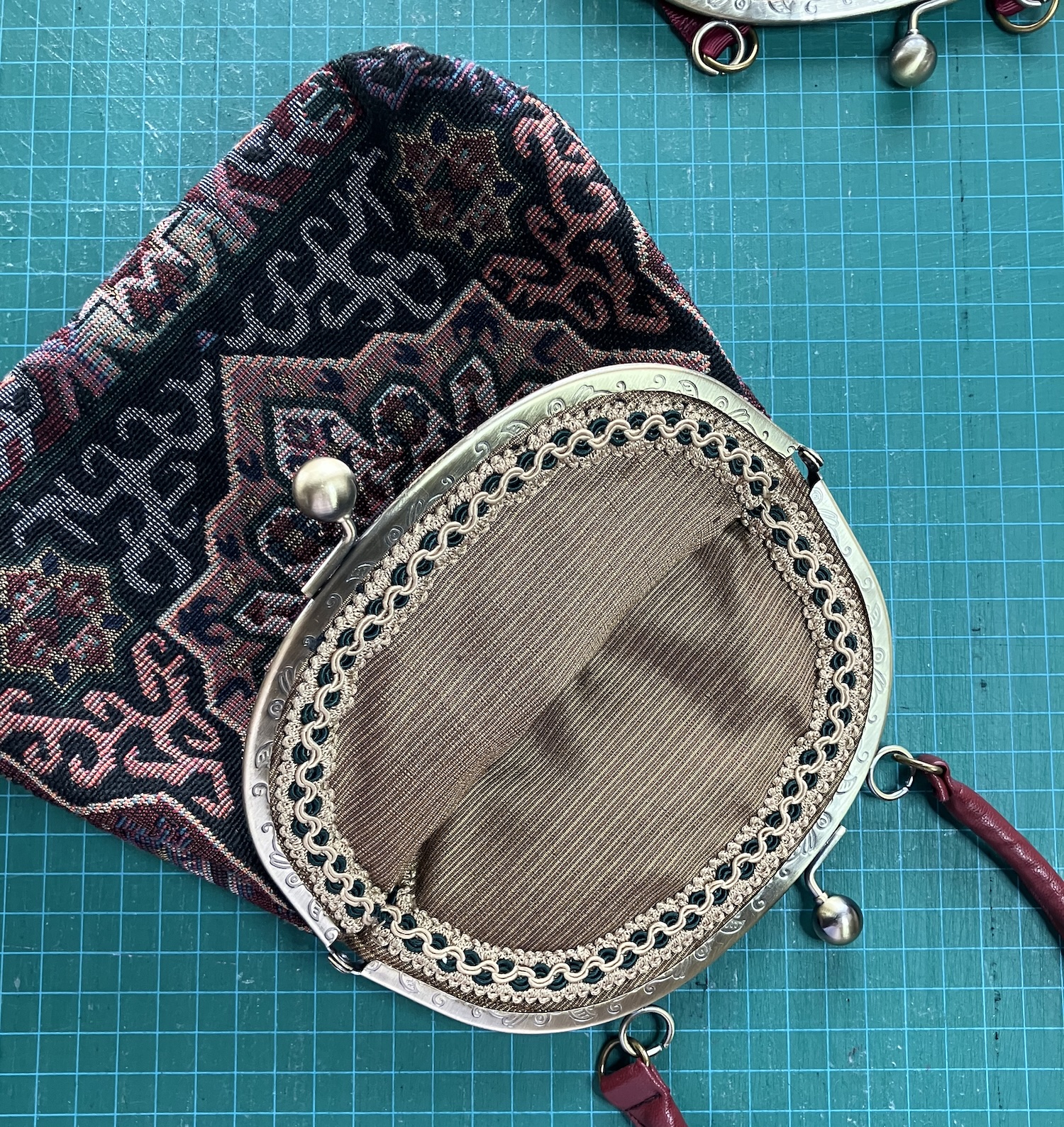
The stitches showed on the inside – I just couldn’t make them small enough to avoid that, as I was using a black buttonhole twist to sew in the clasp. I sewed in a bit of trim to cover that up. Here’s the second bag with the trim pinned in place.

inside of second purse sewn by Deborah Cooke

Here’s the first purse with the trim sewn in. It looks much neater. (You can also see how much flatter this one is.)

inside of first purse sewn by Deborah Cooke

The frame didn’t come with a handle – I think there were matching chain handles, but they were sold out by the time I wanted them. I cut a length of pleather, sewed the outside edges in place then folded the ends over a d-ring. I then fed a length of cording though it. For the second handle, I just hemmed a piece of grossgrain ribbon. The loops on the bag handle had to be coaxed open a little with a pair of plyers to join the handle, but it all worked out just fine.

Here are those two finished bags, side by side.

two finished purses made by Deborah Cooke

I may change the ribbon handle at some point, but for now, it’s just fine.

Knitting Dragons

Two Tarragons knit by Deborah Cooke

You might remember these two little dragons I knitted. The one on the left (Cedric) sits on the bookshelf in my office and the one on the right has gone on to live on a different bookshelf. I started to knit a few more.

The pattern is Tarragon, a free download. (That’s the Ravelry link.) There are a lot of projects on Ravelry with additions and changes to the pattern – I’ve added ears as in one of those projects. I knit mine with a strand of fingering weight or sock yarn – in this case, it’s Koigu KPPPM – held double with a strande of KSH or similar. This time, it’s Elann Silken Kydd.

Here’s the new dragon on the block:

green dragon knit by Deborah Cooke from Tarragon pattern

This time, instead of knitting four wings and sewing them together in pairs, I knit the green wings, then picked up the stitches for the yellow “lining”. The wings are knit from the outer edge in, and this saved some sewing. I think outer edge looks neater too.

green dragon knit by Deborah Cooke from Tarragon pattern

I think he’s cute!

green dragon knit by Deborah Cooke from Tarragon pattern

Those Pretty Socks

You might remember that I cast on these socks in May, from the book Knitted Socks from Finland.

Here’s my original blog post about them.

And here’s the first picture I shared then.

Dear Sister socks in progress, knit in Knitpicks Chroma Fingering by Deborah Cooke

Soon after posting it, I saw the mistake. Do you see it? Look at the left wing of that completed butterfly. You can see a row of black stitches, making the five dots into two dots and a weird V. It’s maybe 15 rows back.

I failed the trick of inverting the chart – what’s black on the chart is being knit in the pinks and what’s white on the chart is being knit in black. That always bends my brain a bit.

I’ve been looking at it ever since, pondering what to do, and finally decided to pick it back and fix it. I don’t know why I ever linger over this choice. Once I’ve seen an error, I can’t un-see it and I always have to fix it. Maybe it just takes me some time to accept the sad truth. I had knitted further than shown in that picture, so there was even more to frog.

So, here’s the same sock with the error fixed. I knit to the end of my kinked up yarn, so this is how far I was. The light is a bit harsh, but that butterfly’s wing dots are now right.

Dear Sister socks in progress, knit in Knitpicks Chroma Fingering by Deborah Cooke - corrected

I tried on the sock because it seemed short. It won’t be a knee sock for me – it looks like the sock will end at the widest part of my calf. That means they’ll definitely be lounging socks, because they’ll slide down when I’m walking.

Onward!

A New(ish) Resource for Sewers

I’ve been looking for years for a way to organize my sewing, similar to how I organize my knitting on Ravelry. I mostly want to inventory my patterns and be able to search through them – without digging through boxes in the attic.

Well, I’ve found it. Threadloop is a comparatively new online app, which lets you do just that. You can also inventory your fabric and notions there, and there are forums for discussion as well. I’ve only just dipped into it, but I like it a lot – and it’s free.

Learn more about Threadloop here.

Socks in Old Patons Kroy

I have been sorting my stash lately, sending some of it on to find new fans. During that process, I rediscovered some old Patons Kroy. It feels so nice and I love the colour so much that I cast on a pair of socks. I also fell down a rabbit hole…

Kroy sock yarn over time

Patons Kroy is a sock yarn. It’s been available for a long time, so it makes sense that there have been some changes over the years. This Patons Kroy is a 3-ply yarn – it’s the heathered blue one on the left – while the current Patons Kroy Socks (the variegated one on the right) is a 4-ply. The 50g put-up on the old Kroy has 250 m, while the new one has 151m. There was another older 4-ply that had 186m per 50g ball, and it’s a really soft squishy yarn. (It’s in the middle.) I have a bit of that, too. With the old 3-ply, you can get a man’s sock out of one ball; with the new 4-ply, you might run short on even a smaller sock.

I bought this 3-ply Kroy yarn about 30 years ago, in two colours – this seagreen mix and a purple. There was a yarn store on Bloor St. W. in Toronto, close to Spadina Ave. on the north side. I don’t remember the name of it – it’s possible that it was a short-term rental in an empty retail space and had no sign – but it was an outlet store like Spinrite. They sold mill ends by the ounce. It might have been another Spinrite outlet.

At that time, there was a Patons mill in Toronto still. It was on Roselawn Ave. I remember it closing and being developed as condos – it is, in fact, Forest Hill Lofts, which were developed in 2003. (Yes, I had some fun checking out the condos for sale.) Patons had a mill store a little west of there for a bit, on Dufferin near Castlefield, but then closed that as well. There was only the Spinrite factory in Listowel after that, which closed earlier this year.

Socks Socks Socks

I bought the Kroy in two colours to make a pair of entrelac socks, from Socks Socks Socks. (That’s a Ravelry link.) They ultimately frustrated me so much that I frogged them back. (The issue was entirely user error: the pattern called for sport weight yarn, and 3-ply Kroy is a light fingering. I was going to change the stitch counts to make it work, but with entrelac, that was complicated.) The yarn has been loitering in the stash ever since – although I’m not sure where the purple has hidden itself away.

It’s surprising to see that this yarn was made in Canada. The current Kroy is made in Turkey, and has been balled and banded in Canada. I’m not sure what happens now since the Listowel mill is closed. Will the yarn be discontinued? Or will they ball and band in the US? Hard to know and harder to care at this point. Patons is a Canadian company no more so I’ll be knitting from my stash.

Socks by Beehive

The pattern is an old one, from a Beehive book called Socks by Beehive #113. They must have printed a lot of copies of this booklet as they’re pretty easy to find in thrift stores and antique markets. This pattern is Knotty Pines. (Those are both Ravelry links.) I really like this pattern and have made it several times, long before Ravelry (so those socks aren’t listed on my project pages there.)

Looking at the pattern on Rav, I see the recommended yarn is Kroy 3-ply by Lady Galt, which was made by Newlands in Cambridge Ontario. Here’s a blog post I found with a bit about Newlands – and LOL I have that knitting book, too. I remember my grandmother buying Lady Galt yarn at Eatons, a long-closed department store, which is another peek at the past. (I wonder if that Newlands building in Cambridge is condos now, too. Hmm. There are a bunch of them there.)

In the meantime, here’s the first Knotty Pines sock knit in the 3-ply Kroy:

sock knit by Deborah Cooke in Kroy 3-ply sock yarn, in Beehive Socks Knotty Pines pattern

I was planning to knit these for myself, so made the leg shorter than the pattern. The foot, though, ended up being too wide for me (at 76 stitches) so the sock ended up being for the mister. He doesn’t mind that it’s a bit shorter. I’ve started the cuff on the second one – it takes a bit of concentration, since it’s not as regular a ribbing as usual. The bonus is that the ribbing lines up with the pattern once you start it, so it’s worth paying attention for a few rows.

Clematis Wristlet

In the beginning dragon quilt in blue, assembled by Deborah Cooke, and completed.

I’ve gotten back into making bags this fall and here’s a completed one to show you. I’ve been waiting for a sunny day to take some pictures, but it’s raining raining raining, so we get some pix taken on my sewing table instead. The blog has been too quiet and I’m done with waiting for sun.

You might remember my blue dragon quilt, which was a kit (and is now FINISHED! HA!). That’s it at right.

I had some leftover of the various fabrics and used them for this, along with a shiny black pleather. They really were bits and ends, so it ended up a bit patchworky but everything coordinates well.

This is the Clematis Wristlet, a free pattern from Blue Calla Patterns. This little bag has fusible fleece on the outside pieces, which gives it a bit of substance, and more interfacing besides. I didn’t have a 9″ brass zipper, so I cut down a 14″ one for this project.

Clematis wristlet by Blue Calla patterns sewn by Deborah Cooke

On one side, I used the scales. I also had a strip of this print to use on the inside of the strap.

Clematis wristlet by Blue Calla patterns sewn by Deborah Cooke

On the other side, I used the background with dragons and circles.

Clematis wristlet by Blue Calla patterns sewn by Deborah Cooke

The lining is the Celtic/tattoo background fabric. (I see I picked up a thread on my cutting table and included it inadvertently in this shot.)

Clematis wristlet by Blue Calla patterns sewn by Deborah Cooke

And the pocket inside is made of the dragons from the border print. There are only scraps now, so they’ve gone into my bag for real patchwork.

This pattern is a pretty easy make, and the finished bag is a useful size. I’m always looking for something flat to hold my cash at bookfairs and this might just do the trick.

I like the idea of the dragons watching over my hoard!

Making Book Covers

I’ve been making a lot of book covers lately. Although I initially learned how to make them from a blog post (one with many video ads. Ugh.) I’ve figured out a few tips and tricks. Having this post here is as much for you as for me, as I keep having to figure them out all over again. 🙂

Here are the book covers I just made for a giveaway of my books at a reader conference:

book covers sewn by Deborah Cooke

And the one in the pictures below is for a reward tier in my most recent Kickstarter campaign.

First, assemble your materials. You’ll need two (cotton) fabrics that match or contrast, along with a length of ribbon and a length of elastic.

measure for a book jacket

Then, measure your book. The height of the book is the actual height. The width is the width of the entire cover, from the front edge, across the spine, and around to the back edge.

In this case, the book is 9.5″ and the width is 14″.

For the height to cut, we need to add a seam allowance top and bottom. I use 3/8″ inch seam allowances on these, which is 10cm. Two of them (2 x 3/8″) is 3/4″. We also need to add .25 to .5″ for ease – since this is a hardcover and a bit thicker, we’ll add .5″ So, our cut height will be 9.5 + .75 + .5″ or 10.75″.

For the width, we need to add a 3″ flap at each end plus the two seam allowances. We’ll also add that half inch for ease. So, the cut width will be 14″ + 6″ + .75″ + .5″ which will be 21.25″

Since the chosen fabric is 45″ wide, I can cut two from the width – each length of 11″ will give me two sides for a book cover. To make six book covers, I’ll need 33″ or so of two different 45″ wide fabrics.

I can also cut the elastic – each cover will need a 12″ piece – and the ribbon bookmark – each cover will need a 15″ piece.

The first seams to sew are the ends of the flaps. For the front edge, sew the entire seam. For the back, leave a gap in the middle for turning.

If it matters to you which way is up, then sew the front flap seam first. It’s the complete one so once it’s done, it becomes a reference. In this case, I wanted those pale tulips to grow upward, so I pinned and sewed the front flap seam with them properly oriented. The seam will be on the right and the pin is at the top.

sewing a book jacket 1

Turn and press, then topstitch where you’ve sewn (leaving the back gap open.) I placed the rotary cutter to show the open back seam. Look closely to see that I’ve only topstitched part of that back flap edge.

sewing a book jacket 2

The top and bottom are sewn next, but I find it easier to position the elastic and ribbon first. With the right side facing, mark the 3″ for each book flap with a pin on the top edge of the top fabric. Pin the ribbon at the top edge near the middle. If your elastic is round and hard to pin, put a bit of tape on each end so you can pin it in place. Pin it to the top fabric 2″ inside the pin for the back flap. Mark the flaps with pins on the bottom edge of the top fabric, then pin the elastic in place, as well.

making a book jacket 3

Remember that the pins are only in the top (blue) fabric.

Turn the book cover so it is right sides together. This is the tricky bit. The flaps are folded in like an accordian, but it all comes out right in the end. At one end, pinch the fabric right sides together at the pin marking the flap. Pin the seam allowance in place, folding it inside the book cover, then fold the lining so that it aligns with the pin at the edge.

sewing a book jacket 4

Repeat for the other three corners.

This is inside the front flap with the edges pinned in place. The seam ripper is just holding the flap open so you can see the accordion fold. On the back flap, there’s an opening in the seam so you can turn the book cover right-side out.

sewing a book jacket 5

Sew right across the top, then right across the bottom.

Reach through the gap in the back flap and turn the book cover right side out. Since the cover is reversible, you can choose which fabric is on the outside. (Invariably, I get the fabric planned for the lining on the outside and have to think about it for a minute.) Push out those corners so that they’re nice crisp points.

Pin the opening of the back flap shut and top stitch it closed.

sewing a book jacket
the finished book cover

Press, press, press.

Insert the book, place the bookmark in the book, and wrap the elastic around the outside to hold the book closed. You can trim the ribbon bookmark or even add a charm to it, if you choose.

And there you go!