Water Shawl

The Water shawl by Sylvia McFadden has been in my queue for a long time, even though the stitch pattern in the inserts is one that always gives me trouble. (That’s a Ravelry link.)

I made her Waiting for Rain shawl in 2017 in two colours of MadTosh Dandelion. It looks like this:

Waiting for Rain shawl knit in MadTosh Dandelion by Deborah Cooke

It’s a very long and skinny shawl, and better if I can wrap it around my neck twice.

Here’s one of the official images for Water:

Water by Sylvia McFadden

It’s so pretty!

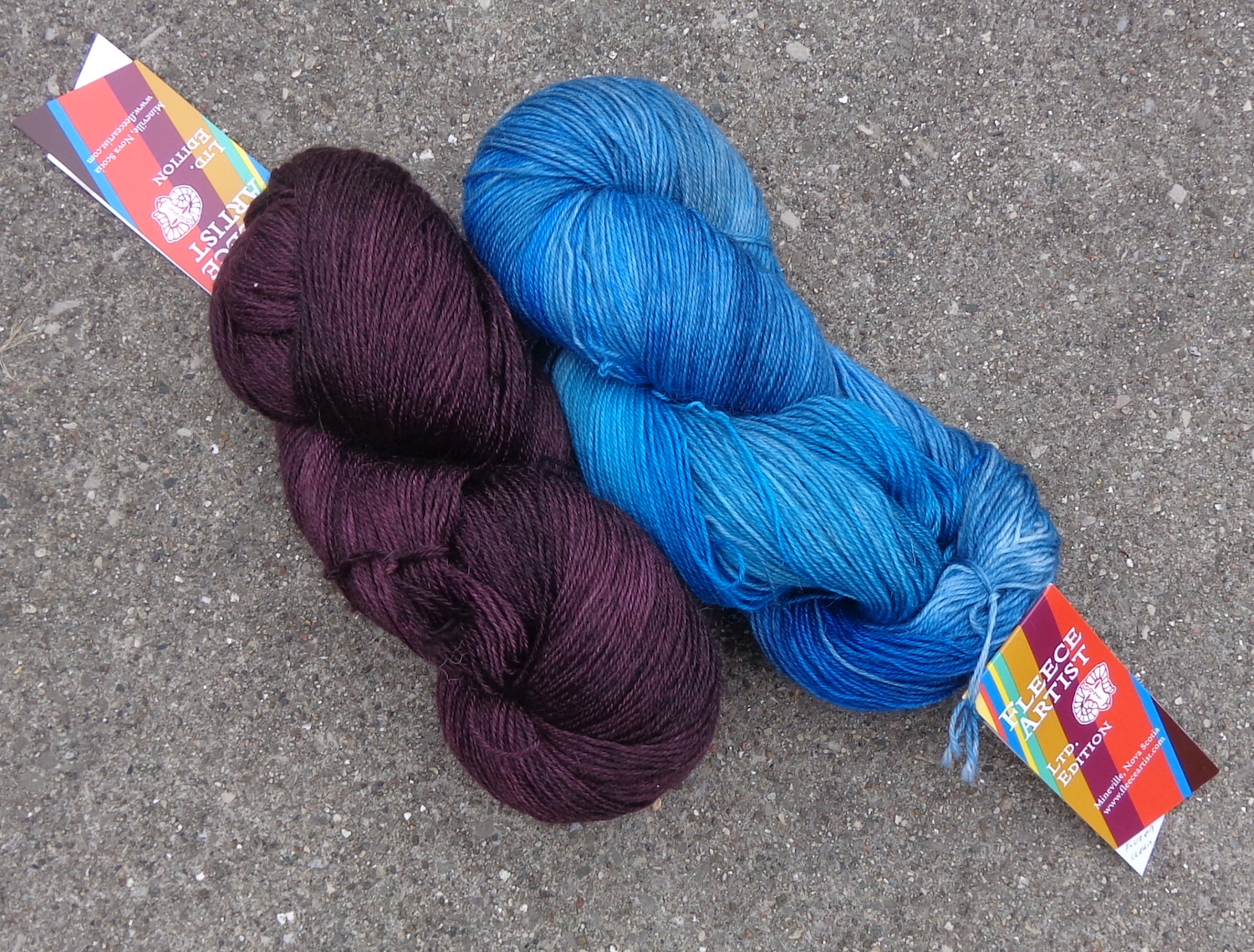
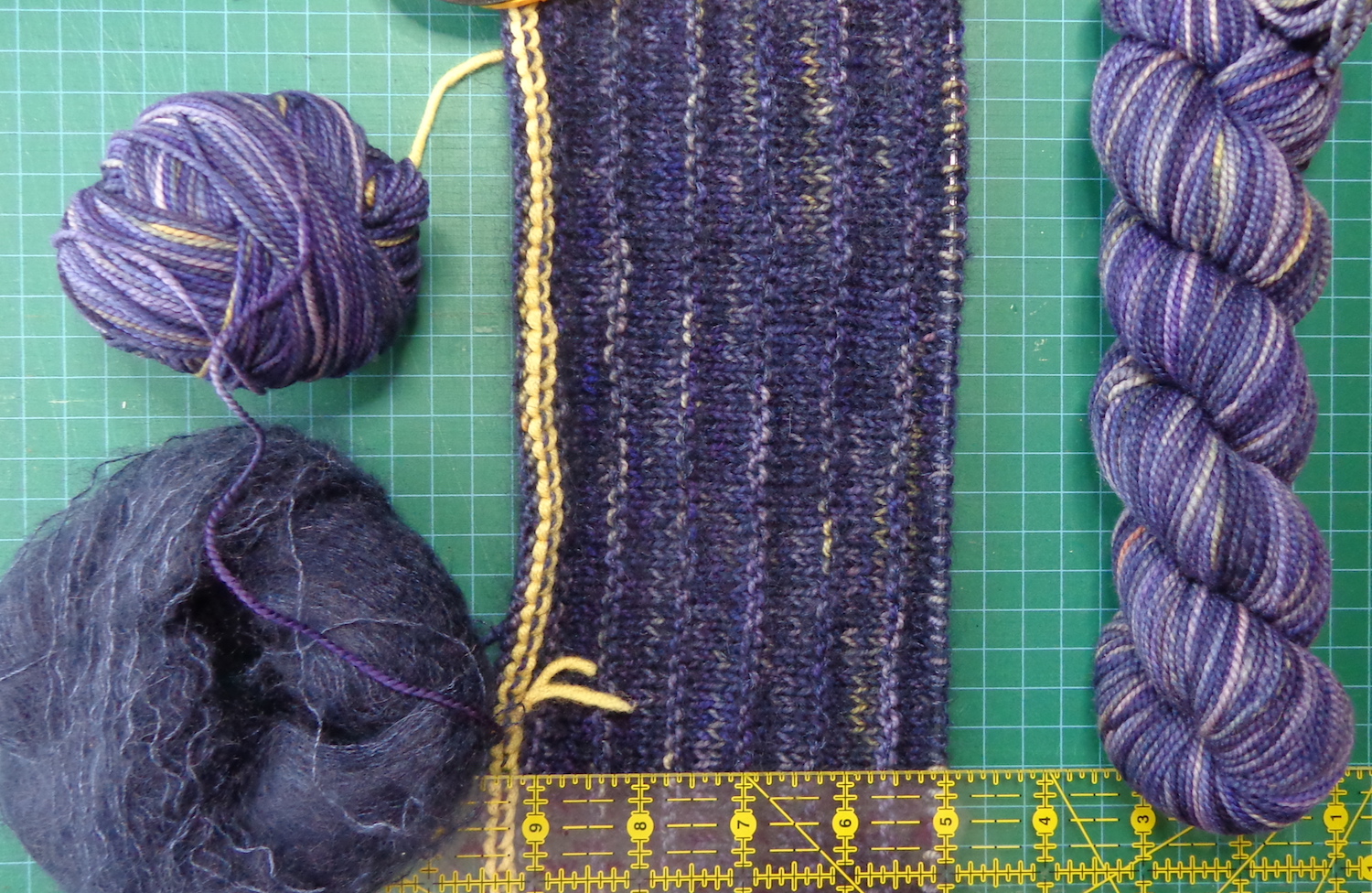
I decided to knit mine in Fleece Artist Anni, a mohair and merino blend. (That’s a Ravelry link.) I’m using the colourway Frozen Ocean, the perfect mix of blues. Here it is in the skein:

Fleece Artist Anni in Plum and Frozen Ocean

I also bought a colourway called Plum. It’s a light fingering weight which makes it a little bit skinny for the pattern’s specifications. As a result, I dropped down to a 3mm needle (instead of the specified 3.75mm) to get a fabric I like. My shawl, of course, is coming out smaller, so I’m thinking I’ll need to do more repeats.

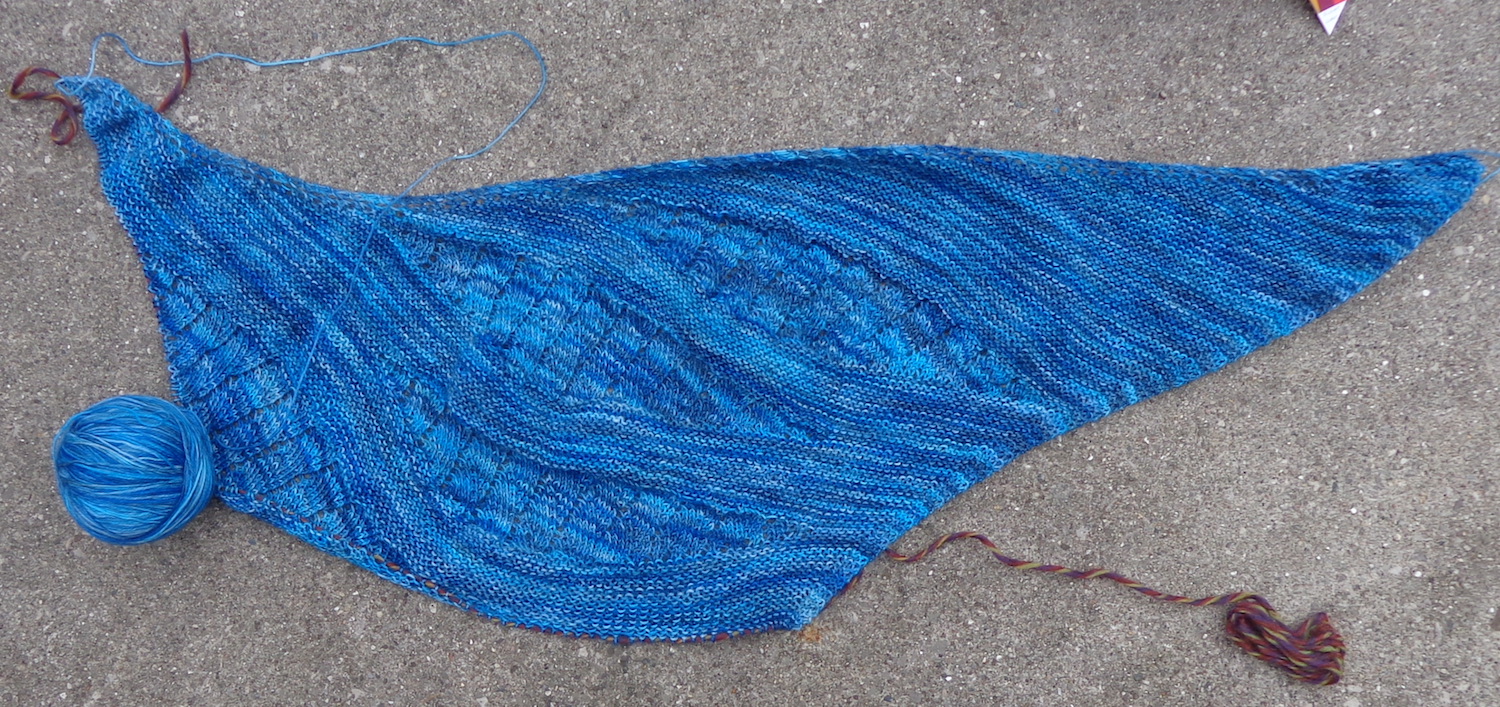
Here it is so far:

Water, designed by Sylvia McFadden, knit by Deborah Cooke in Fleece Artist Anni Frozen Ocean

The lead edge is at the top and it’s pretty tight at this point. I hope it relaxes when the shawl is blocked.

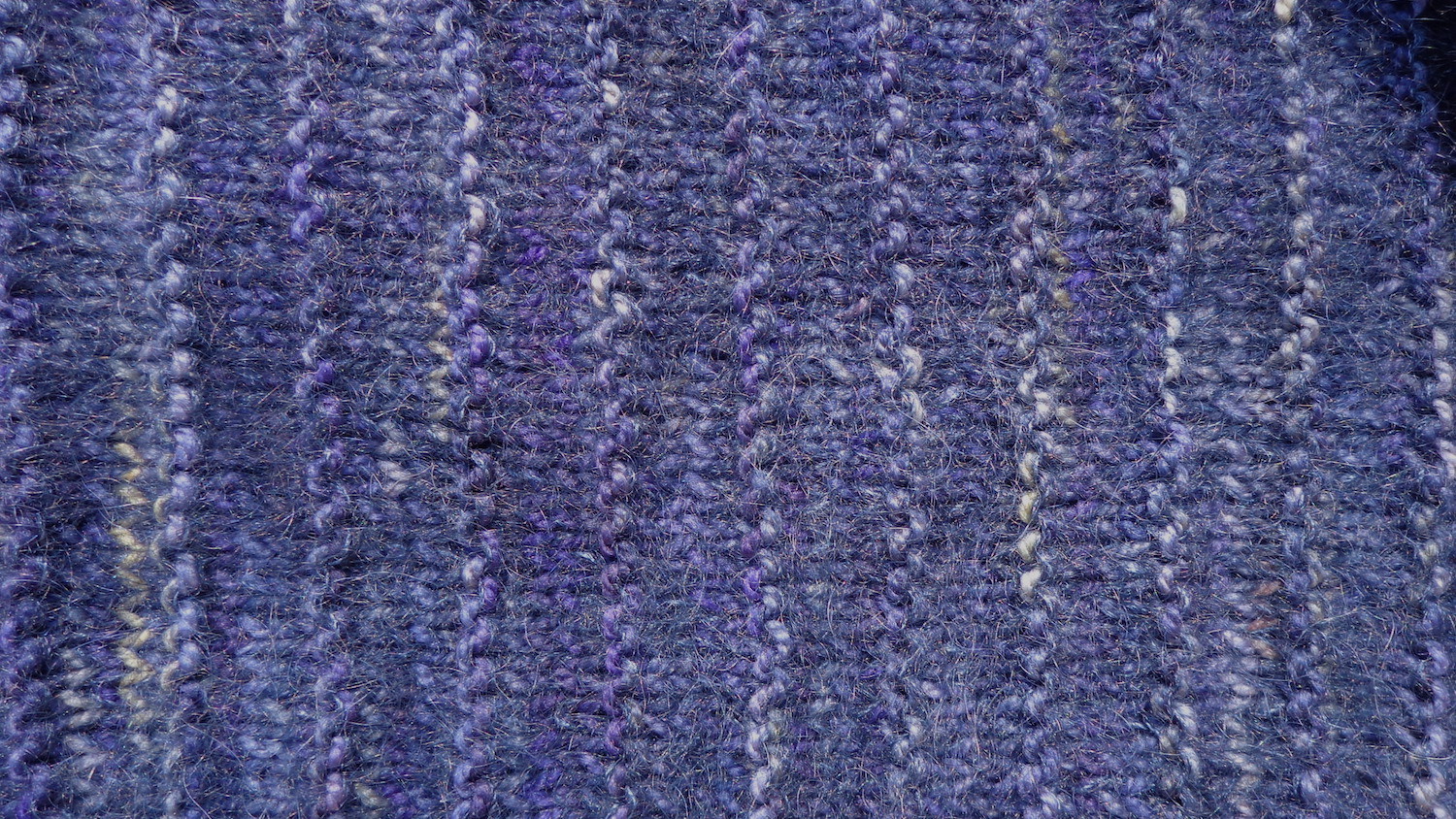
I think I’m still having trouble with that pattern stitch. It doesn’t look like the photo from the pattern:

Water, designed by Sylvia McFadden, knit by Deborah Cooke in Fleece Artist Anni Frozen Ocean

But I like it enough to keep going. It’s all twisted stitches so reknitting it isn’t an appealing option. I’ll just continue and be consistent. 🙂

Overall, I’m pleased. It has a wavey watery look to it that I like a lot. Onward!

New Projects

There’s an unusual confluence of variables in my life right now, which means I’m starting both new writing projects and new knitting projects. It’s amazing to me how similar the two situations are. It’s not just about choosing the project—the bigger issue is getting the combination of variables right. Possibilities abound! I need to get some of them settled so I can start creating effectively.

Let’s talk about the knitting project here.

First off, I finished another pair of socks. These are knit in my usual pattern, the one I have memorized, in Fleece Artist Kiki. (That’s a Ravelry link.)

socks knit in Fleece Artist Kiki by Deborah Cooke

The tag says the colourway is Pansy but I think it’s really Nova Scotia (there’s no purple in this skein). I was excited to get this yarn on sale and realized later that it’s discontinued. It’s quite a thick sock yarn, so I went down to 64 stitches from my usual 72. I knit another pair of socks in another colourway of Kiki and showed them to you earlier this year. It’s a nice squishy yarn and good to have another pair of socks done for the winter. (I may have to cast on another pair of socks, just to have an anchoring project in my currently chaotic world.)

Water by Sylvia McFadden

I also cast on a new shawl. Water is a pattern I’ve wanted to knit for a while (that’s a Ravelry link) and I finally found the perfect yarn for it. The designer is Sylvia McFadden and one of the official pix of the shawl is at right. (Click through on the Ravelry link to see more.) You can see that it’s in garter stitch with lovely wavey insertions.

I bought a collection of her patterns and knit Waiting for Rain from it – that’s the Ravelry link for the pattern and this is my blog post about my shawl.

In case you don’t feel clicky, here’s my Waiting for Rain shawl.

Waiting for Rain shawl knit in MadTosh Dandelion by Deborah Cooke

In that pattern, the insertions were of a different lace pattern and they were knit in a contrasting color. There was a lot of stripe-y goodness in that design.

Waiting for Rain shawl knit in MadTosh Dandelion by Deborah Cooke

I’m knitting my Water shawl with Fleece Artist Anni (that’s a Ravelry link), a limited edtiion yarn that is also discontinued. It’s fingering weight and a blend of merino and mohair. It’s a bit more itchy for me than anticipated, so is a better choice for a shawl than a sweater. The colorway is called Frozen Ocean, which seems very apt.

Here’s how it looks so far:

Water designed by Sylvia McFadden knit by Deborah Cooke in Fleece Artist Anni in Frozen Ocean

The color is really not true in this image. It looks very green here, but is actually turquoise. I made good progress but am now at the first insertion and need to pay attention to the lace stitch. This bit isn’t TV knitting. 🙂

Portia deisgned by Norah Gaughran for Berroco

Which meant (inevitably) that I was casting around for a TV knit, since we’re binging mystery series these evenings. I’d been thinking of making an asymmetical sweater for the girls, which reminded me of this pattern. Portia is another sweater I always intended to make. (Yes, that’s a Ravelry link.) It was designed by Norah Gaughran for Berroco and has such an interesting design.

I actually have the specified yarn, Berroco Peruvia, but don’t have quite enough of it. I could make the smallest size, but that seems overly ambitious. It’s unlikely that I’ll lose a bunch of weight, sitting on the couch knitting. (That’s a Ravelry link because yes, Peruvia is discontinued.)

So I ended up auditioning yarn candidates from my stash – which is awfully similar to auditioning opening scenes for a book, my daytime task this week. The first candidate was some Rowan Felted Tweed Aran, which is exactly the same weight as Peruvia. (That’s a Rowan link as my colorway is discontinued but not the yarn itself.) Mine is a rosy colour, though, and I’m not sure I’ll wear a sweater coat in that shade. It’s a lot of pink. Beautiful yarn, though. I need to figure out what to do with it now.

Next up, some Debbie Bliss Donegal Luxury Tweed Aran in a scarlet shade. (Another discontinued yarn; another Ravelry link.) Very pretty but I thought the yarn looked too thin when knit to gauge. I could use smaller needles, but then the dimensions of the garment would be changed. Given the design of this sweater, it’s tough to anticipate how to adjust the fit.

#18 Shawl Collared Coat from Noro Magazine #1, designed by Mari Tobita

Next candidate: Noro Nadeshiko. This is lovely squishy yarn, an angora, silk and mohair blend. It’s a little heavier than Peruvia but I really like the firmer fabric when knit to gauge. I had bought this to make another sweater coat, this one from the original Noro magazine, designed by Mari Tobita, at left. It’s called #18 Shawl Collared Coat. (Yes, more Ravelry links. The problem with a well-aged stash is that everything is discontinued.) This coat has really pretty shaping in the back.

The colourway I have is less stripey than the one in this picture. It’s mostly shades of grey with a little bit of brick-red and a bit of white. I’m concerned that it might look too stripe-y in Portia, but am giving it a try. Here’s what I have so far:

Portia by Norah Gaughran knit in Noro Nadeshiko by Deborah Cooke

This is the centre-back braid, knit down from the back yoke, so it’s going to taper from here to that lowest point. The red looks more emphatic in the photo than in real life.

After this triangular piece is knit, you then pick up the side panels along the edges and knit toward the front. If I continue with the Noro, I’ll have to make sure that the stripes are symmetrical. I’m just too matchy-matchy to be happy with the result otherwise. I’ll see how it looks when the triangle is done.

With any luck, I’ll soon have both a knitting project and a writing project launched!
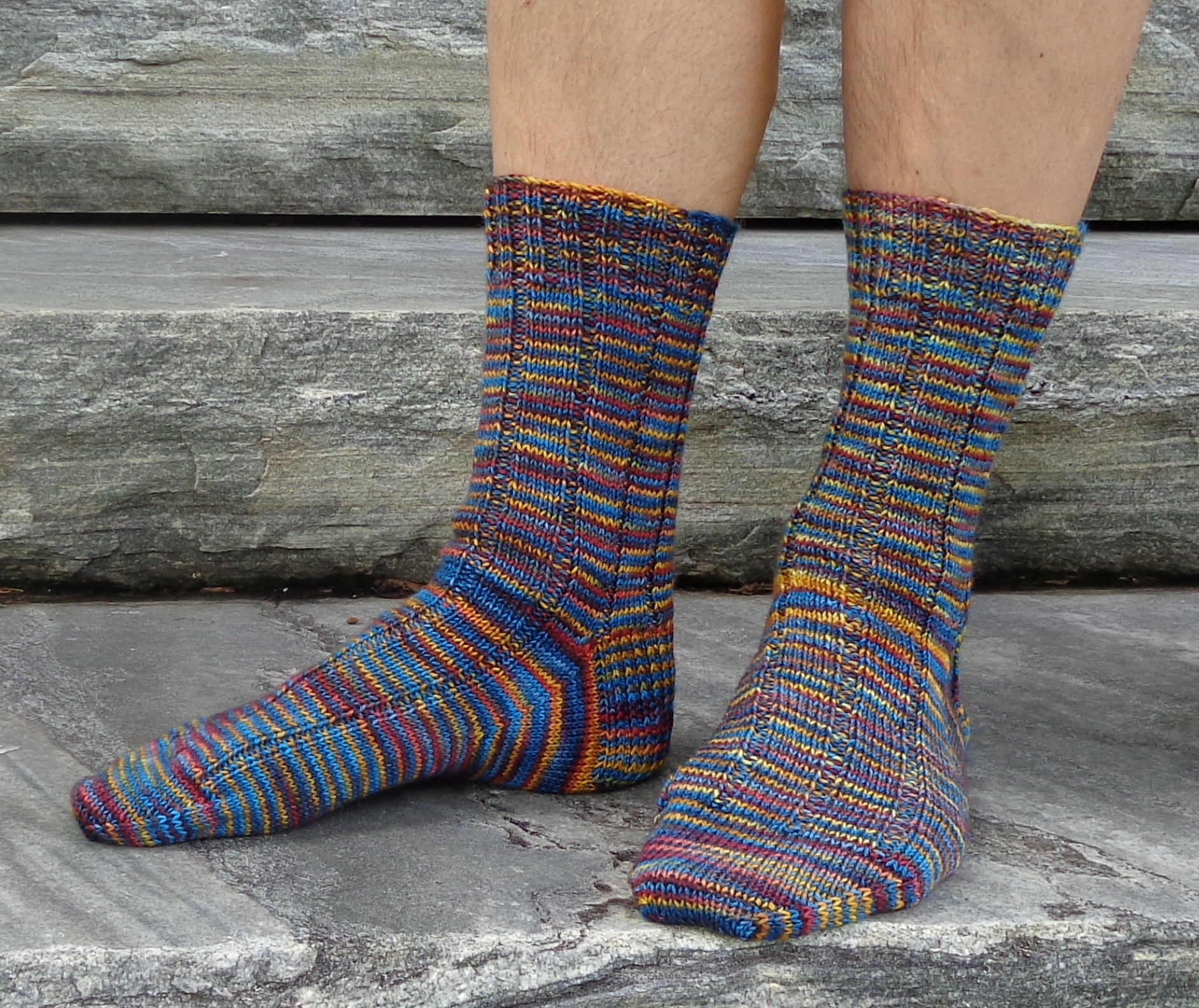
Fleece Artist Socks

Things have been really busy writing-and-publishing-wise, which means my knitting and sewing projects have been getting less action. When I need to think, I need a simple project (or two.) So I finished a pair of new socks for myself which is always a good thing.

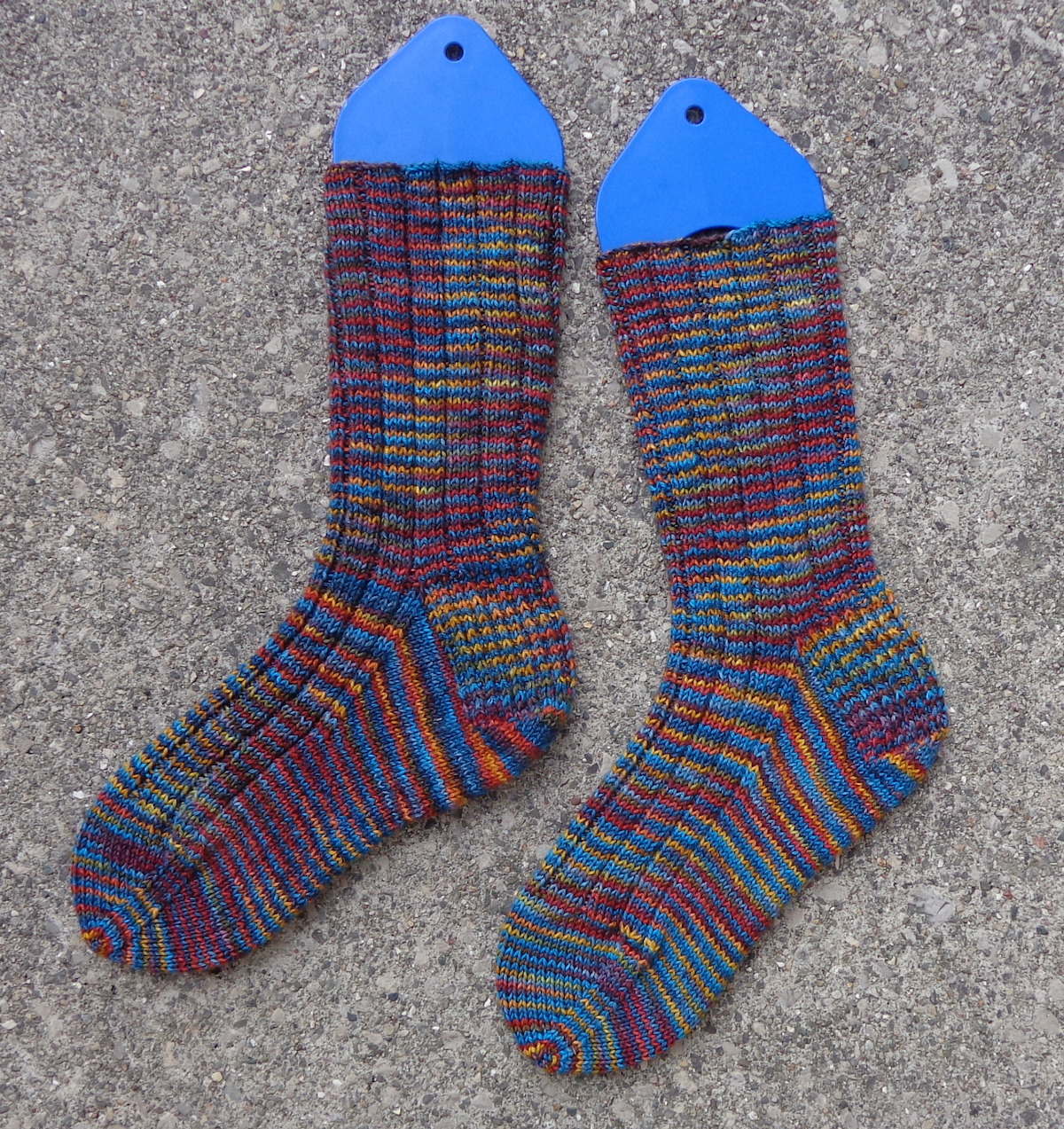
Socks knit by Deborah Cooke in Fleece Artist Kiki, Twilight colourway

I managed to crop the toe of one of them in this picture, but the colour is pretty true. They’re knit of Fleece Artist Kiki in Twilight, a superwash and nylon blend that is put up in a big skein of 140g. (That’s a Ravelry link for the yarn.) This yarn is thick, so these socks are thick, and I used almost the whole skein.

This is just my usual sock pattern, the one I don’t have to think about too much, but this time, I added two six-stitch mirroring cables to the front.

Socks knit by Deborah Cooke in Fleece Artist Kiki, Twilight colourway

After the 2/2 ribbing, I changed to 6/2 ribbing for the rest of the sock, turning cables on two adjacent knit bands. When I got to the heel, I positioned them at the center front. They go all the way down to the toe and make me happy.

It was the Halo that got me thinking about Fleece Artist yarn and missing (as usual) their Trail Socks yarn base. I no longer have a LYS with Fleece Artist yarn, which is sad, but Ravelry shows that Trail Socks isn’t discontinued. Good news. I haven’t seen it in so long that I assumed otherwise. (Let the hunt begin.) I found Kiki at Little Knits, because it’s discontinued. The colour saturation is great and the yarn is very squishy. I was surprised by the thickness, though. These are heavy socks.

Here’s my Ravelry project page.

I’ve also rescued my Spector from Sleeve Island and hope to have that to show you soon. I still don’t love it, but I’ll be glad to have it done.

Halo is Done!

Another sweater freed from Sleeve Island. This cardigan is Halo, a pattern from Fleece Artist.

Mine is knit in Koigu KPPPM held with a strand of Rowan KidSilk Haze. Here’s my first blog post about it.

I started this project a year ago, in February 2022. (It was a free pattern then, but might not be so now.) I liked the design a lot but didn’t want to buy more yarn, so I shopped my stash. I came up with some Koigu KPPPM in a mixy blue and some Rowan Kidsilk Haze in Turkish Plum which matched. The resulting fabric is lovely and soft, with enough variation from the Koigu to make the colour interesting.

Mmm. Squishy goodness.

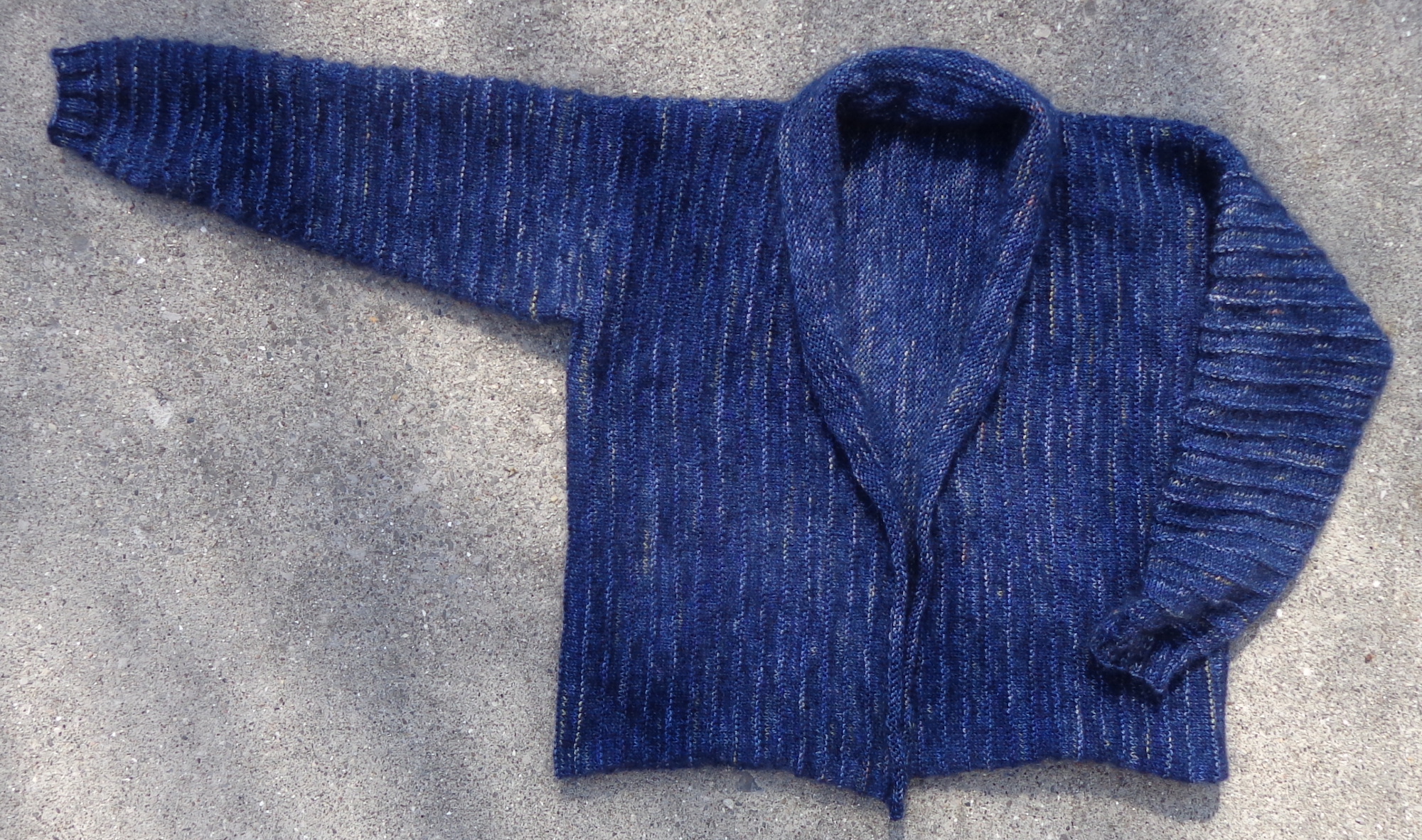
Halo Jacket by Fleece Artist knit by Deborah Cooke in Koigu KPPPM and Rowan Kidsilk Haze

The construction is interesting. You can tell by the ridges that it’s a sideways knit. You cast on provisionally at what might be considered a sideseam, knit across the back, cast off stitches for the sleeve, then knit across one front. You put those stitches on a holder. You go back to the provisional cast-on to pick up enough stitches for the other front, then when it’s done, put them on a holder. You sew the shoulder seams, then start knitting those front stitches, up one side, pick up stitches across the back for the collar, then down the other front. This makes a self-rolling shawl collar after you knit five inches of it. Then you go back to each sleeve opening to pick up stitches and knit in the round, decreasing down to each cuff.

By the elbow of the second sleeve, I was sure that I would run out of yarn. I stopped knitting so I could look for something matchy-matchy at the Koigu tent sale in August. The best I could do was some solid-ish navy (it looks kettle-dyed) so I decided to use it on the cuffs and the front edge of the collar, if necessary. I frogged a lot of the collar to be sure I had enough Koigu for the second sleeve. By this time, I’d lost momentum and the project sat. As is so often the case, I picked it up finally and finished it in a couple of evenings.

And – ha! – I didn’t run out of yarn. I took the remaining Koigu and knit on the collar until it was gone.

Here’s Halo completed.

Halo Jacket by Fleece Artist knit by Deborah Cooke in Koigu KPPPM and Rowan Kidsilk Haze

Morning sunlight through the tree branches makes for dappled light and shadow. 🙂

Mine came out a bit smaller than anticipated. I made the larger size, which meant it should have been 25″ long and 48″ wide. There’s no row gauge specified, probably because it’s stretchy, but the stitch gauge is 20 sts to 4″. Mine is right on, but my sweater is 22″ long and 42″ wide. So, if and when I make another of these cardigans, I’ll add 15 stitches to the length and 7 or 8 repeats to the width, probably 4 across the back and 4 on each front.

I’m thinking I might knit a second one of these rather than another Lunenberg-meets-Hebrides cardigan. I have more of the KPPPM in the teal colourway than I had of the navy, so that should work out well – plus I have KSH in Trance to knit with it. Or I might buy a Halo bundle from Fleece Artist and actually knit the sweater in the specified yarn. (Had to sit down for a minute there. Phew. What a concept.) We’ll see after I finish up a few projects still on the go.

In the meantime, here’s the link to my Ravelry project page.

Fairy Fingers

This is a pattern from Fleece Artist to make fingerless gloves called Fairy Fingers. Fairy fingers is also an old term for foxglove flowers. As seems to be happening a lot lately, I made my first pair from Koigu KPPPM. (They were done last week, but a gift, so I couldn’t show you before the recipient saw them!)

Here they are:

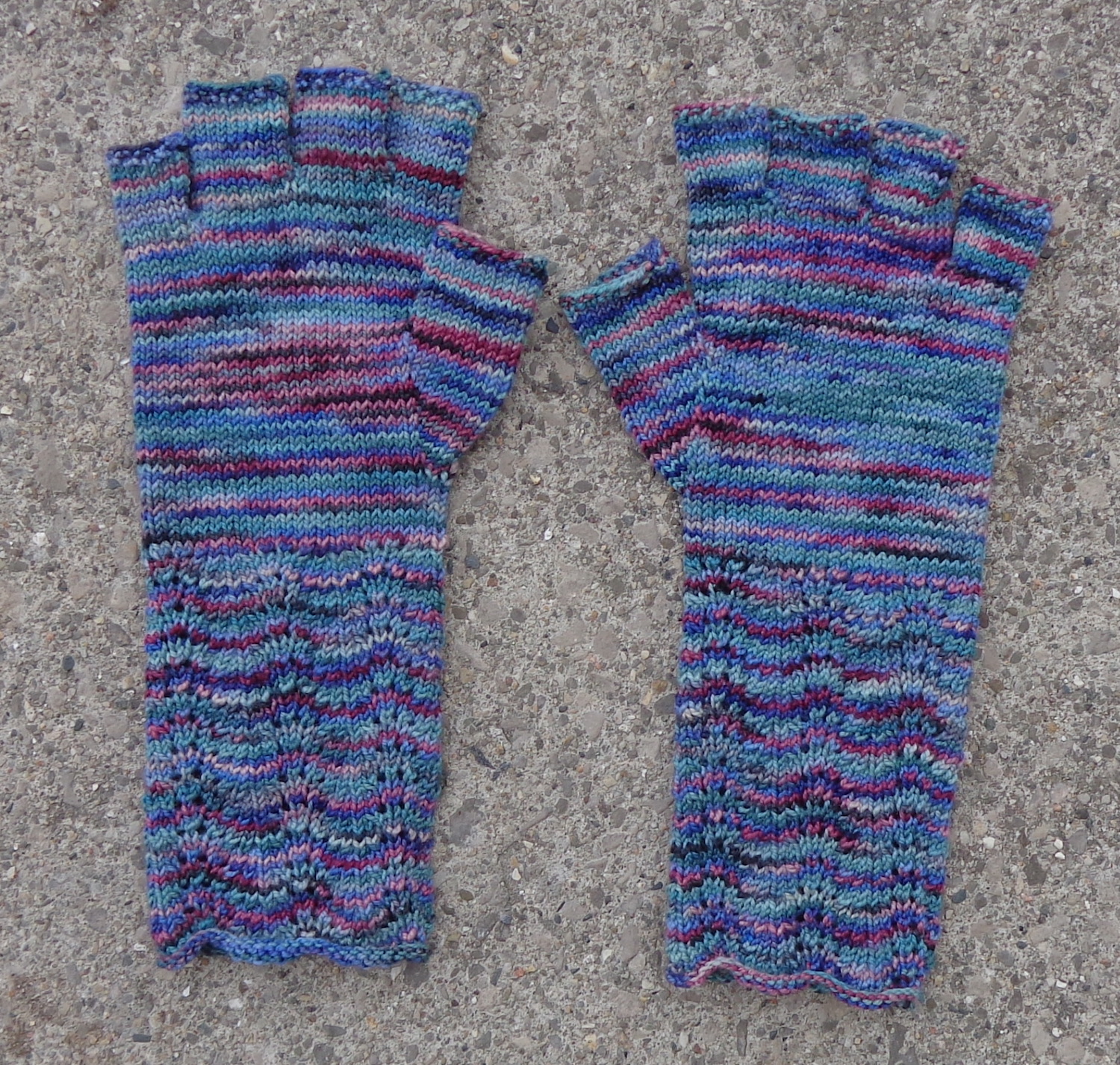
Fairy Fingers knit by Deborah Cooke in Koigu KPPPM

This is the colourway that made a swirl in my teal Navelli so was frogged and returned to the stash as a result. I wasn’t sure what it would do in these gloves and was pleasantly surprised by the result. The colourway is P528. Here’s the other side of them:

Fairy Fingers knit by Deborah Cooke in Koigu KPPPM

I did only 12 repeats of the pattern on the cuff instead of the 15 specified.

The pattern calls for 2.75mm needles but I thought the cuff looked too loose, so I went down to 2.5mm needles. I really like the fabric that resulted, but this might make the gloves too small for some people. They fit me perfectly 🙂 which is inevitable since they were a gift.

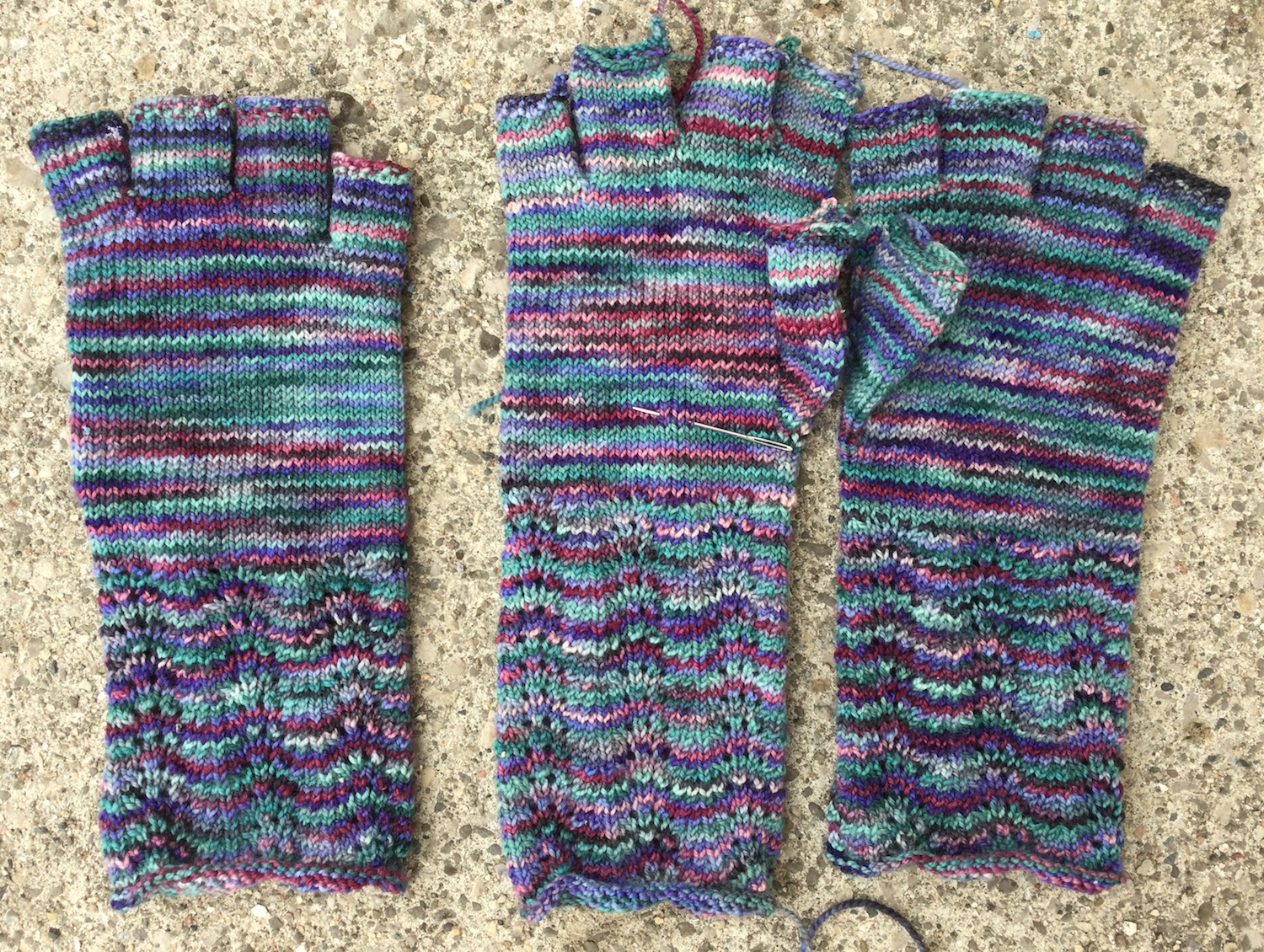
I did end up with a pair for myself, though. When I cast on the second glove from a different skein of Koigu, it didn’t look like it would match the first one. I knit one with 15 repeats in the cuff then and made a second pair, which I kept. You can see that glove in the middle here – doesn’t it look a bit lighter than the outside two?

Fairy Fingers knit by Deborah Cooke in Koigu KPPPM

Instead of using a second skein, I went back and cast on the second of the shorter gloves from the leftovers of the first skein, to make sure it matched. Koigu comes in skeins of 50g and the first short glove used 28g. For the second glove, I got all of it out of the remainder of the skein except the fingers – if there’s a colour difference, you can’t see it.

This pattern also launched me on a hunt for Fleece Artist yarn. I love their colourways. There’s some new Fleece Artist yarn on its way to me, which I’ll show you once it’s knitted up.

Just editing this to show the other pair, the longer ones that are for me.

Fairy Fingers knit by Deborah Cooke in Koigu KPPPM

I’m also noticing the pooling on the hand with this pair – the other pair has it, too, but I’m taking a better look now. 🙂 If I flip one over, you can see that it worked out the same way on both, just it ends upon on the back of one and the palm of the other.

Fairy Fingers knit by Deborah Cooke in Koigu KPPPM

I did do the fussy-knitting thing of casting on at the same point in the colour gradation – I usually do this with a self-striping yarn by choosing a point (like where the burgundy changes to the turquoise) and making my cast-on knot there for both mitts (or socks). That way, the striping will unfurl the same way on both. A second fussy-knitting fix would have been to knit an extra half row on the hand before starting the thumb gusset, moving it to the other side so that the two palms would be the same (and the two backs). They wouldn’t mirror but they’d match.

Maybe next time. 🙂

Halo Cardigan

Sometimes, you just need a quicker project. I have a lot of projects on my needles right now, but most of them use small needles, which means slow progress. I’ve finished eight repeats of the pattern on my Rowan Lace Scarf and am partway through the fifth ball of the six provided in the kit. I’ve almost finished the body of my Noro Mitred Jacket. I’m coming down to the hem on my Spector pullover, which may be the slowest knit on the planet for me. (Will it languish on Sleeve Island? Maybe…) And I’ve been knitting a lot of Barbie clothes. There’s a whole pile of them waiting for their ends to be sewn in. Last weekend, I felt in need of some more immediate knitting gratification.

And then, an ad from Fleece Artist sailed across my screen. Ooooooooo. I’m a complete sucker for their gorgeous yarns.

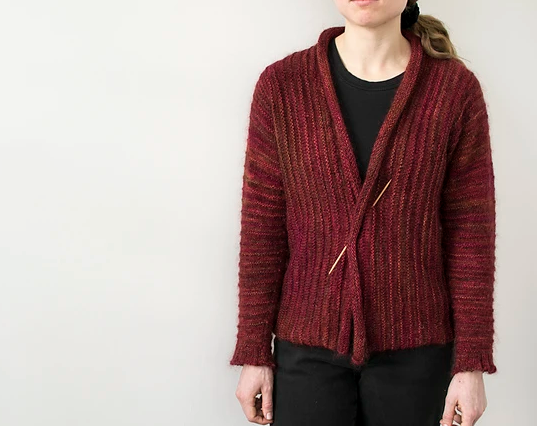
Halo Jacket from Fleece Artist

The Halo Jacket is a free pattern from Fleece Artist. (That’s one of the pattern images from Fleece Artist.) You can download it from their website, or grab a copy here on Ravelry. It’s knit side to side with two yarns held together, a fingering yarn and a mohair-silk laceweight yarn (which creates, hey, a halo!) Here are the yarn bundles at Fleece Artist — as usual, their colours are absolutely scrumptious.

But….in the interests of managing my own yarn inventory, I decided to shop the stash. I have some Koigu KPPPM in a purpley-blue, which I bought for a sweater I ultimately decided not to make. I also have some Rowan Kidsilk Haze in Turkish Plum. I’m a little short of yardage in the Koigu, but fortunately, the original pattern (the one that wasn’t knitted) required two coordinating colours. I have the coordinating colour and will use it on the cuffs and collar if necessary. The best part is that those bits are knitted last, so I can decide after the majority of the garment is done.

Here’s my start:

Halo Jacket knit in Koigu KPPPM and Rowan Kidsilk Haze by Deborah Cooke

I’ve pinned it down because it wants to roll into a tube! The actual colours are darker than they appear in the photo, but look at how much the KSH darkened the KPPPM. I hadn’t knit up this Koigu because it wasn’t dark enough – although it’s very pretty – but I love it combined with the KSH. The fabric is wonderfully squishy and soft.

What do you think?

New Socks for Me

This isn’t a hugely exciting project, but it’s one I’m glad to have off the needles. Once upon a time, I decided to make myself a pair of knee socks in this great Fleece Artist Trail Socks colourway called Hercules. The first one looked like this:

knee sock knit in Fleece Artist Trail Sock by Deborah Cooke

I had bought two skeins and FA yarns don’t have dye lots. They looked the same, but the second one striped like this…

knee socks knit in Fleece Artist Trail Socks

Hmm. This did not give me joy. I thought maybe I’d started at a different point in the repeat, but one skein seemed to be more saturated than the other. I frogged the cuff of the second sock and made a pair of socks for the mister:

socks knit in Fleece Artist Trail Socks by Deborah Cooke

I finished those socks for him three years ago. Meanwhile, the lonely knee sock sat in my basket. I seem to need to do that with things that have to be frogged. Maybe it’s a mourning period for the lost work. (?) This summer, I pulled out that sock, frogged it, and knit a pair of regular socks for myself. Here they are:

Socks for me in Fleece Artist Trail Socks

So, that’s a project FINALLY out of the basket AND off the needles! I’m glad to have it done.

Now I need to find more FA Trail Socks since I’ve used up all of mine. I really like this yarn for socks – it has a firm twist and wears really well, plus the colours are awesome.

Toe-Up and Cuff-Down Socks

Things have been quiet here, and I apologize for that. I’ve been finishing a book (one that doesn’t want to end) and trying to complete some knitting projects, too.

I finished these socks, finally, but still don’t like the feel of the yarn. It’s Estelle Sock Twins, which comes in two balls, each with the same gradient. (That’s a Ravelry link.) I found the yarn splitty.

It looks like a gradient, but the colour transitions are quick: I think it’s more like steps of colour instead of a steady gradation. You can see the change from the last blue bit to the dark orange in the third stripe from the top on the right: the blue/orange just ends. The finished socks look the same, so I’ll just use the old picture:Socks knit in Estelle Sock Twins knit by Deborah CookeI knit them toe-up because I wanted to use up all the yarn in the gradient. This time I used the Ann Budd tutorial from Interweave Knits. It took me forever to get around to knitting the second one, because I still don’t like knitting toe-up socks. This is about the tenth pair I’ve made and I just don’t enjoy the process, no matter which pattern I use. It’s probably because I have to check the instructions all the time, while I’ve knit so many cuff-down socks that I just knit away. At any rate, they’re finally done and that’s a good thing because I got my needles back.

I cast on a new pair of cuff-down socks in Fleece Artist Trail Socks, a yummy yummy yarn, in a delicious colourway—Nightshade. (That’s a Ravelry link.) The colour hovers between brown and purple, with a few flashes of other colours that end up making a stripe.

Fleece Artist Trail Socks in Nightshade knit into socks by Deborah CookeI’m just doing my usual sock thing, casting on 72 stitches, working 72 rows, turning the heel etc. This time I did 6×2 ribbing and added a cable twist every 12th row. It makes the counting easier to the heel, although I hadn’t planned it that way. I just wanted to mix it up a bit.
I also worked on the sleeves for my Juicy Gloss cardigan, but discovered once I’d knit one to the elbow that the sleeves would be too wide. I frogged it back and recalculated, taking an addition 8 stitches out of the sleeve at the underarm, then decreasing more rapidly than the pattern specifies. I’m reaching the elbow now and am much happier with the fit. I’ll show it to you once the first sleeve is completed.

Spider’s Web Shawl

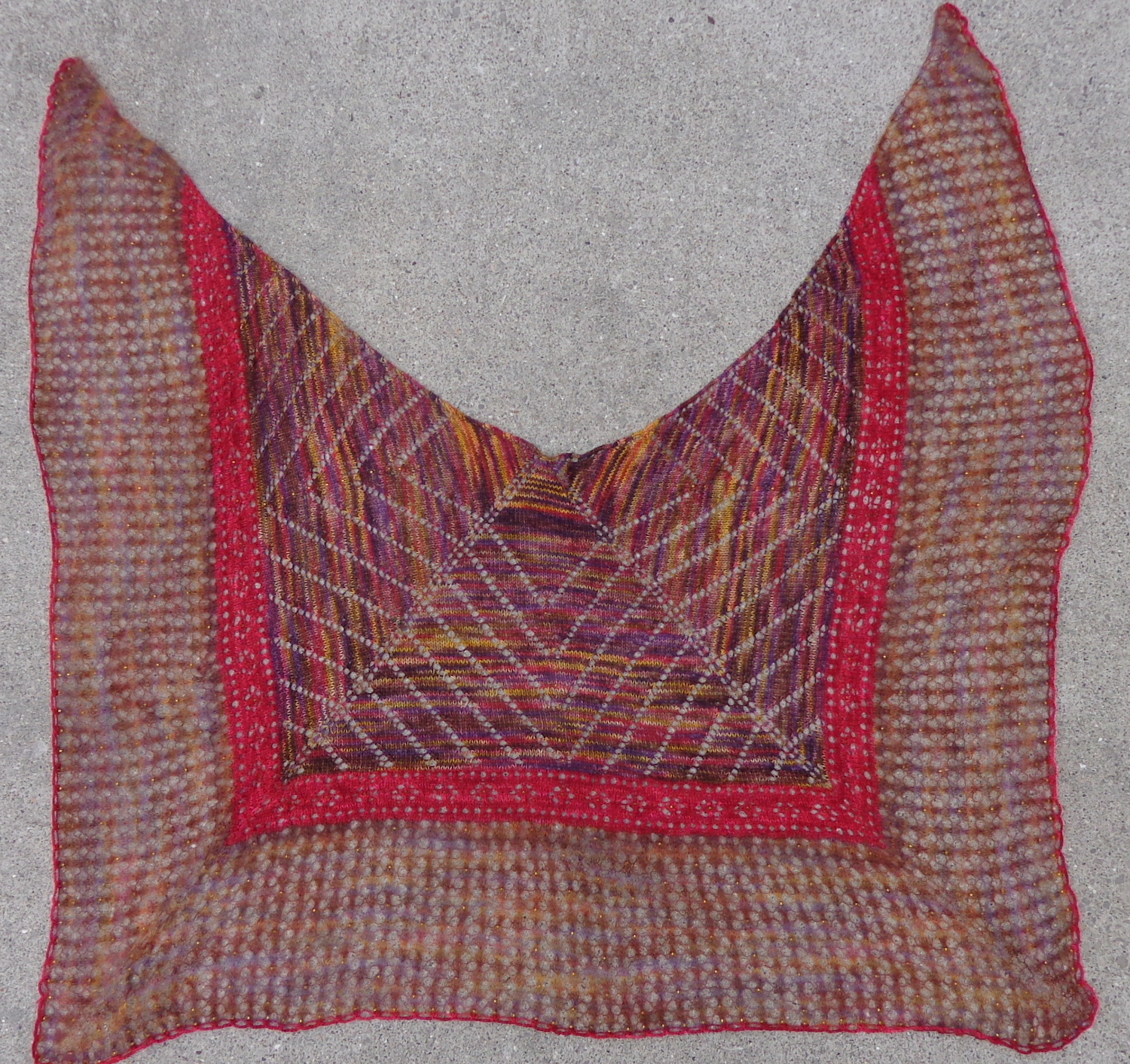
This is the semi-circular Spider’s Web Shawl from Jane Sowerby’s book, VICTORIAN LACE TODAY. One of these days, I’ll knit the full circle version. The yarn is from Fleece Artist Merino 2/6 which comes with a skein of Angelhair dyed the same colourway. I used the yarns separately, knitting the middle of the shawl from the merino and the lacy edge from the Angelhair.  Spiders' Web shawl by Jane Sowerby knit in Fleece Artist Merino 2/6 and Angelhair by Deborah Cooke I used another Fleece Artist yarn, Somoko, in red for the band between the two sections and for the outer hem. See the gold beads?

Spiders' Web shawl by Jane Sowerby knit in Fleece Artist Merino 2/6 and Angelhair by Deborah Cooke