Last time, I told you about watching Kate’s videos at her YouTube channel, The Last Homely House. I went back to her channel to watch more and chose a video about using up scraps – because it was first in the queue of her most popular videos. (It’s right here.) She shares her enthusiasm for Terry Rowland’s scrappy quilt. I was sufficiently inspired to see what I have in my bag of bits and ends.
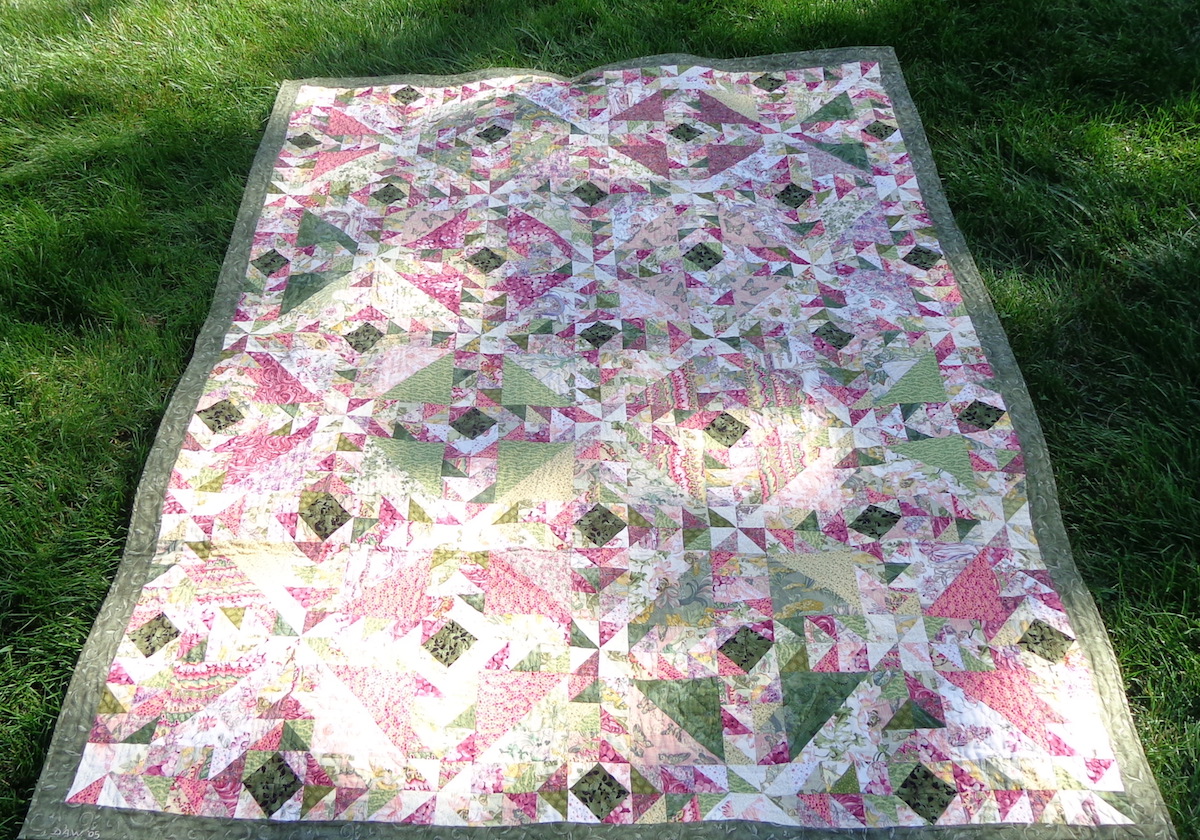
A lot of my bits are from specific quilts. For example, I had a bunch of half square triangles leftover from this Lady of the Lake quilt. The palette is pretty specific on this quilt, all olive greens, pinks and burgundies. The first fabrics chosen were a selection of fat quarters featuring Alphonse Mucha drawings, all Art Nouveau ladies. I just love those prints.
I started to piece the leftover bits into blocks:

I have a few strips of fabrics from the quilt and will add as many borders as possible. This will be a mini quilt to practice my machine quilting – although it’s a good size to be a matching pillowcase. Hmm. I’ll show it to you when it’s done.
I also found the Franken Fish, long forgotten by yours truly.
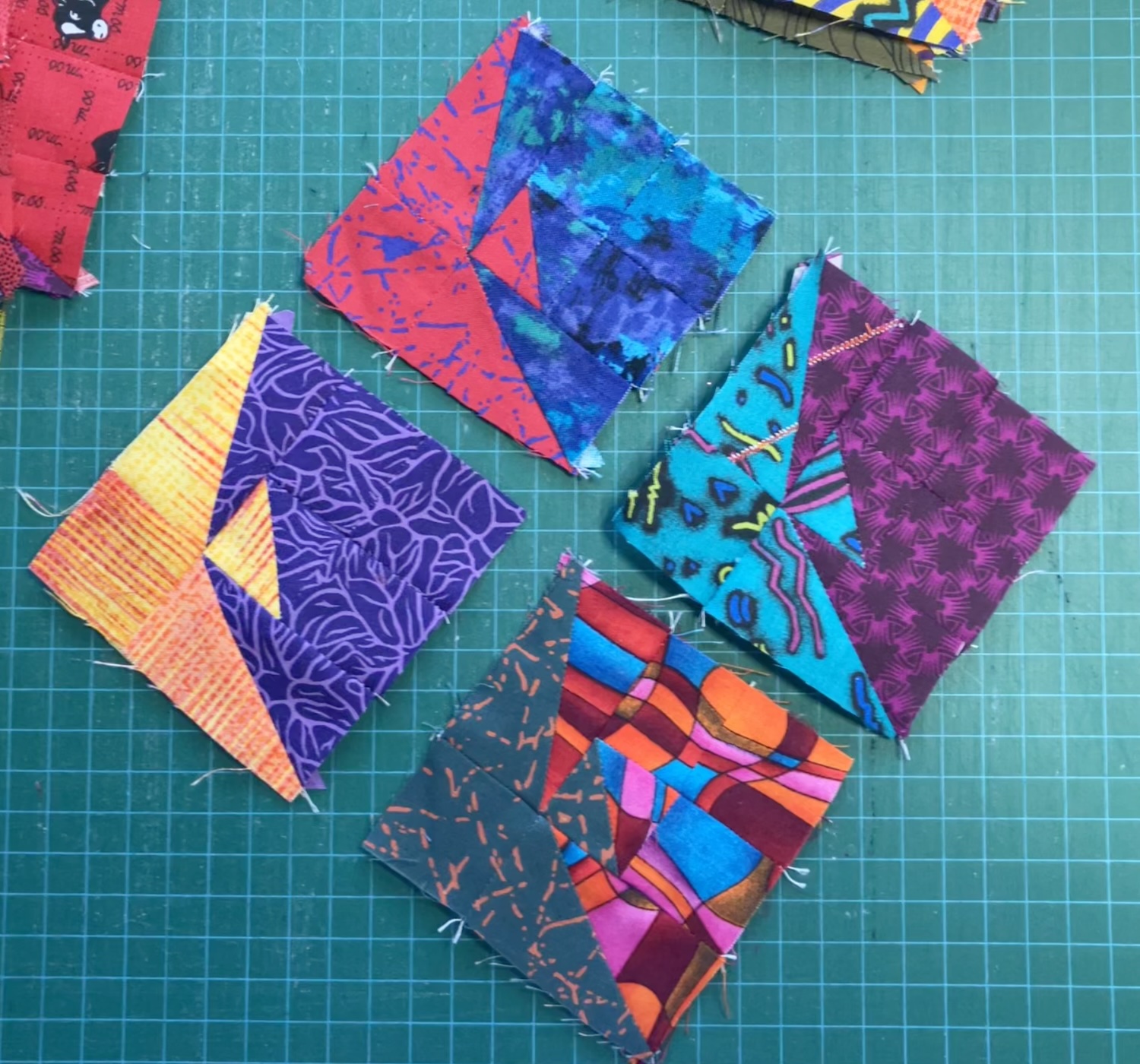
I called these the Franken Fish because I made a mistake and patched it up. These fish were cut from charm squares – each square was just enough for one set of pieces, so there’s a fish of any given fabric and a background of any given fabric. I made a cutting mistake though and because there was no extra fabric, I patched the pieces.
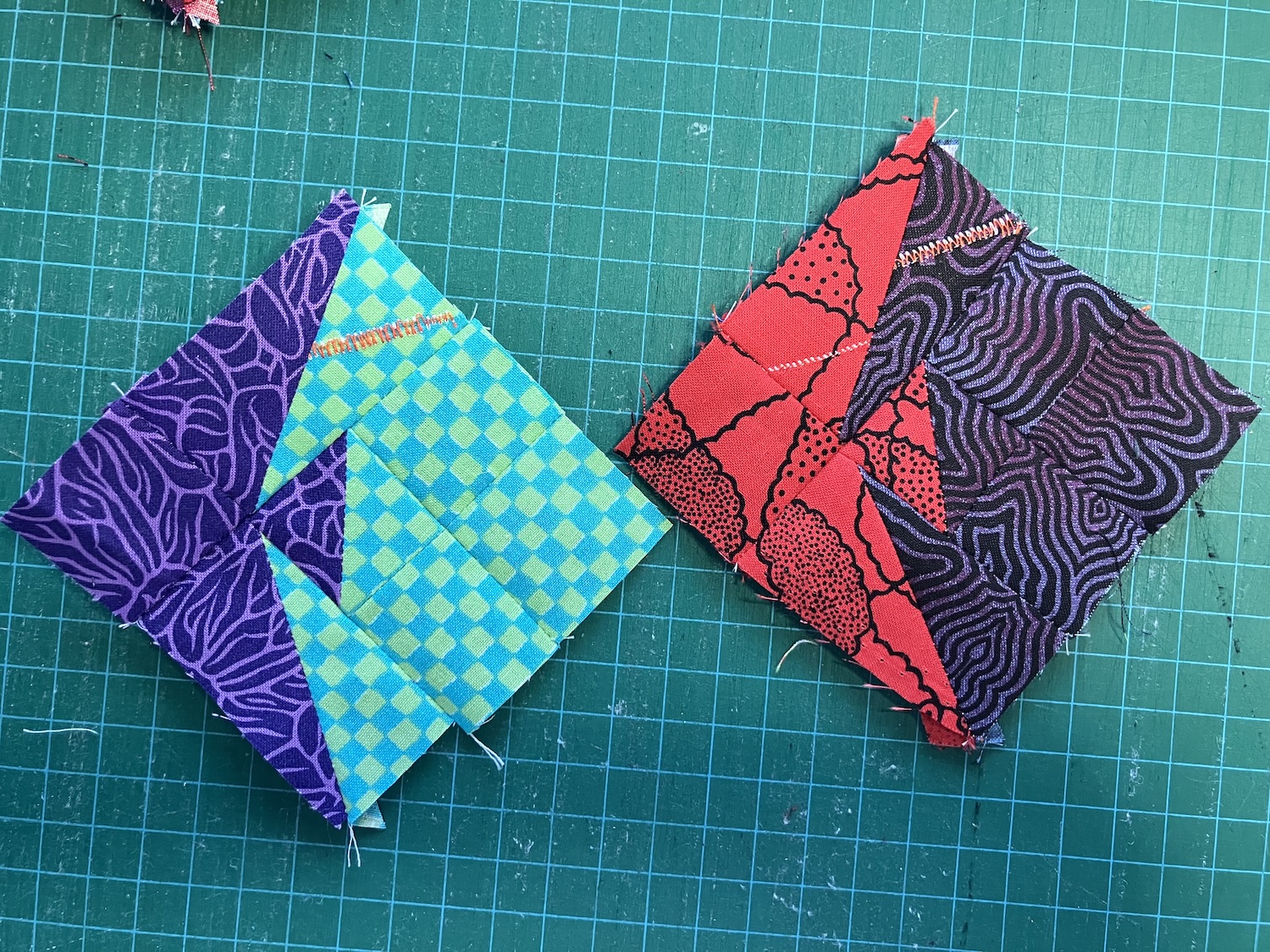
Their scars are all in the same place. They are Franken Fish.
I must have seen the block somewhere and liked it. I have a vague memory of scribbling it on some random piece of paper in my purse. Now the Franken Fish need an ocean to swim in…
I found a lot of bias already cut. There’s a tremendous amount of the pink, which probably means I had plans for it. I wonder what they were.

And I found these two pieced stars, fussy cut from Kaffe Fassett’s Kimono print.


Interestingly, the camera reset itself on the second one and dimmed down the colours, as if it was saying ‘whoa. That’s a lot of fuschia and orange together.’ LOL It is!
I must have made these while piecing my Pineapple Star, which used a lot of that Kimono print.
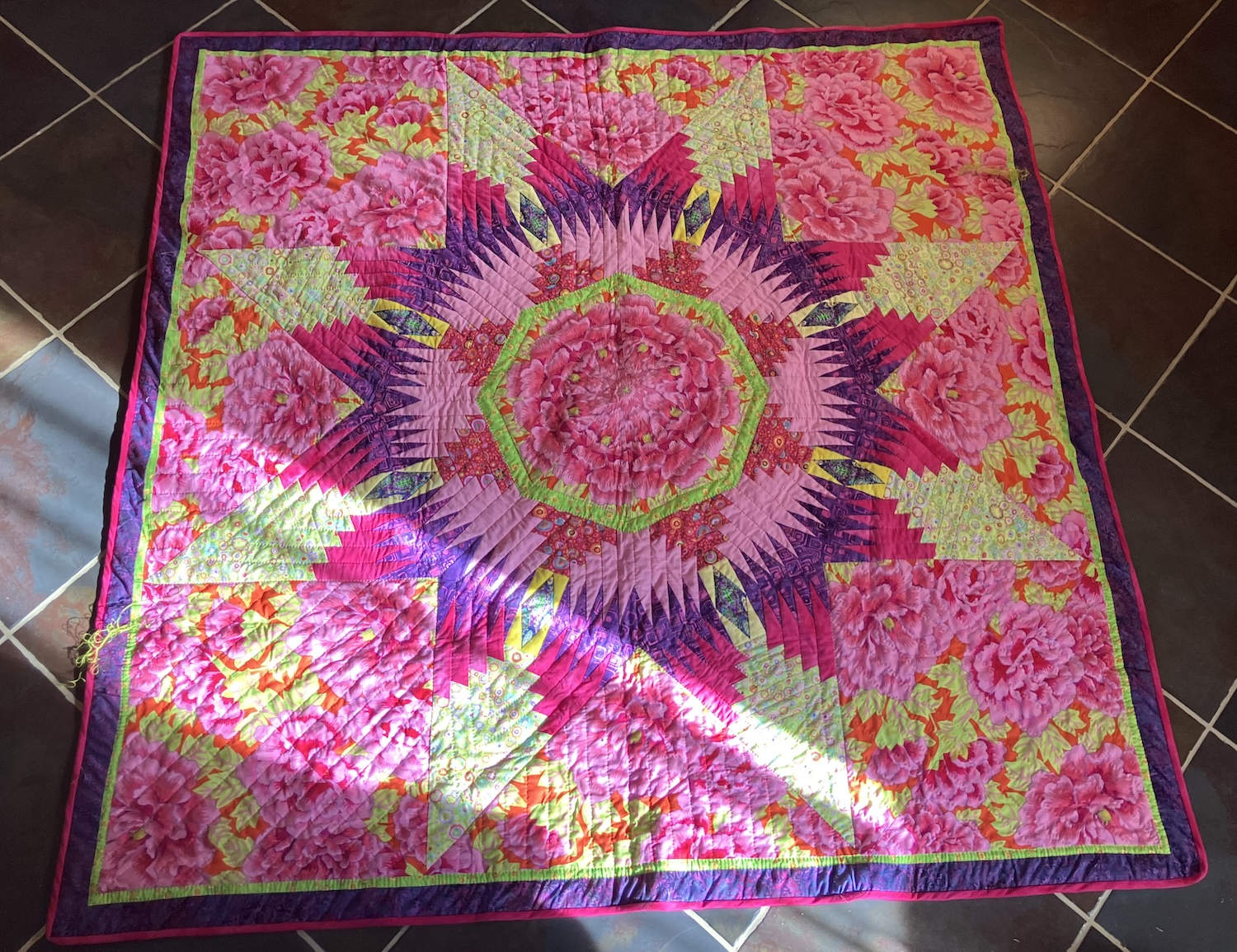
Somewhere (ahem) I have many bits and pieces of Kimono in triangular shapes. I need to find them and make more of these smaller stars because I really like them.
There are more bits and ends, too, but let’s start with these. 🙂
This exercise proved to be more like poking about a hard drive of saved works-in-process than opening a dictionary. Instead of raw materials (bits and ends), I found all sorts of forgotten beginnings. I’ll be finishing these incompletes up first – then I’ll have a look at the remainder for a true scrap-busting project.
First one to be finished will be the Lady of the Lake scraps. Stay tuned!
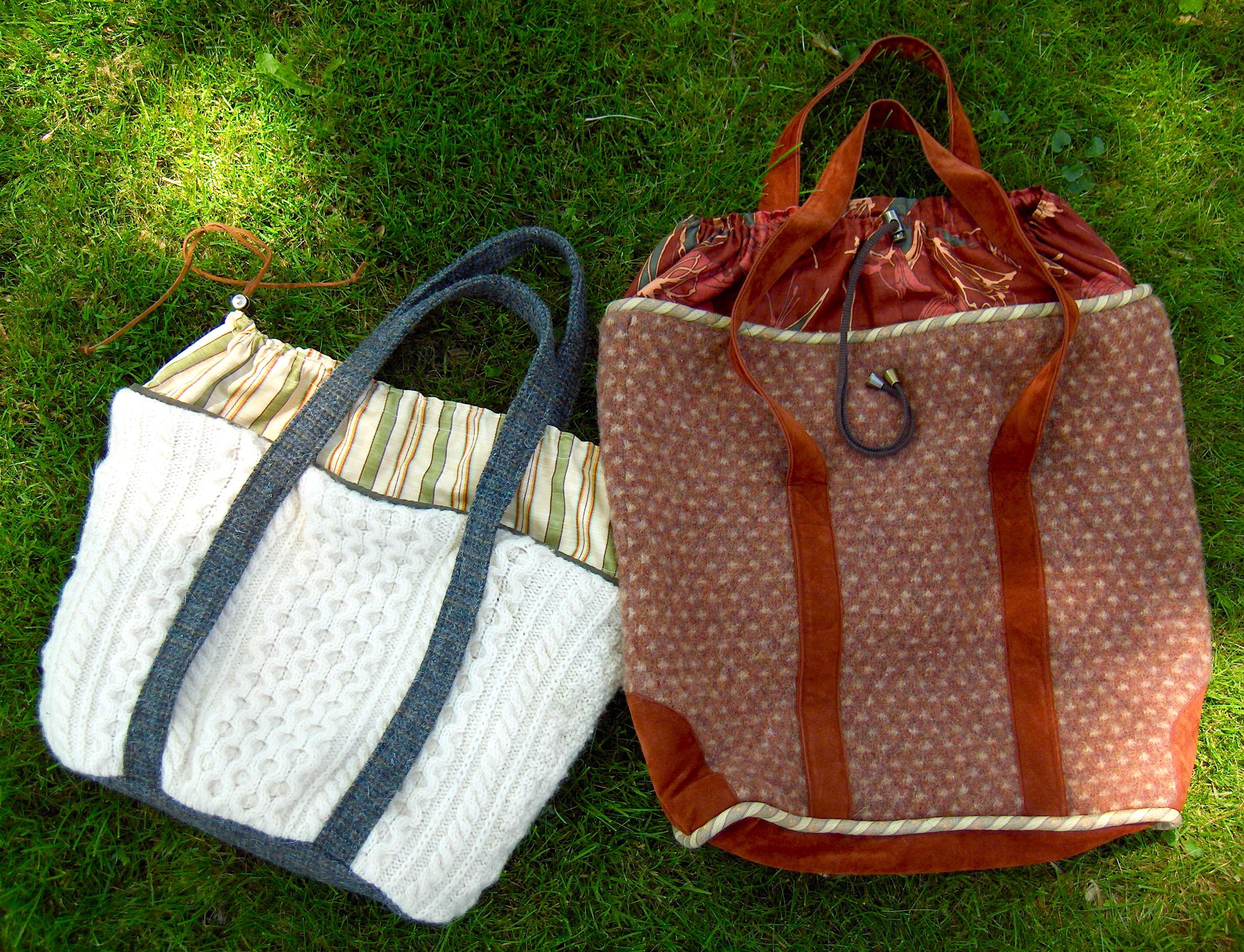 Those patches on the brown bag to the right cover the armholes and also a few holes. I felted that man’s sweater and used it upside down – the waist ribbing is at the top. The left one didn’t felt (probably a superwash wool) and the grey fabric is from the scraps left when the tailor made a jacket for the mister from the Harris Tweed we bought directly from the weaver in Scotland.
  This one is a Gap sweater that was felted at the thrift store already. I felted it a bit more. It had a raglan sleeve. I cut straight across the front for the bag front, and the flap is the back up to the neckline. I gave this one away, but found another just like it at the thrift store. Same issue. (Apparently people who buy wool sweaters at the Gap are inclined to toss them into the washing machine rather than read the instructions.) I like the colours, but haven’t done anything with the second one yet.
 As you can see, I ended up cutting the pieces smaller—I think there are quarters of leg sections—to make all the patches work together. I love this bag, even though it’s a bit lumpy. (I used a zigzag stitch to join the pieces. It might be smoother if they were serged.) There are pink squares with a bit of purple which are clearly not Noro anything – that was a sock yarn that felted the very first time I washed the socks. Also a pretty color. Also annoyed me. (I don’t wash knit socks by hand. They go in the washer on a gentle cycle then are hung to dry. The label said that was okay for this yarn but the label lied.)
 Alive & Knitting